First, check whether the gardening programme you want to listen to is broadcast via FM or DAB+ where you live; DAB+ alone doesn’t guarantee reception indoors. A headphone socket is important for listening without disturbing others, while shared listening requires a clearly specified speaker. Then consider the battery type, size and controls to find a pocket radio that suits your everyday needs.
Who is a pocket radio suitable for?
Listeners looking for specific gardening programmes
If you’re looking for a particular gardening programme, first check which station broadcasts it and how it’s transmitted where you live. MDR publishes regional gardening programmes, and DAB+ Mehr Radio’s reception forecast distinguishes between mobile and indoor reception.
Considerate listeners
A headphone socket can be useful in an open-plan living space if you don’t want others to hear what you’re listening to. Sony Deutschland, Philips Deutschland and SANGEAN Electronics list headphone playback for the models described here; the Sangean DPR-39 does not have a built-in speaker listed.
Radio listeners on the move
If you move your radio between rooms or take it with you, compare the dimensions, power supply and controls of the specific model. The manufacturer specifications for the Sony ICF-P27, Philips TAR1509/00 and Sangean DPR-39 differ in terms of battery type and features.
What should you look for when buying?
First, check how your programme is broadcast, then decide whether you want to listen through headphones or a speaker. Size, power supply and station controls can help narrow down your options further.
| What matters |
What to check before buying |
Who is this especially important for? |
| Receiving gardening programmes |
Find out the station and how it’s broadcast; for DAB+, check the indoor reception forecast for where you live. |
If you want to listen to a particular gardening programme, the first thing to check is whether it’s available where you live via the right reception method. Around 36% of consumers prioritise receiving the programme they want. |
| Listening considerately |
Check whether the exact model has a headphone socket and a built-in speaker; treat them as separate features. |
If other people are busy in an open-plan living space, you may want to listen through headphones, while still having a speaker for other occasions. Around 29% of consumers prioritise private listening. |
| Pocket size and power |
Compare the dimensions and required battery type; check that the power options suit your everyday needs. |
If you move your radio between places or want to use it without a mains socket, its size and power supply need to suit the way you’ll use it. Around 21% of consumers prioritise portable listening and battery power. |
| Finding stations easily |
Compare analogue tuning with digital station presets, and check the model’s controls. |
If you regularly tune in to the same gardening programme, you’ll want to find the station again without a long search. Around 14% of consumers prioritise straightforward station controls. |
Common buying mistakes
-
Assuming DAB+ guarantees reception of your gardening programme
Whether you can receive a programme indoors depends on your location and whether it’s broadcast via DAB+. Regional gardening programmes vary from place to place.
First, find out which station broadcasts your programme and how it’s transmitted. If it’s on DAB+, check the indoor reception forecast for where you live, then test the spot where you plan to use the radio.
-
Assuming a headphone pocket radio has a speaker
A headphone socket doesn’t mean the radio also has a built-in speaker. The Sangean DPR-39 does not have a speaker listed in the manufacturer specifications.
If you want to switch between private and shared listening, check that the exact model has both a headphone socket and a speaker.
-
Buying a ‘battery-powered’ radio without checking the battery type
The models listed require different types of battery. A description such as ‘battery-powered’ doesn’t tell you which batteries you’ll need.
Before buying, check the specified battery type and whether batteries are included.
Key brands at a glance
Sony
The Sony ICF-P27 is an analogue FM/MW pocket radio for programmes broadcast via these bands where you live.
- Sony Deutschland lists a mono speaker, headphone output, telescopic aerial and operation with two R6/LR6 batteries.
- According to Sony Deutschland, the ICF-P27 does not have a DAB+ tuner. The stated battery life is based on manufacturer specifications, not measurements in a particular home.
Philips
The Philips TAR1509/00 is a compact analogue FM/MW radio with manual tuning and battery power.
- Philips lists a headphone socket, telescopic aerial, analogue tuning and operation with two AAA batteries.
- According to Philips, this model does not receive DAB+; the manufacturer’s specifications are not an independent reception test.
Sangean
The Sangean DPR-39 combines DAB+ and FM in a small radio designed for headphone listening, according to the manufacturer.
- SANGEAN Electronics lists a headphone output, ten station presets and a key lock.
- The manufacturer specifications do not list a built-in speaker. If you want to listen without headphones, check for a model with a clearly specified speaker.
TechniSat
A larger portable DAB+/FM alternative may suit you if the radio will mainly stay in one place at home.
- A TechniSat product description dated 24 March 2021 lists DAB+/FM reception and optional battery power.
- The description is older and says nothing about current availability or reception at your specific location.
Joybuy products for gardening programmes
The Joybuy products below include pocket radios for DAB+ and FM, as well as an FM pocket radio for listening through headphones.
 No image available
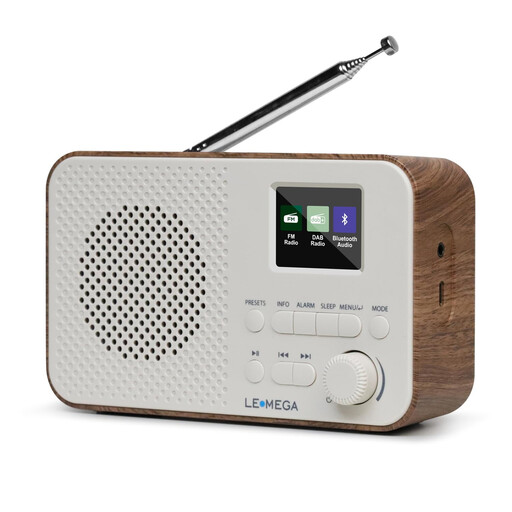
LEMEGA DAB Go, walnut effect
If your chosen programme is broadcast via DAB+ or FM where you are, this radio offers both reception methods and a headphone socket.
The product name lists a rechargeable 2200-mAh battery, USB-C charging, Bluetooth, an LCD display and 40 station presets. Check the listing for the specific product to see whether you can listen without headphones.
Joybuy
 No image available
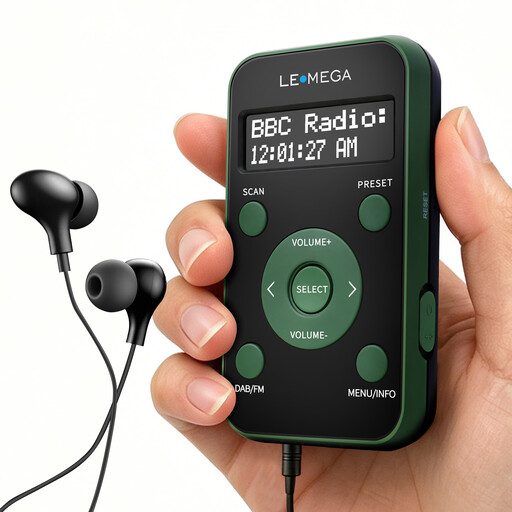
LEMEGA PR1, green/black
If your programme is available via DAB+ or FM and you want to listen privately, this pocket radio offers both reception methods and comes with earphones.
The product name lists a rechargeable battery, USB-C charging, an LCD display and 20 station presets. According to the product description, the supplied earphones also act as the aerial, so check that this suits the way you want to use the radio.
Joybuy
 No image available
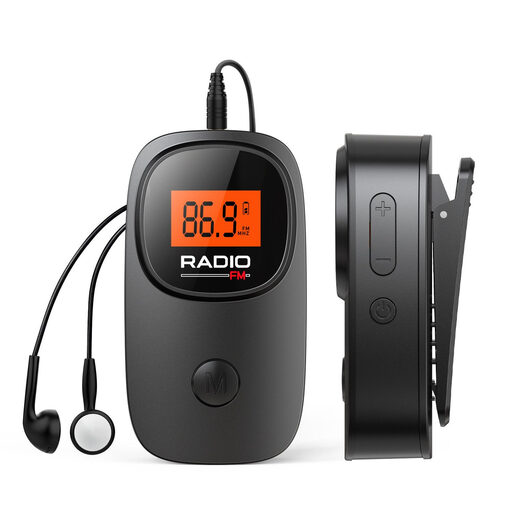
FM Pocket Radio, orange
This FM pocket radio is worth considering if your gardening programme is broadcast locally on FM and you want to listen through earphones.
The product name lists a frequency range of 76–108 MHz, automatic station search, display backlight, belt clip and earphones. According to the product description, AAA batteries are not included.
Joybuy
Frequently asked questions
How can I find out whether I can receive my gardening programme?
First, search for the specific programme and the station that broadcasts it. MDR, for example, publishes regional gardening programmes; for DAB+, you can then check the indoor reception forecast for where you live. Reception may vary depending on where you place the radio.
What can I try if DAB+ reception is weak at home?
Try moving the radio closer to a window and check the reception again. DAB+ Mehr Radio recommends placing it near a window, but this does not guarantee that you’ll be able to receive your chosen programme there.
What should I look for on radio labelling in Germany?
For electrical devices offered for sale, the Bundesnetzagentur lists requirements including correct CE marking, an identifiable device, manufacturer details and instructions in German. The marking is not a quality assessment of reception or sound; check the details on the specific product listing.
Who should I contact if there’s a fault?
For statutory consumer rights, contact the seller; a voluntary manufacturer’s guarantee is separate. The Verbraucherzentrale describes repair or replacement as forms of remedy.


