What should you look for when buying?
First, find out how the programme you want to hear can be received at your listening spot. Then consider the speaker, power supply and headphone socket in light of how you plan to use the radio.
| What matters to you |
What to check before buying |
Who it matters most to |
| Receiving the programme you want |
Find out which programme and station you want; check how it is broadcast and the indoor reception forecast for your postcode. |
If receiving a particular science programme at your listening spot matters to you, check the station and how it is broadcast first. Around 36% of consumers prioritise being able to receive the specific programme they want. |
| Listening to speech through the speaker |
Confirm that the radio has a built-in speaker; check how clear it is with your usual background noise and listening distance. |
If you want to listen while working on your hobby without headphones, clarity from your usual spot is key. Around 29% of consumers prioritise listening through the speaker. |
| Flexible power options |
Compare mains or battery operation, rechargeable batteries, battery type and the stated battery life for the exact model. |
If you move the radio between listening spots or don’t have a socket nearby, its power options should suit how you plan to use it. Around 21% of consumers prioritise flexible use without mains power. |
| Listening privately with headphones |
Check for a headphone output and the type of socket; don’t assume Bluetooth input means you can send audio to wireless headphones. |
If you don’t want to disturb others while listening closely, a suitable headphone socket is important. Around 14% of consumers prioritise private listening with headphones. |
Joybuy products for the hobby room
The selection ranges from a DAB+/FM pocket radio with earphones to models described as kitchen radios, with speakers. Check that the radio supports the broadcast method used by your preferred programme and that its size and speaker or headphone options suit your listening spot.
 No image available
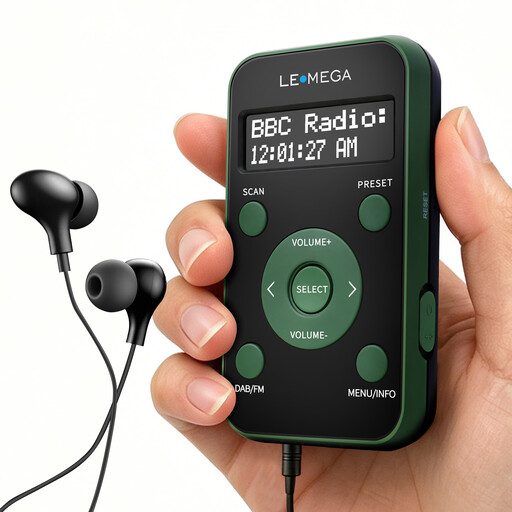
LEMEGA PR1 DAB+/FM pocket radio, green/black
A good option if you want to listen to DAB+/FM on the move or at your hobby room listening spot using earphones.
Features include a rechargeable battery, USB-C charging, up to 12 hours of playback, 20 preset stations, an LCD display and earphones. According to the product details, the earphones also act as the antenna.
View at Joybuy
 No image available
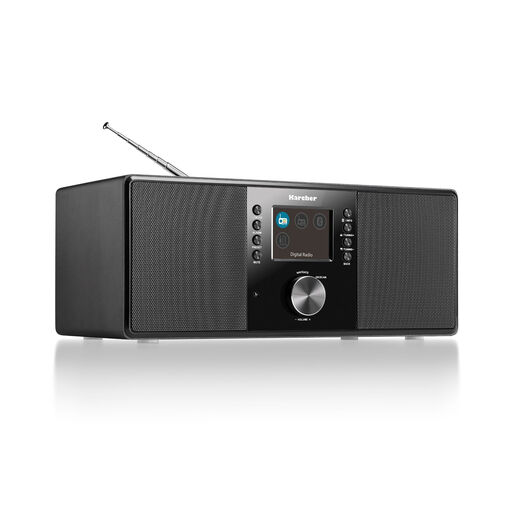
Karcher DAB 5000+
An option if you want to listen to DAB+/FM in your hobby room through a speaker, with the option to connect headphones too.
The product title lists Bluetooth, RDS, a 2.4-inch colour display, speaker, headphone socket, AUX input, line output, alarm clock and remote control.
View at Joybuy
 No image available
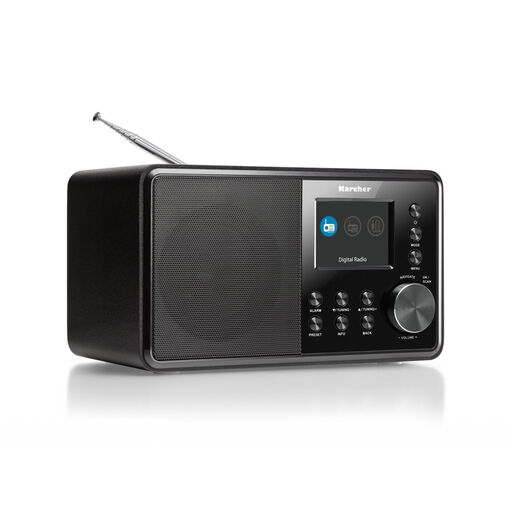
Karcher DAB 3000
An option for listening to DAB+/FM in your hobby room if you’re looking for a speaker model described as a kitchen radio.
The product title lists a 2.4-inch colour display, speaker, AUX input, line output and alarm clock.
View at Joybuy
 No image available
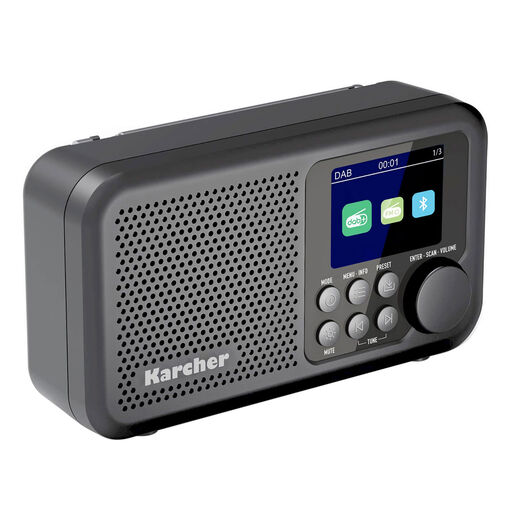
Karcher DAB 2415
A portable option if you want to listen to DAB+/FM at your listening spot through a speaker or headphones.
The product title lists a rechargeable battery, Bluetooth, a 2.4-inch colour display, speaker, headphone socket and alarm clock.
View at Joybuy
 No image available
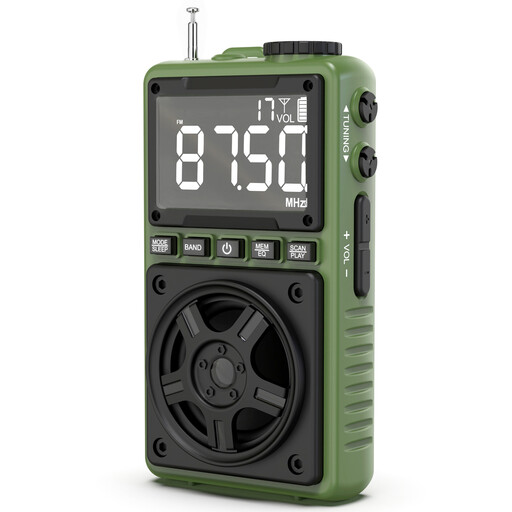
AM/FM pocket radio with speaker
An option if the programme you want is available on FM at your listening spot and you want to listen through the built-in speaker.
The product details list a rechargeable battery, USB-C charging, Bluetooth input, TF card playback and a headphone socket.
View at Joybuy
Frequently asked questions
Is an FM pocket radio enough for every science programme?
No. It depends on how the specific programme is broadcast. Deutschlandfunk describes “Forschung aktuell” as a science programme; for Deutschlandfunk Nova, it lists digital radio, cable, satellite and the internet as ways to listen. First check the programme you want, then check reception at your listening spot.
Where should I position a DAB+ radio in my hobby room?
First check the indoor reception forecast for your postcode and test reception where you’ll actually be listening. If you have reception problems, DAB+ Mehr Radio recommends trying other locations, particularly somewhere closer to a window. The forecast is no substitute for testing it out.
Does an aerial radio need the internet to receive stations?
You don’t need an internet connection to receive DAB+ or FM. Position the aerial as described in the instructions and scan for stations if necessary; Panasonic, for example, describes this function for the RF-D10. If you’re choosing a battery-powered model, also check which type of battery it needs.
Who should I contact if my radio is faulty, and what else might I need to use it?
If the radio has a fault, the seller is your first point of contact for your statutory rights; any additional manufacturer’s guarantee is separate. Depending on the model, you may need suitable batteries or a compatible way to recharge it.
What should I look for to check that the product complies with regulations?
When carrying out market surveillance of affected products, the Bundesnetzagentur lists checks including CE marking, manufacturer details, instructions in German and a declaration of conformity. Check the details for the specific device and listing; a brand name alone doesn’t confirm that an individual product complies.


