Commuters with a regular route
You want to catch updates about your route before setting off, so you need a local station that you can receive at your desk. Digitalradio Deutschland e. V. provides a location-based DAB+ reception forecast as a guide.


First, check whether you can receive your chosen local station at your desk; the DAB+ indoor coverage forecast is only a guide. A DAB+/FM radio gives you both reception options, while an FM model will do if the station comes through reliably on FM. For listening without headphones, the speaker and quick access to your station matter. If you share the room with others, a headphone socket may be more important.
You want to catch updates about your route before setting off, so you need a local station that you can receive at your desk. Digitalradio Deutschland e. V. provides a location-based DAB+ reception forecast as a guide.
You tune in for brief updates and want to find your station quickly and listen to speech without headphones. Sony and Panasonic list speakers in their product specifications; Sony also lists station presets for the XDR-P1DBP.
You listen around other people or want to focus on your work and use headphones when needed. Sony lists a headphone socket for the XDR-P1DBP, while Panasonic lists one for the RF-P50D.
First, check whether you can receive your chosen station where you plan to listen. Then consider how you want to listen, how easy the radio is to use and how it’s powered.
| What matters | What to check before buying | Who is this important to? |
|---|---|---|
| Local stations and reception | Check the station’s programmes and broadcast band, the DAB+ indoor coverage forecast, and reception at your desk. | If I need updates about my route before setting off, I want to be able to receive the right station at my desk. Around 33% of consumers are likely to consider reception their top priority. |
| Listening without disturbing others | Check whether the specific model has a speaker and a headphone socket; if possible, test how clearly it plays speech where you plan to use it. | If I want to listen to short updates without headphones, I need to hear speech clearly at my desk; in a shared room, I want the option to switch to headphones. Around 27% of consumers are likely to prioritise listening options and speech clarity. |
| Quick access to stations | Compare station presets, buttons and display. If you only listen to one familiar FM station, an analogue tuner may also be suitable. | If I only tune in briefly before setting off, I want to find my station again without searching for ages. Around 20% of consumers are likely to consider ease of use their top priority. |
| Power supply | Compare the battery or battery type, charging options and stated battery life when using the speaker or headphones. The German Environment Agency highlights the ongoing costs and resource use associated with disposable batteries. | If I want to use or take my radio with me regularly, I need a power supply that suits my routine. Around 20% of consumers are likely to put power supply first. |
A location-based forecast can’t guarantee how well a particular radio will receive a signal where you actually place it.
Check that your chosen local station is available, then test reception where you plan to use the radio.
A radio station you can receive and route-specific traffic data for a compatible sat nav are two different things. Westdeutscher Rundfunk describes TPEG as a digital traffic service; having a DAB+ tuner alone doesn’t mean a radio will provide automatic alerts.
If you want to listen to traffic updates, check the station. For route-specific information or alerts, make sure the specific device is explicitly described as offering that feature.
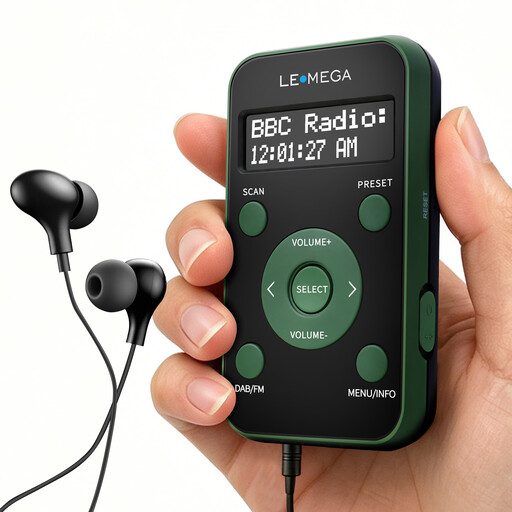
A headphone socket doesn’t confirm that a model has a built-in speaker, too. According to the product listing, the LEMEGA PR1’s earphone cable also acts as its aerial.
Check the speaker, headphone options and aerial arrangement separately for the specific model.
A rechargeable model needs a suitable way to charge it; an AA model needs batteries.
Compare the battery type, charging port and the manufacturer’s stated battery life for the way you usually listen.
Sony describes the XDR-P1DBP as a compact DAB+/FM radio with a speaker, headphone socket and station presets. The SRF-18 is an FM/MW model.
According to Panasonic, the RF-P50D is an FM/MW radio with a speaker, powered by two AA batteries.
According to Roberts, the Rambler Mini combines DAB+/FM reception with a built-in rechargeable battery and USB-C charging.
The Joybuy listing describes the PR1 as a DAB+/FM pocket radio with a rechargeable battery and included earphones. According to the listing, the earphone cable also acts as an aerial.
The following portable DAB+/FM radios could be suitable for local traffic updates. Check whether speaker or headphone listening suits your workspace for each model.
 No image available
Best suited to listening mainly through earphones, provided your chosen station is available on DAB+ or FM.
If you want to listen without headphones, check before buying whether the model has a speaker.
 No image available
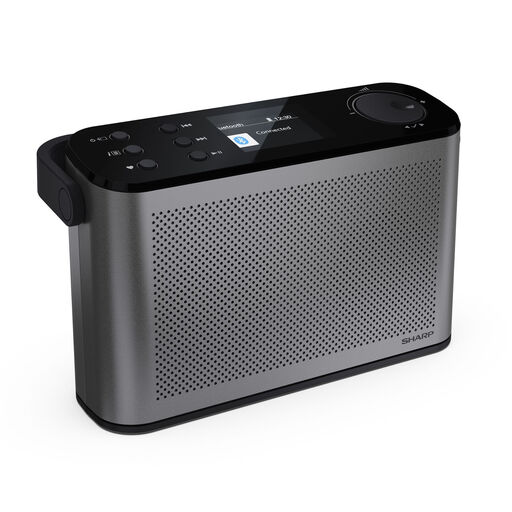
For your desk, if you want DAB+/FM reception, a speaker and the option to save stations.
 No image available
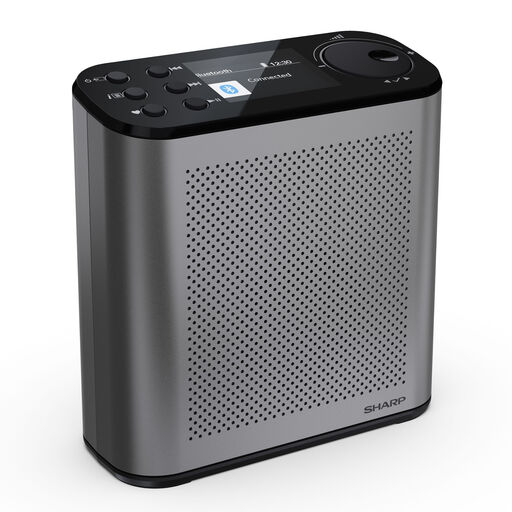
For quick, regular access to saved stations on DAB+/FM, with a rechargeable battery.
If you want to listen without headphones, make sure you check the speaker specifications before buying.
 No image available
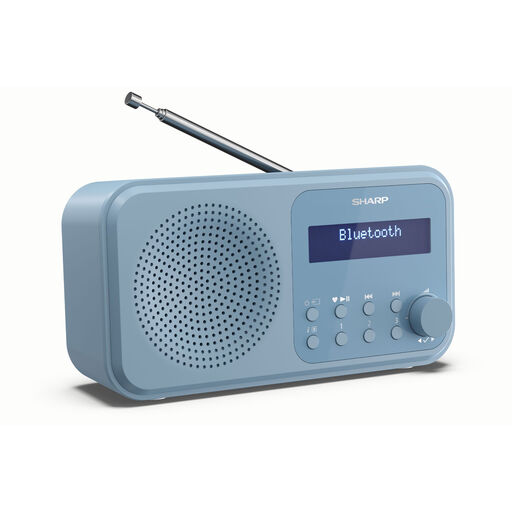
For DAB+/FM reception at your desk, with the option to switch between speaker and headphone listening.
First, find a station that broadcasts updates for your route. For DAB+, Digitalradio Deutschland e. V. provides a location-based indoor reception forecast, but it doesn’t replace testing reception at your desk. Run a station scan where you plan to listen and save the station if your model has presets.
No. A DAB+ tuner alone doesn’t mean a pocket radio will show route-specific updates or read them out automatically. ARD describes TPEG as a digital traffic service, including for compatible sat navs. Check that the specific device explicitly offers these features. To listen to spoken editorial updates, you’ll need to be able to receive a radio station that broadcasts them.
An AA model may involve ongoing costs when you replace the batteries; a rechargeable model needs a suitable way to charge it. The German Environment Agency recommends using rechargeable batteries instead of disposable ones when a battery is needed, and checking whether they can be replaced before buying. The actual cost depends on how often you use the radio and the batteries you buy.