
Lieferung heute & morgen

Qualitätsgarantie

Willkommens-Angebote freischalten: KOSTENLOSE Lieferung | Bis zu 80 % RABATT | Kostenlose 30-Tage-JoyPlus-Testphase
App herunterladen
A pocket-sprung mattress can be a sensible choice for couples, families and anyone who values good ventilation and a sleep surface with minimal motion transfer. However, product names and advertising claims can differ considerably from the properties that can actually be checked. Focusing only on terms such as “orthopaedic”, “ergonomic” or a high number of zones does not automatically mean you will buy the right mattress.
A 7-zone mattress is often advertised as providing targeted support for different parts of the body. What matters, however, is whether the zoning suits your sleeping position, height and preferred firmness. A 5-zone mattress may be sufficient for some users, while others may prefer a more differentiated layout.
The zones should also be correctly aligned with your body. If your height differs considerably from the dimensions the mattress was designed for, the shoulder, pelvis or lumbar areas may not be positioned as intended.
Labels such as H2, H3 or “medium firm” provide a general guide, but they are not fully comparable between manufacturers. A H3 spring mattress can feel different depending on the number of springs, padding, foam thickness and body weight.
As well as the firmness rating, check the maximum load capacity, mattress height and construction of the comfort layers. Different combinations may be suitable for side, back and front sleepers.
An airy mattress should not be marketed using this term alone. More useful information includes details of the cover, foam structure and spring core. By design, pocket springs allow air to circulate between the individual spring pockets. However, a thick, closed-cell foam layer can alter this effect.
An antibacterial or mould-resistant cover is no substitute for regular ventilation either. Such claims should be viewed as product features, not as medical or hygiene-related promises.
In a pocket-sprung mattress, each spring sits in its own individual pocket. This allows neighbouring springs to move relatively independently. That can be particularly appealing to couples looking for a mattress with motion isolation.
Pay attention to:
A hybrid mattress combines a pocket-spring core with one or more foam layers. Memory Foam can mould more closely to the body, while open-cell foams and the spaces between the springs can support air circulation.
For side sleepers, a certain degree of give in the shoulder and pelvic areas is important. Back and front sleepers often place greater emphasis on a stable sleep surface. There is no universal recommendation, as body weight, body shape and personal comfort preferences all play a role.
Terms such as “back-friendly mattress” or “orthopaedic mattress” are no guarantee of suitability for a particular person. If you already suffer from back problems, choosing a product should not be regarded as a substitute for medical advice.
The mattress must fit the bed frame and slatted base. Common sizes include:
A mattress in a rolled box makes it easier to transport through narrow staircases and lifts. After unpacking, the time needed to reach its full height and shape varies depending on the model. The manufacturer’s instructions, which may specify anything from two hours to 72 hours, should be followed. The plastic packaging must be removed completely before first use.
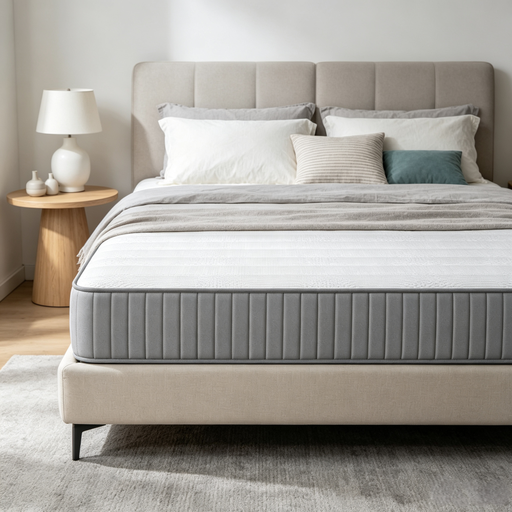
Why this product suits this profile: The single-bed size and H2/H3 construction are suitable for people looking for a compact hybrid mattress with pocket springs and a medium-soft surface.
The product description specifies five zones, individually pocketed springs and a reinforced edge, rather than relying solely on general comfort claims.
24 cm height, knitted cover, rolled box packaging and motion isolation according to the product details.
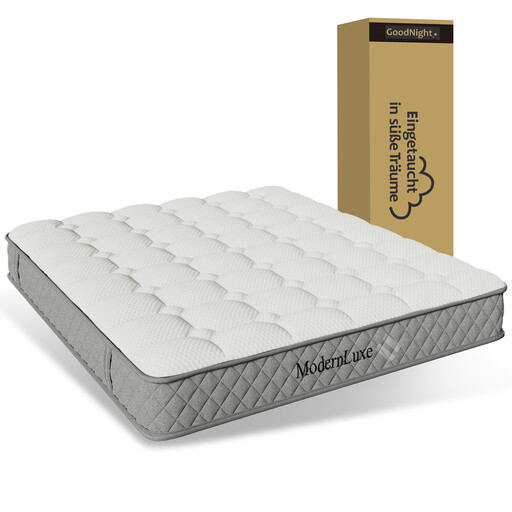
Why this product suits this profile: The 180 cm width is aimed at couples who want to compare seven zones, H3 firmness and specific details about the number of springs and load capacity.
The details specify 868 pocket springs, a height of 20 cm, H3 firmness and a maximum load capacity of 280 kg. The OEKO-TEX claim should be checked against the listing before purchase.
A combination of cold foam, a 7-zone core, an anti-slip underside and four handles.
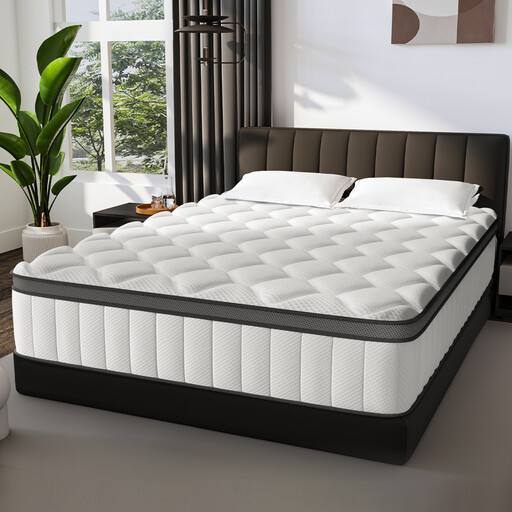
Why this product suits this profile: The 140 cm size is suitable for a narrower double bed or a spacious single bed. The included fitted sheet can make furnishing your bed simpler.
The product details list nine layers, 2.1 mm springs and a maximum load limit of 150 kg. According to the product description, the core underwent 30,000 roll tests.
25 cm height, 7-zone construction, viscoelastic foam and delivery in vacuum-rolled packaging.
After unpacking, the pocket-sprung mattress should be placed on a suitable, stable base. Ventilate the room and do not use the mattress until it has fully expanded. A mattress protector helps protect the cover from moisture and dirt.
Regularly turning the mattress may help ensure even wear. Treat stains locally with a mild cleaning product and a damp cloth. Whether the cover can be removed or washed depends on the model. Avoid jumping on the mattress, sharp objects and naked flames.
We have put together a complete, regularly updated list of products that fully meet these strict selection criteria and the safety regulations applicable in the EU.
This depends on the model. Product details specify periods ranging from around two hours to 72 hours. The manufacturer’s instructions should be followed. Before sleeping on it, the mattress should have reached its intended shape and height.
There is no reliable one-size-fits-all answer. Its lifespan depends on factors including the load it carries, material quality, base, room climate and care. Claims such as “30,000 roll tests” describe a product-specific test value according to the manufacturer, but are not a guarantee of a particular service life in the home.
Models with individually pocketed springs can limit movement across the sleep surface. Whether the motion isolation is sufficient also depends on the spring core, padding layers and bed size. For couples, the 160x200 cm and 180x200 cm sizes are often particularly relevant.