Readers of poetry editions with carefully arranged text
If you want lines, indents and stanzas to remain easy to read at your preferred font size, check a page from the specific edition on the display you’re considering.


For poetry collections read at the library, the specific edition should remain easy to read on screen at your preferred font size. A smaller reader is easier to handle, while a larger display gives you more room for long lines and larger text. If you also want to borrow digital titles from the library, check the model’s Onleihe support, the required software version and, for PDFs, the copy protection before you buy.
If you want lines, indents and stanzas to remain easy to read at your preferred font size, check a page from the specific edition on the display you’re considering.
If you want to borrow digital titles as well as read books you own, the availability of the edition, its copy protection and the reader’s software all matter.
If you mainly read at a table, you can weigh up whether a lighter, more compact device matters more to you than extra room for text and larger type.
First, check how the lines in your specific poetry edition look on screen. Then decide which display size suits the way you like to read. Onleihe compatibility matters only if you want to borrow digital titles from a library.
| What matters | What to look for when buying | Who should pay particular attention? |
|---|---|---|
| Line layout and file format | Check a representative page at your preferred font size. EPUB can reflow text differently from a PDF with a fixed page layout. | If I want to read lines, indents and stanzas as close as possible to the printed edition, line layout is my most important consideration. Around 36 % of consumers give line layout top priority. |
| Digital library titles | Check Onleihe support for the exact model and software version. For PDFs, check the copy protection too. | If you want to read poetry collections from your library’s digital catalogue, you need to check that both the model and the file are supported. Around 29 % of consumers put digital borrowing first. |
| Reading area and lighting | Test the edition on your preferred display size and assess the adjustable lighting at your usual reading spot. | If I prefer larger text or want to read long lines, I need enough screen space and suitable lighting. Around 21 % of consumers prioritise display comfort. |
| Ease of handling | Compare the weight and dimensions of the specific model in the position you usually read in. | If you want to hold and put away your reader comfortably at the library, ease of handling is especially important. Around 14 % of consumers put it first. |
A supported file format alone doesn’t tell you whether a particular borrowed title can be opened on the reader. The model, software version and DRM can all matter too; Kindle e-readers are not suitable for Onleihe e-books.
Before buying, check the specific book source, device model and software. If you’re looking at a PDF edition, check its copy protection as well.
EPUB can adapt text to the screen size, whereas a PDF keeps its line and page breaks fixed. Depending on the poem’s layout, this can change where lines break or mean you have to zoom in on a small display.
Look at a representative page from the edition you want at your preferred font size, and check the lines, indents and stanzas.
Colour isn’t necessarily needed for poetry that consists of text alone. According to the tolino specifications, the vision color displays colour content at 150 ppi and black-and-white content at 300 ppi. The Onleihe e-reader function is also not designed for audiobooks.
Only make extra features a deciding factor if they’re needed for the books you actually read or the way you use your device.
A stylus is available separately for the tolino vision color, so check whether you really need this accessory.
Models for purchased books, with direct Onleihe access also available on compatible devices running suitable software versions.
Readers with a range of display sizes, including compact and large-format models.
A potential choice if the specific poetry editions you want are available through Kindle.
A compact alternative for suitable book sources outside a reliably supported direct Onleihe connection.
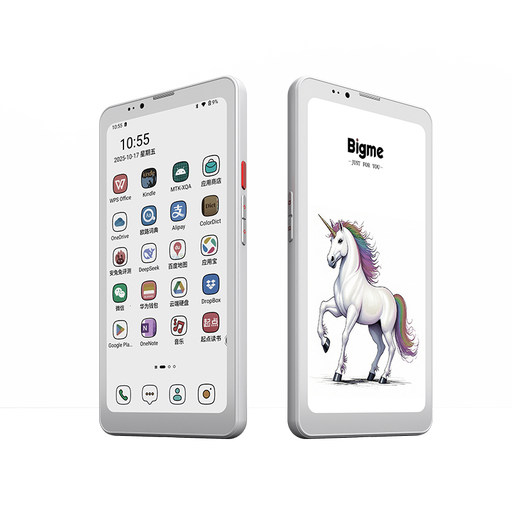
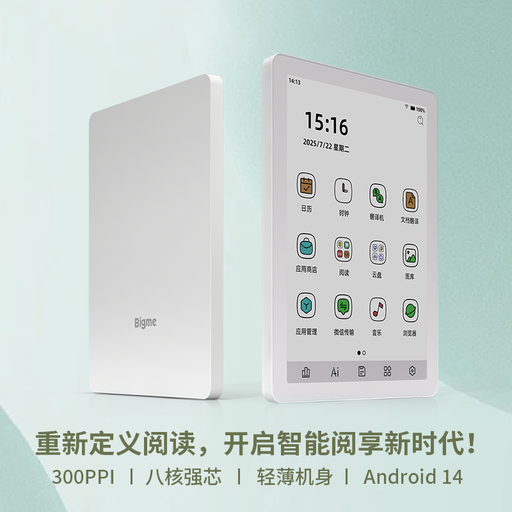
These Joybuy products are e-readers for digital reading. Their display sizes and stated screen specifications may help you weigh up your options for poetry collections.
 No image available
The stated E-Ink display could be an option for reading poetry on a digital reader. Check how the lines in your edition look at this screen size.
The product details list a 6,13-Zoll display, with 300 ppi for black-and-white content and 150 ppi for colour content.
 No image available
The 6-Zoll format is a compact option for digital reading. Check whether your poetry edition fits on the reading area at your preferred font size.
The product details list an E-Ink display with 300 ppi for black-and-white content and a front light adjustable to 36 levels.
No, not simply to read a file of your own that you’re legally entitled to use. However, if you want to borrow e-books from your library through Onleihe, its guidance says you’ll need a valid library card and the associated password.
Select your library in the reader’s Onleihe section and sign in with your library account details. For the shine 5, shine color and vision color, Onleihe describes a dedicated menu option from software version 5.15.253009 onwards. According to its guidance, you’ll need a Wi-Fi connection.
No. For PDFs on tolino and PocketBook readers, Onleihe specifies Adobe or ByteBooks DRM as a requirement; PDF pages also retain their fixed layout. Onleihe announced that the previous Adobe ID sign-in method for Adobe Digital Editions and external reading apps was discontinued on 23 June 2026 and replaced by ByteBooks ID.
In its quick-start guide, Onleihe describes using its e-media service as free, but says you need a valid library card. Whether your library charges for a card, and how much, depends on its own terms, so check directly with your library.
Reading or borrowing a book does not give you general permission to copy an entire protected edition or bypass DRM. Section 53 of the UrhG sets out the conditions and limits for private copies, and in particular restricts copying a book that is substantially complete. The legal position depends on the circumstances of the specific case.