Focused listeners
You want to hear quiet words and pauses in a reading at a comfortable volume, despite household noise. First, check that the earbuds fit well and how ANC works with your recording.


For household noise, well-fitting in-ear earbuds with active noise cancelling (ANC) are an obvious choice if you want to hear poetry readings at a comfortable volume. The World Health Organization recommends well-fitting, noise-cancelling headphones, as they can reduce the need to turn up the volume in noisy surroundings. If you often need to respond to others, also check how easy it is to pause playback or switch to an ambient mode – stronger noise isolation can make it harder to hear someone speaking to you.
You want to hear quiet words and pauses in a reading at a comfortable volume, despite household noise. First, check that the earbuds fit well and how ANC works with your recording.
You want to remain available to others while listening. An easy-to-reach pause control or ambient mode may matter more than continuous noise isolation.
You listen to several readings in a row and need a fit that stays comfortable over time. For wireless models, also check the battery life in the listening mode you actually use.
| Your priority | What to check before buying | Who is this important to? |
|---|---|---|
| Hearing quiet passages clearly | Try different ear tips for fit, then test the same quiet passage with and without ANC in your usual listening spot. | If you want to make out the words over household noise without turning up the volume unnecessarily, how clearly your recording comes through is key. Around 36 % of consumers say their main concern is being able to hear quiet passages clearly despite background noise. |
| Staying reachable | Try pausing and switching between ANC and ambient mode on your own playback device. | If you’re interrupted often, you may want to hear other people in the household or pause the reading quickly. Around 29 % of consumers prioritise being able to respond to others over maximum noise isolation. |
| A comfortable fit | Check the ear tip sizes and fit over the length of a typical listening session for you. | If you listen to several readings in a row, the fit should stay comfortable and a loose fit shouldn’t compromise noise isolation. Around 21 % of consumers put long-term comfort first. |
| Device compatibility and cost | Check that the features you want are compatible, what’s included and the terms of the specific offer. | You want to use features that work with your playback device, rather than pay for extras you don’t need. For around 14 % of consumers, device compatibility and cost are the main considerations. |
How much household noise bothers you also depends on the fit and the type of sound. A manufacturer’s claim doesn’t prove that voices at home will be reduced to the same extent.
Try a quiet spoken passage of your own with suitable ear tips before choosing a model.
An open fit and a sealing ear tip differ in how much background noise you can hear and how much the earbuds isolate you from your surroundings.
First consider how often you need to be able to respond to others, then check how clearly you can hear the recording in your usual listening spot.
Some features may be limited when paired with devices from other manufacturers. A feature-packed charging case is only useful if you use what it offers.
Check that the controls and connectivity features you want work with your specific device before comparing offers.
The AirPods Pro 3 combine a noise-isolating in-ear design with ANC and Transparency mode.
The Tour PRO 3 are in-ear earbuds with adaptive ANC and a charging case that offers additional controls.
The EAH-AZ100 are an in-ear option for anyone who wants to check how their recordings sound as well as use ANC.
The WF-1000XM6 are noise-isolating in-ear earbuds with ANC, where fit plays an important role.
Fit and ANC settings are especially worth checking with the Space A40 and Liberty 4 NC.
This selection includes noise-cancelling in-ear headphones, with both wired and wireless models as well as options with features that let you hear your surroundings.
 No image available
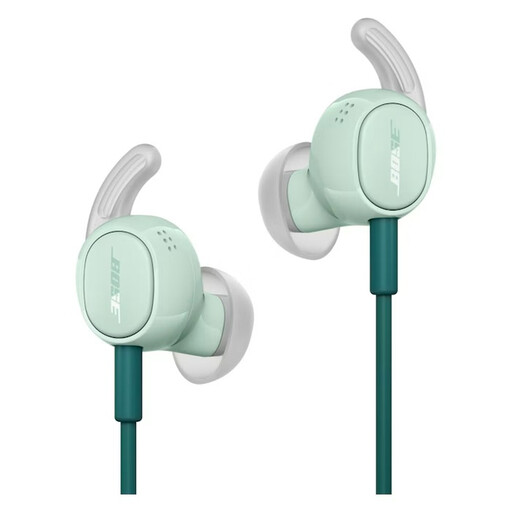
A wired in-ear option if you want noise cancelling and don’t need a wireless connection.
Check that your playback device is compatible with the USB-C connection listed.
 No image available
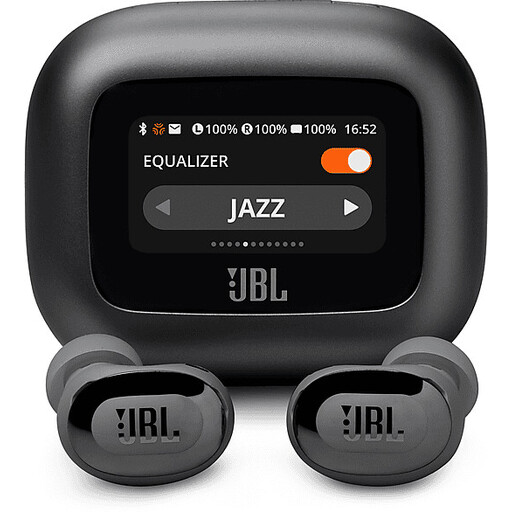
A wireless in-ear option with noise cancelling if you’d rather listen without a cable.
The product name mentions wireless charging and a Smart Case.
 No image available
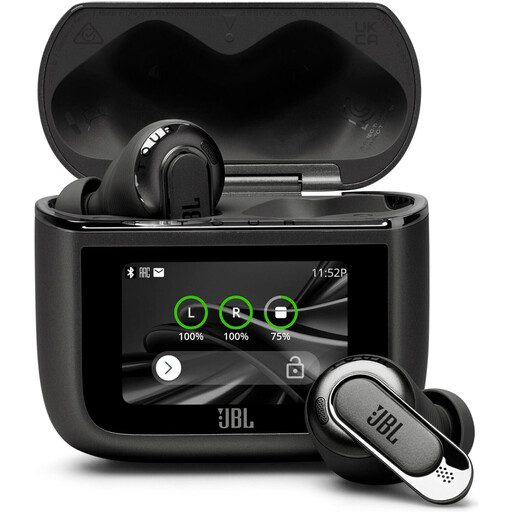
A good fit if you want to block out noise while listening, then hear more of your surroundings again when needed.
JBL lists True Adaptive Noise Cancelling and a Transparent Mode for this model. Try them to see if the fit and switching between modes work for you.
 No image available
An in-ear option with ANC if you want to reduce household noise while listening.
The product name mentions Bluetooth, ANC and an Environmental Sound Mode. Check how the controls work with your playback device.
 No image available
A wireless in-ear option with ANC if you want noise cancelling while you listen.
The product name mentions True Wireless and Active Noise Cancelling. Check that the features you want are available with your device.
First, check the fit and, if available, ANC. The World Health Organization recommends well-fitting, noise-cancelling headphones, as they can reduce the need to turn up the volume in noisy surroundings. However, both volume and listening time still matter.
Try suitable ear tips and compare a familiar passage with and without ANC. For first-time use of the Liberty 4 NC with both earbuds in, soundcore recommends adaptive ANC; this advice applies to that model.
If your earbuds are faulty, your statutory rights against the seller are separate from any additional manufacturer’s warranty. Germany’s consumer advice centre says the retailer is generally responsible for two years. Its checklist also says that online purchases usually come with a 14-day right to cancel, although exceptions may apply. Check the terms of the specific offer before trying the earbuds.
No. Germany’s Federal Environment Ministry explains that waste electrical and electronic equipment must be taken to an authorised collection point, such as a local collection centre or a relevant retailer.