Readers in reverberant rooms
If you want your voice to stand out from the room sound, aim to speak from a consistent, close distance. Shure points out that room acoustics still matter, even with good recording equipment.


For poetry readings in a reverberant, untreated room, a directional dynamic microphone used at a consistent, close speaking distance is a sensible starting point, but it won’t eliminate room echo. USB is suitable for connecting directly to a computer; XLR is an option if you have the right additional recording equipment. A condenser microphone may be worth considering if you prefer its sound and can control the setup and any extra equipment required.
If you want your voice to stand out from the room sound, aim to speak from a consistent, close distance. Shure points out that room acoustics still matter, even with good recording equipment.
If you want to record poetry without a separate audio interface and monitor your voice as you read, check that the specific model has a USB connection and headphone monitoring. Samson and Audio-Technica describe these connection options for their respective models.
If you want to capture soft and emphatic lines with clarity, consider the microphone, its positioning, the room and, where necessary, an interface. Audio-Technica specifies a separate XLR recording setup with phantom power for the AT2020.
A good fit if: you want to get started directly on your computer and stay as close as possible to the microphone while reading.
Bear in mind: keeping a consistent distance matters; the microphone design won’t eliminate echo or background noise.
A good fit if: you already have a suitable audio interface or want to expand your recording setup.
Bear in mind: recording on a computer requires a suitable additional signal chain; XLR alone doesn’t mean better sound.
A good fit if: capturing vocal nuances matters to you and you can carefully set up your recording space.
Bear in mind: even a directional model won’t prevent reflections from the room; connections and power requirements depend on the specific model.
| What you’re looking for | What to check | Who is it most relevant to? |
|---|---|---|
| Voice over room echo | Polar pattern and a practical position in front of your manuscript; make a test recording in the intended location. | If your main concern is managing reverberation, a close, consistent position and a listening test are key. Around 36% of consumers say room sound is their top buying priority. |
| Easy connection and monitoring | USB compatibility with your recording device and a headphone output; check which features are available in the connection mode you choose. | If you want to record on a computer and listen back as you go without a separate interface, check the connection and monitoring options. Around 29% of consumers prioritise a straightforward setup. |
| Vocal nuance and volume | Test-record soft and emphatic lines; check the pop filter, consistent distance and sound through headphones. | If soft passages and stressed syllables are especially important to your delivery, your test recording should include both. Around 21% of consumers focus on vocal expression. |
| Room to expand later | Check your existing interface, the inputs you need and the cables; the AT2020 requires full 48 V phantom power. | If you already use an interface or may want to record additional voices separately in future, make sure your signal chain is suitable. Around 14% of consumers prioritise the option to expand. |
A microphone won’t soundproof an untreated room. Shure stresses that room acoustics remain important when recording.
Before deciding, record a short poem in the spot you plan to use and listen back, rather than choosing based on microphone type alone.
Changing your recording position or adding acoustic treatment may mean extra setup work.
An XLR connection alone won’t let you record on a computer. The Audio-Technica AT2020 also has a model-specific requirement for full 48 V phantom power.
Consider the microphone, interface, cable, power supply and monitoring as parts of one signal chain.
An XLR setup for a computer may require an audio interface and a suitable cable.
With directional microphones, speaking from a very short distance can boost the bass. If you move while reading, changes in distance can affect the sound.
Try a passage with your usual head movements and check the sound and plosive sounds through headphones.
The Q2U is a dynamic microphone with USB and XLR connections, making it a potential option for getting started.
The dynamic ATR2100x-USB and the AT2020 XLR condenser microphone require different recording setups.
The dynamic PodMic USB combines USB and XLR connections for a fixed, close-mic position.
The dynamic SM58 with an XLR connection may be an option if you already have a suitable recording setup.
The Joybuy options below include dynamic USB/XLR microphones, wireless lavalier sets and kits with condenser microphones. For a poetry reading, pay particular attention to the connection, positioning and sound in the actual recording space.
 No image available
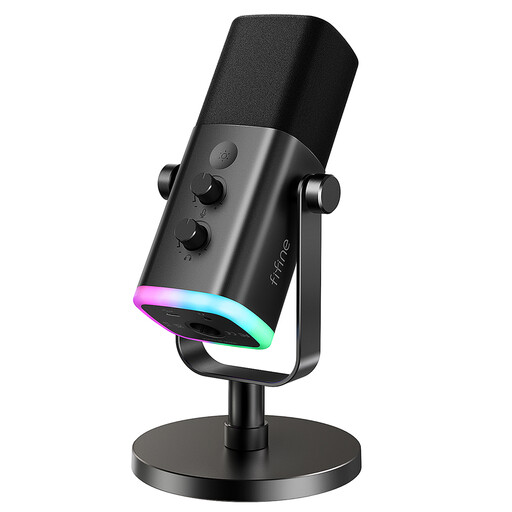
This dynamic USB/XLR model may suit a close-up solo reading; check the distance by trying it out with your manuscript.
Features listed in the product name: RGB lighting, mute button, headphone jack and desktop stand.
 No image available
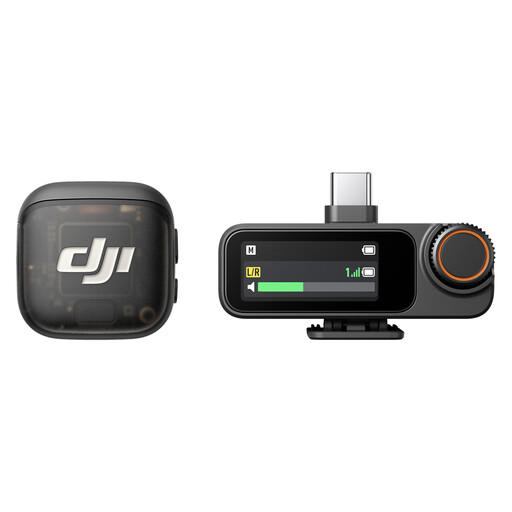
This set may suit you if you’re considering a wireless option with two transmitters for reading aloud; check that this configuration works for your recording needs.
The product name lists two transmitters, one receiver and a charging case.
 No image available
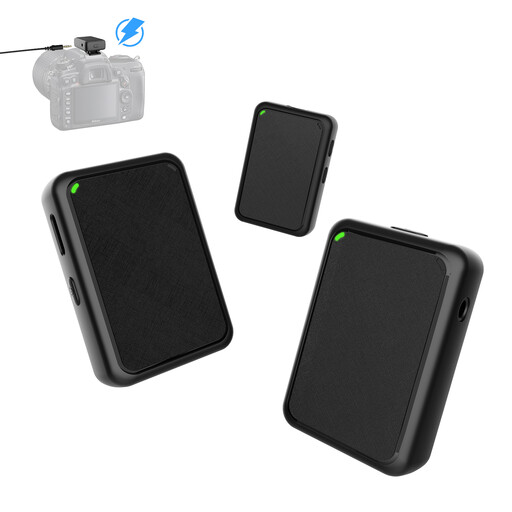
If you want to keep your hands free while reading, a lavalier set with two transmitters may be an option; check that it connects to the recording device you plan to use.
The product name lists a wireless camera microphone set with USB plug-and-play, two transmitters and one receiver.
 No image available
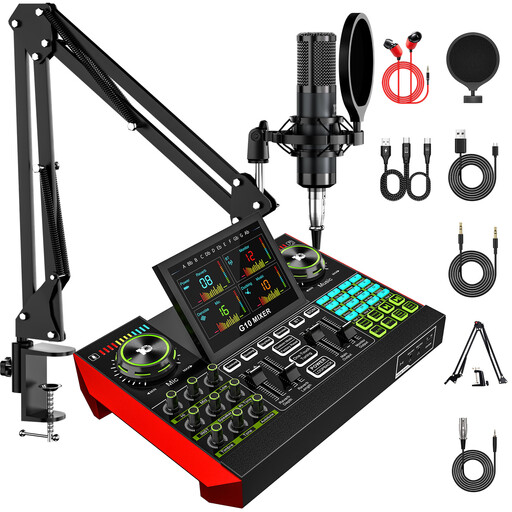
This kit may suit you if you want to use a condenser microphone with a sound card and boom arm in a computer setup; test the sound in your recording space.
The product name lists a 3.5 mm condenser microphone, a sound card and a boom arm stand.
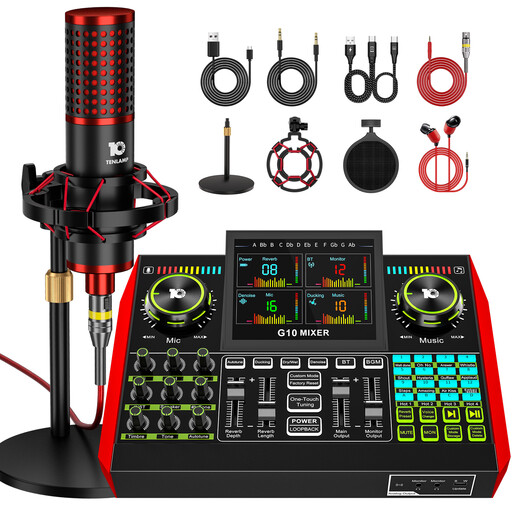 No image available
If you’re looking for a condenser microphone with a mixer for a PC or mobile device setup, check the connections and sound in your room first.
The product name lists an audio mixer and a 3.5 mm condenser microphone.
No. A dynamic microphone won’t eliminate echo in a room. Shure points out that room acoustics remain important when recording, so test the position and sound in the place you’ll actually be recording.
Point the speaking side towards your mouth and try to keep the distance consistent while looking at your text. RØDE recommends around 5–10 cm for the PodMic USB; this distance is specific to that model and may not suit other microphones.
No. A compatible USB microphone can connect directly to a computer; recording via XLR on a computer requires a suitable additional signal chain. Audio-Technica states that the AT2020 requires full 48 V phantom power.
Compare what’s included with your recording setup. An XLR setup for a computer may need an interface and a suitable cable; Samson lists a desktop stand, windscreen and cables among the Q2U’s accessories. Also check the warranty and returns policy for the specific offer.
Not without taking care. Section 201 of the German Criminal Code makes it an offence to record another person’s words spoken in private without authorisation. If you intend to record other people’s voices, make sure you have permission before you start; the provision does not apply simply because you record your own voice on your own.