What to look for when buying
First, check the sound where you’ll actually be reading. Then make sure the connection and monitoring options suit your recording process.
| Priority |
What to check when buying |
Who it matters most to |
| Voice clarity versus room sound |
Make a test recording where you’ll be reading; listen for reflections or ventilation noise; check the polar pattern and positioning. |
If I can hear reflections or ventilation noise in my booth, I want to know first whether my voice still comes through clearly over the room sound. Room and background noise are the top priority for around 33% of consumers. |
| Vocal nuances and plosives |
Test quiet and emphatic passages; consider a pop filter and level control. |
When reading quiet and emphatic verses, I want to hear whether plosives occur and whether I can control the level appropriately. Vocal nuances and plosives are the priority for around 25% of consumers. |
| Connection and recording chain |
Check USB compatibility or whether you have an XLR input; confirm the accessories and preamp gain required for the specific model. |
If I want to start without a separate interface or use my existing equipment, the connection needs to be right. A suitable, straightforward connection is the top priority for around 25% of consumers. |
| Monitoring and controls |
Compare the headphone socket, monitoring function and how easy the controls are to reach. |
While reading, I want to check the level through headphones and reach the controls without losing sight of my manuscript or microphone position. Monitoring and ease of use come first for around 17% of consumers. |
Joybuy products for close-up voice recording
The following Joybuy products include dynamic microphones with USB and XLR connections for close-up voice recording.
 No image available
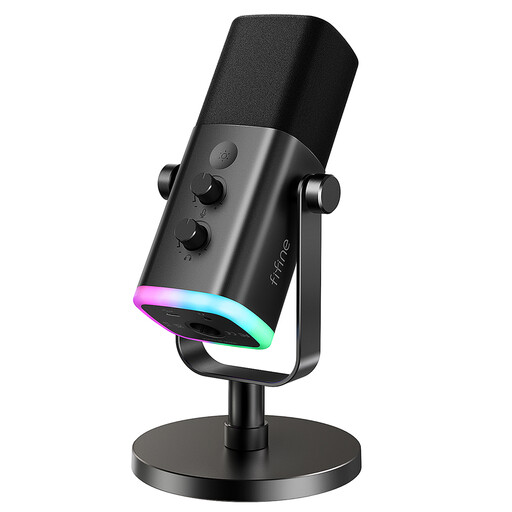
FIFINE AM8 dynamic USB/XLR microphone
Could suit a close-miked, directional solo voice; try it in position with a test recording where you’ll be reading.
Unidirectional pickup pattern, headphone socket and gain control when used via USB. A desktop stand and USB cable are listed as included.
An XLR cable is not included; according to the product description, the microphone controls are inactive when using XLR.
View at Joybuy
 No image available
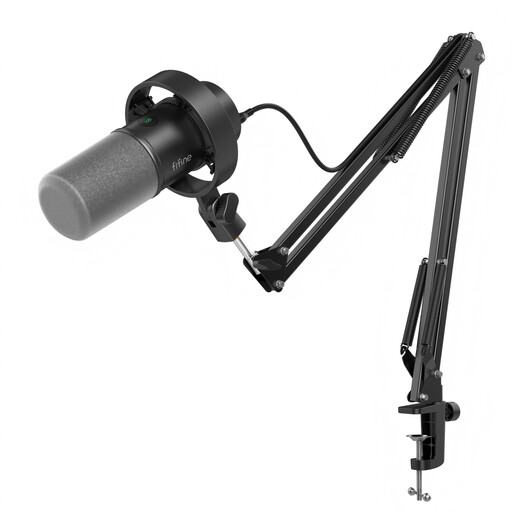
FIFINE K688CT dynamic USB/XLR microphone kit
The included microphone arm could make it easier to position the mic close to your manuscript and reading area; test it at your usual speaking distance.
The description lists USB-C, XLR, headphone monitoring and a gain control. Recommended speaking distance: 2 to 6 inches.
An XLR cable is not included; according to the product description, the microphone controls are only active when using USB.
View at Joybuy
 No image available
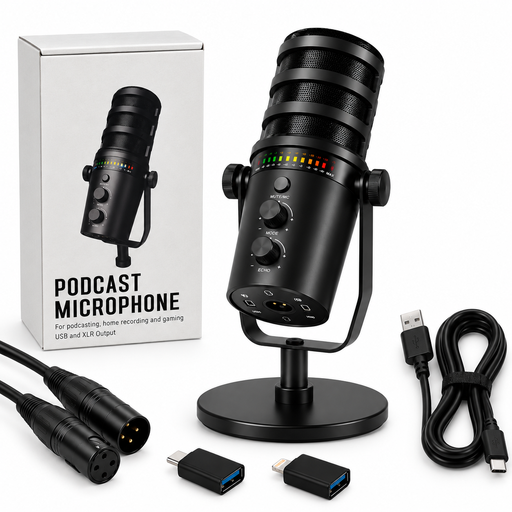
Dynamic USB/XLR microphone set with desktop stand
The desktop stand is useful for a seated, single-voice setup; check that you can position the microphone suitably where you’ll be reading.
The description lists a cardioid pickup pattern, USB and XLR connections, a headphone output and gain control. A desktop stand and XLR cable are listed as included.
View at Joybuy
Frequently asked questions
How can I tell whether my booth is suitable for a condenser microphone?
Record a passage from the position where you’ll be reading, including pauses, quiet sections and emphatic moments, then listen for reflections and ventilation noise. The size of the room alone won’t tell you whether its acoustics are right for your recording; a directional microphone doesn’t replace this listening test either.
How should I start setting levels and monitoring?
Position the microphone where you’d normally read, record a test passage including your loudest emphasis, then check the signal on the level meter and through headphones. The Sennheiser Profile USB manual describes gain, mix and headphone controls; other models may have different features.
What extra costs and consumer rights should I consider when buying online?
Check what’s included in the box, such as the mount and cables, and whether you’ll need a suitable interface, rather than looking at the microphone alone. When buying from a trader in the EU, consumers generally have a legal guarantee period of at least two years from the date they receive the goods. Online purchases generally come with a 14-day right to withdraw from the contract, although legal exceptions may apply. The European Union explains these rules for the areas in which they apply.
Can I publish a recording of someone else’s poem online?
You can’t determine that from the microphone purchase alone. Under German copyright law, the author’s rights also include making their work available to the public. Before publishing a recording of someone else’s poem, check whether it is still protected and what rights or permissions you need for that specific use. Making a private recording does not automatically give you permission to upload it. The relevant provisions of German copyright law apply.


