Readers in a reverberant room
If you can hear reflections from the room, position the recorder and microphone so your voice remains clear from your usual reading spot. Shure notes that room reverberation can be noticeable in voice recordings.


For a single voice, a compact recorder with built-in microphones is a practical starting point, provided you can position it securely where you speak. If you can hear the room’s reverberation, or plan to use an external microphone, microphone placement and the right connection are crucial. 32-bit float can make it easier to adjust levels later, but it won’t remove reverberation. A test recording in your own room will help you check these points before a longer reading.
If you can hear reflections from the room, position the recorder and microphone so your voice remains clear from your usual reading spot. Shure notes that room reverberation can be noticeable in voice recordings.
If you move between a whisper and more emphatic lines, compare the recording formats and options for adjusting levels afterwards. Zoom and Tascam list 32-bit float as a feature on the models covered here.
If you want to start and save recordings with as few preparation steps as possible, consider the storage type and power supply. Sony lists 16 GB of internal storage for the PCM-A10.
First decide whether you’ll record using the built-in microphones or position an external microphone where you want it. Then consider dynamics, storage and how you’ll manage multiple takes.
| What matters to you | What to check before buying | Who will find this important? |
|---|---|---|
| Voice and room reverberation | Check how the recorder can be positioned and listen back to a test recording made in the spot you intend to use. | If the room sounds reverberant, I want to record a clear voice from my reading spot and adjust the microphone position. This is the main consideration for around 36% of consumers. |
| Quiet and loud lines | Compare the recording formats available on the specific model and test your quietest and loudest passages. | Readers who move between a whisper and more emphatic lines want to be able to edit the recording later. Around 29% of consumers prioritise this. |
| Recording process and storage | Check the storage type, power supply and recording time in your preferred format. | If I want to record and find several takes without avoidable interruptions, I’ll plan storage and power in advance. This is the main consideration for around 21% of consumers. |
| External microphone | Check that the recorder’s connection is compatible with your specific microphone and that it can meet any power requirements. | If you want to position a studio microphone you already own, or plan to buy, you’ll need a suitable input and should also plan for the cable and mounting. Around 14% of consumers focus primarily on this. |
Recording format and room acoustics are two different things. A room with poor acoustics or a badly positioned microphone can still be noticeable in a voice recording.
Make a short recording from your usual reading spot, including quiet and loud lines, and listen back before recording the whole reading.
Some models require extra items such as a memory card, power supply, mount or cable. The Tascam manual specifies that a microSD card must be inserted in the DR-05XP; a Bonedo review of the Zoom H1essential noted that it comes with few accessories.
Check what’s included with the specific offer and what you’ll need for your planned setup.
Depending on your setup, you may need to take extra steps to prepare a memory card, mount or cable.
The Zoom H4essential’s two XLR/TRS inputs are mainly useful if you want to connect compatible external sources. Extra inputs won’t soundproof a reverberant room.
First decide which microphone you want to use and where, then choose a recorder with the right connection.
The DR-05XP is a handheld recorder with built-in stereo microphones and a 3.5 mm input for a compatible external source.
The H1essential is designed for compact recording with built-in X/Y microphones. The H4essential offers two XLR/TRS inputs if you need them for your planned setup.
The PCM-A10 is a compact option for anyone who values internal storage and Linear PCM or MP3 recordings.
The XV1-R combines built-in X/Y microphones with recording profiles and a 3.5 mm microphone/line input.
This Joybuy selection features voice recorders that are worth comparing with your recording needs, based on their names and stated storage options. Before buying, check which recording formats are available and whether you can position the device suitably in your reading space.
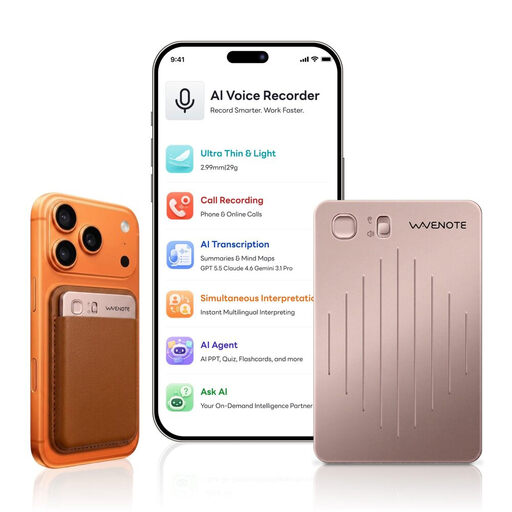 No image available
For readers who want to compare voice recorders with a clearly stated storage capacity. Check the available recording formats and microphone position in the room beforehand.
The product name specifies 64 GB and rose gold.
 No image available
For readers who want to consider a digital voice recorder with a stated storage capacity and transcription function. Check which features you actually need for your recordings.
The product name specifies 64 GB and a transcription function.
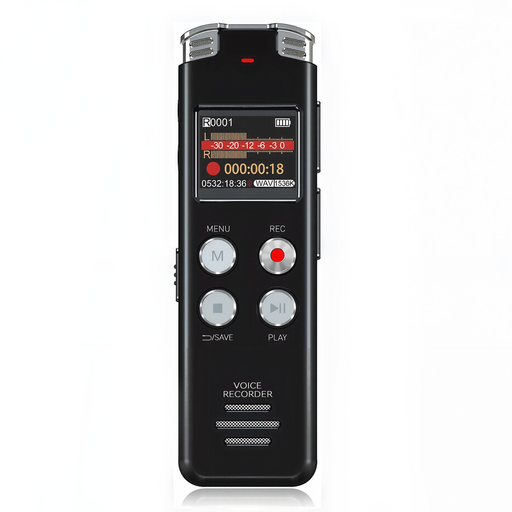 No image available
For readers who want to compare portable voice recorders with a stated storage capacity. Check the controls and recording process against the takes you plan to make.
The product name specifies 128 GB, an LCD display and the model number L357.
 No image available
For readers who want to compare voice recorders with a case and stated storage capacity. Check which recording formats are available for your poetry reading.
The product name specifies 32 GB and a case.
No. The format affects how recording levels are handled and edited afterwards. To hear how the room sounds in the recording, make a test recording from the intended microphone position and listen back.
Check the power supply, storage and your preferred recording format. The Tascam DR-05XP manual explains how to insert a microSD card. The Sony PCM-A10 has internal storage, but its stated recording time depends on the format.
Making a private recording doesn’t automatically mean you can publish it online. Under German copyright law, literary works may be protected, and making a work available to the public is a right belonging to the author. Before publishing someone else’s poem if it is still protected, check that you have the necessary rights or that a relevant exception applies.
Not necessarily: Section 201 of the German Criminal Code (StGB) concerns the unauthorised recording of another person’s non-public spoken words. If other people might be heard in the recording, discuss it with them beforehand. The same issue doesn’t arise in the same way when you’re recording only your own voice.