
Lieferung heute & morgen

Qualitätsgarantie

Willkommens-Angebote freischalten: KOSTENLOSE Lieferung | Bis zu 80 % RABATT | Kostenlose 30-Tage-JoyPlus-Testphase
App herunterladen
Polarised cycling glasses need to do more than ordinary sunglasses when you are out on your bike. They must keep out the wind, stay securely in place, reduce UV exposure and provide as clear a view as possible in changing light conditions. At the same time, models vary considerably in terms of lens material, ventilation, weight and adjustability.
If you focus only on a mirrored finish or bold product claims, you may overlook important details. The following criteria will help cyclists, mountain bikers, road cyclists and outdoor enthusiasts choose the right sports glasses for cycling.
A mirrored surface primarily changes the appearance of the glasses and may reduce the amount of light entering the eyes. On its own, however, it says nothing about whether the glasses can specifically filter reflected glare. A polarised cycling lens uses a special filter within the lens to do this. It can reduce distracting reflections from wet roads, bodies of water and bright road surfaces, for example.
When buying, make sure the technical specifications explicitly state “polarised”. A coloured or mirrored coating is not an adequate substitute.
Dark lenses may feel comfortable, but they do not automatically provide complete UV protection. Look for the UV400 marking. This describes protection up to a wavelength of 400 nanometres and is listed as a technical feature on many models.
Cycling glasses with UV400 protection should also have clear product labelling and understandable safety information. UV protection is not a substitute for suitable protective equipment when carrying out work involving high mechanical loads.
Cycling glasses may appear lightweight at first glance, yet still cause pressure on the nose or temples during a longer ride. Rigid nose pads, arms that are too short or a frame that is too narrow can affect the fit. For lightweight cycling glasses, it is therefore not just the weight that matters: flexible arms, adjustable nose pads and frame width are also important.
Polycarbonate lenses are common in many cycling glasses because they combine low weight with high resistance to breakage. TAC lenses are also frequently used in polarised sports sunglasses. Neither material should automatically be considered unbreakable.
Check whether the manufacturer provides information about impact resistance and whether the glasses are intended for your chosen sport. Damaged or heavily scratched lenses should be replaced. Cycling sunglasses are not intended for activities such as grinding, drilling or looking directly at the sun.
Polarised lenses can reduce reflections from bright surfaces. A wide field of view is also useful for road cyclists and mountain bikers, allowing them to spot movement and obstacles to the side as early as possible. Highly curved lenses can improve side protection, but they must suit the shape of your face.
Look for a clear description of the lens width, frame width and arm length. These measurements are more useful than vague claims such as “universal fit”.
At high levels of exertion or in low temperatures, condensation can form on the lenses. Ventilation openings support air circulation, but they do not prevent fogging in all conditions.
If you often move between shade, woodland trails and direct sunlight, you may wish to consider photochromic cycling glasses. Photochromic lenses adjust their tint to the intensity of the light. The adjustment does not happen instantly and may be limited behind vehicle windscreens, as these filter out some UV radiation.
Cycling glasses with interchangeable lenses offer another solution: you can fit the appropriate lens depending on the weather and route. This is flexible, but it requires the lens change to be straightforward and replacement lenses to be available.
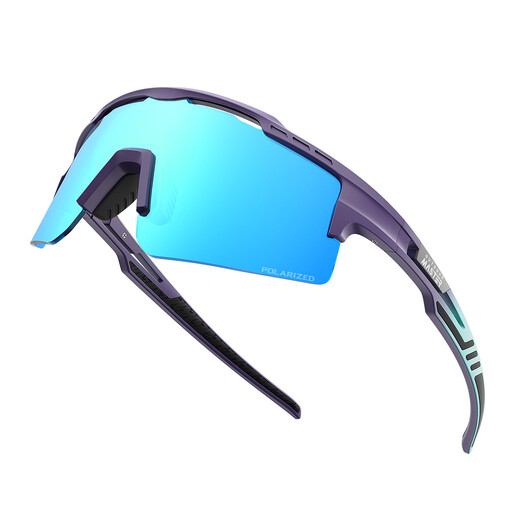
Why this product suits this profile: The combination of polarised TAC lenses, a UV400 rating and a TR90 memory frame covers key requirements for occasional bike rides and a range of outdoor activities.
The technical specifications list polarisation and UV400 separately rather than relying solely on a mirrored finish.
Polarised TAC lenses with a UV400 rating and an aerodynamically designed TR90 frame.
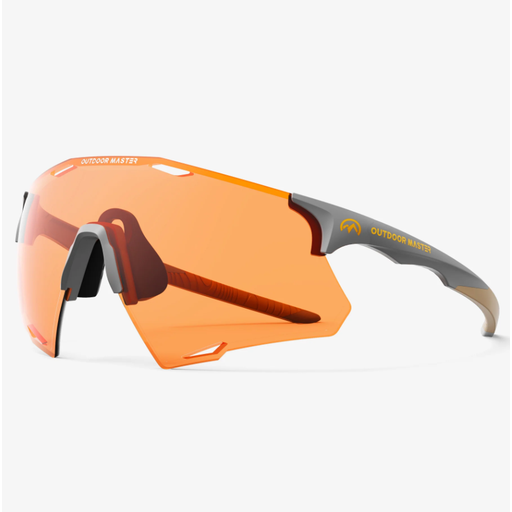
Why this product suits this profile: The ventilation, adjustable nose pads and 25.5 g weight will appeal to users who value a secure fit and good airflow on longer rides.
The ventilation helps address the risk of fogging, while the adjustable nose pads allow the glasses to be adapted to different face shapes.
TR90 frame, polycarbonate lenses, UV400 rating, ventilation design and a product weight of 25.5 g.
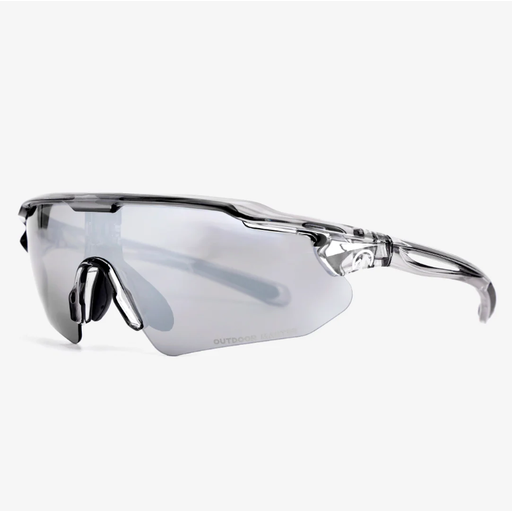
Why this product suits this profile: Photochromic and polarised lenses are suitable for users who ride on routes with changing light conditions and want versatile features.
The product information explicitly states the limitation behind windscreens. This means the photochromic function is not presented as effective without restriction.
TR90 frame, polycarbonate lenses, polarisation, photochromic technology, UV400 rating and a stated weight of 29 g in the photochromic version.
The description cycling glasses for women and men does not mean that every face shape will be covered equally well. Before buying, compare the following points:
Cycling glasses for reducing glare should also not be selected based solely on lens colour. Polarisation, UV400 certification, field of view and a secure fit are the key factors.
We have put together a complete, regularly updated list of products that fully meet these strict selection criteria and the safety regulations applicable in the EU.
Polarised lenses are particularly useful in reflected light, such as on wet roads or in low, bright sunshine. In twilight, dense woodland or poor weather, very dark lenses can restrict visibility. For frequently changing conditions, photochromic lenses or models with interchangeable lenses may be worth considering.
Their lifespan depends on how they are used, cleaned and stored. Scratches, peeling coatings or a distorted frame can affect both visibility and fit. Clean the lenses regularly, avoid harsh cleaning products and carry the glasses in a case. They should be replaced if there is any visible damage.
Some models include an inner frame. Whether it is suitable for your prescription depends on your individual correction, the available space and the design of the frame. The fitting should be carried out by an optician. Not every inner-frame system is compatible with every pair of glasses.