
Lieferung heute & morgen

Qualitätsgarantie

Willkommens-Angebote freischalten: KOSTENLOSE Lieferung | Bis zu 80 % RABATT | Kostenlose 30-Tage-JoyPlus-Testphase
App herunterladen
Polarised cycling sunglasses should reduce distracting reflections while you ride, protect you from UV rays and stay securely in place, even on longer rides. But not every pair of sports sunglasses for cycling is equally suited to road cycling, mountain biking or everyday use. If you focus only on a mirrored finish or big promises, it’s easy to overlook important details.
Polarised lenses can reduce reflected light from roads, water and metal surfaces. However, they don’t automatically provide certified UV400 protection. Look for a clear statement about UV protection rather than relying on terms such as ‘HD’, ‘Revo’ or ‘Mirror’.
Visible light transmission, usually shown as a VLT value, matters too. A value of around 12 to 18 per cent suits bright conditions, but may feel relatively dark in heavy cloud or when riding through woodland.
Lightweight cycling sunglasses made from TR90 can feel comfortable to wear. But the nose pads, ends of the arms and lens shape also affect how securely they fit. Without non-slip details, or if the arms are too short, the sunglasses may slip on bumpy routes.
The fit should suit the width of your face. Cycling sunglasses for men and women aren’t automatically a universal fit just because they’re sold in one size.
Cycling sunglasses with interchangeable lenses let you switch manually between lenses for bright or dark conditions. This is useful if you want to choose the right lens for different situations. However, you’ll need to handle them carefully to avoid scratching the surface.
Photochromic cycling sunglasses adjust their tint according to light levels. They don’t respond equally quickly to every light source. For example, they may darken less behind a windscreen, as the glass filters out some UV rays.
For cycling sunglasses with UV400 protection, the product description should explicitly state that they protect against UVA and UVB rays. Polarised TAC or polycarbonate lenses can also reduce reflections. This doesn’t mean the sunglasses are approved for industrial work or protection against extreme impact risks.
Scratch-resistant sports sunglasses still need careful handling. Dry cleaning, harsh cleaning products or loose storage can damage the coatings. Rinse them with water, use a soft microfibre cloth and keep them in a case.
Cycling sunglasses can fog up on climbs, in cold weather or in high humidity. Cycling sunglasses with anti-fog ventilation have openings or a specially shaped lens to encourage airflow. Ventilation reduces the risk of fogging, but can’t prevent it in every condition.
Make sure the vents aren’t positioned in a way that lets extra wind or splashes go straight into your eyes.
A weight of around 25 to 33 grams can feel comfortable on longer rides. But the right fit for you remains key. Adjustable nose pads, flexible arms and a wide field of vision can make cycling sunglasses easier to wear on road or mountain bike rides.
If you have a vision impairment, check whether the sunglasses support a prescription insert or whether an over-glasses style might work for you. For more options, take a look at our range of polarised fit-over sunglasses.
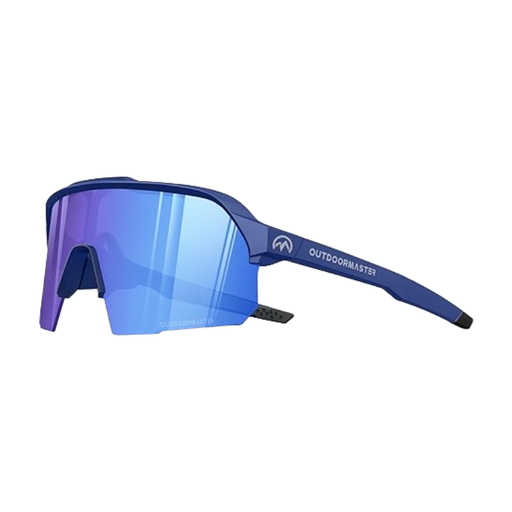
Why this product suits this profile: These sunglasses combine a lightweight TR90 frame with polarised lenses and a clear spare lens for different light conditions.
The product details specify UV400 protection and an interchangeable clear lens, so your choice isn’t based on tint alone.
TR90 frame, polarised lens, clear spare lens and storage case, according to the product description.
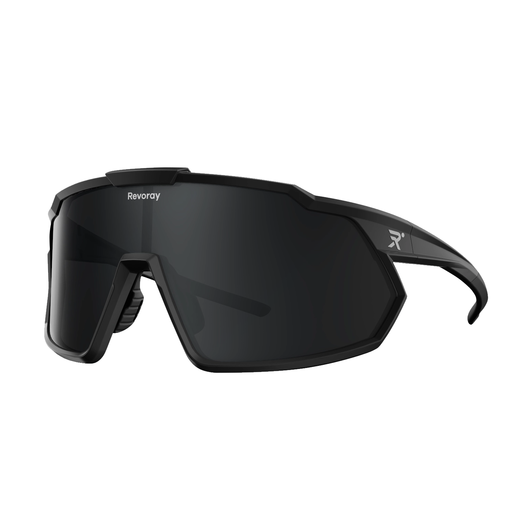
Why this product suits this profile: For regular road and mountain bike rides, the stated weight of around 33 g, adjustable silicone nose pads and multiple lens coatings are all useful features.
As well as polarisation, the product details specify VLT, UV400 protection and an ANSI-Z87.1 performance test.
TR90 frame, TAC lenses, water- and oil-repellent coating, and a stated VLT of around 15.2 per cent.
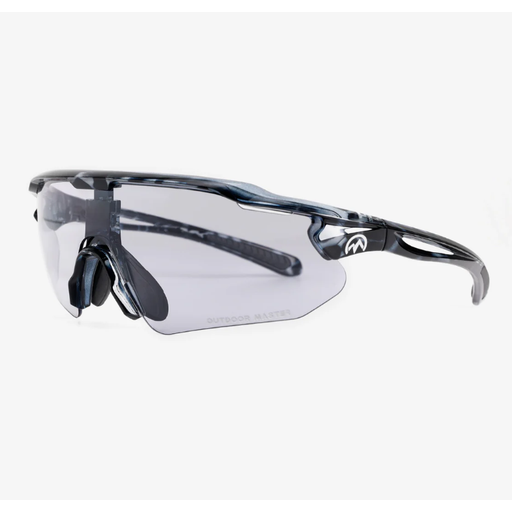
Why this product suits this profile: The combination of photochromic and polarised technology is designed for riders moving between sunny roads, shade and changing outdoor conditions.
Tint adjustment is listed as a feature, while UV400 protection, weight and adjustment options remain details you can check.
TR90 frame, polycarbonate lenses, adjustable nose pads and a stated weight of 26 to 29 g.
After dusty or wet rides, rinse the lenses with clean water and wipe them with a soft cloth. Don’t use harsh cleaning products or place the sunglasses lens-side down. A case helps protect them from pressure, heat and scratches.
Replace damaged or heavily scratched lenses, as scratches can affect your vision. When changing lenses, handle them only by the edges. How long they last depends on how they’re used, cleaned and stored, so there’s no meaningful one-size-fits-all estimate.
We’ve put together a complete, regularly updated list of products that meet these strict selection criteria and the safety regulations in force in the EU.
It depends on the visible light transmission. Dark lenses with a low VLT value may not let enough light through in heavy cloud or in woodland. For changing conditions, clear interchangeable lenses or photochromic lenses are a practical option.
Look for ventilation openings, a good fit and enough space between the lens and your face. Cycling sunglasses with anti-fog ventilation can encourage airflow. Fogging may still be hard to avoid when there’s a big temperature difference.
The price depends on factors including lens material, stated UV protection, frame material, adjustment options and what’s included. Don’t compare price alone: check the VLT value, spare lenses, case and care instructions too. This will help you work out which features you really need for your rides.