What to look for when buying
When choosing a hob for polenta served at different times, your priorities will depend mainly on how you plan to serve it, the heat setting you need and whether your existing pan is compatible with the hob’s heating technology.
| Priority |
What to check when buying |
Who it matters most to |
| Serving at different times |
Check how to use any dedicated keep-warm function, and plan to check the food’s temperature in several places. |
If we’re not all eating at the same time, I need a reliable way to keep the food hot or cool and reheat it. Around 36% of consumers prioritise serving food safely at different times. |
| Gentle cooking |
Check the low heat settings and how easy they are to use; a high maximum power rating says nothing about how the hob performs on a low heat. |
When leaving the polenta to absorb the liquid, I want to be able to adjust the heat easily while still stirring it occasionally. Around 29% of consumers prioritise controlled, low-heat cooking. |
| Space and connection |
For portable hobs, check the dimensions and make sure you have a safe place to set it up; for built-in models, check the cut-out, connection type and instructions for the specific model. |
If I need an extra cooking zone or a built-in hob, its design and connection must suit my kitchen. Around 21% of consumers prioritise space, design and connection. |
| Reusing your existing pan |
For induction, check that the pan has a suitable magnetic base and that its diameter is supported; don’t assume that a ceramic surface means a particular heating technology. |
If I want to keep using my current pan, it needs to be compatible with the hob’s heating technology. Around 14% of consumers particularly value being able to reuse their pans and avoid buying extra cookware. |
Joybuy product selection
This selection includes portable single-zone hobs and built-in induction or ceramic hobs for cooking polenta.
 No image available
Induction hob for the worktop, 3500 W
A suitable extra cooking zone if your pan is induction-compatible.
3500 W; 8 temperature and power settings; timer function; overheating protection.
View at Joybuy
 No image available
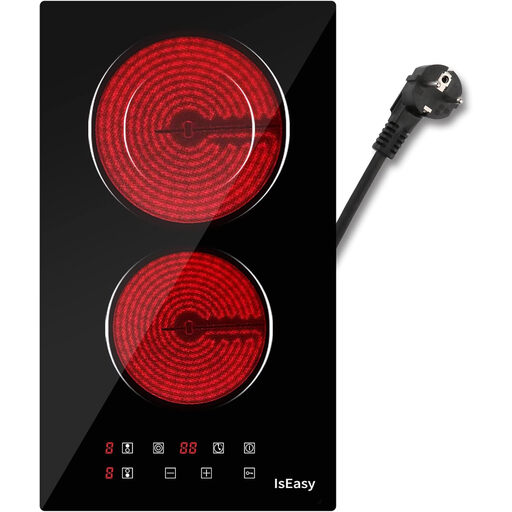
IsEasy ceramic hob, 2 zones
The two cooking zones are useful if you’re planning to cook something else alongside the polenta.
3200 W; 9 power settings; touch controls; child lock; timer from 1–99 minutes.
View at Joybuy
 No image available
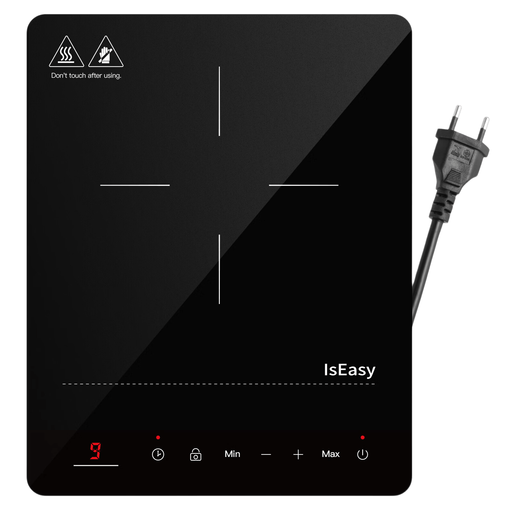
IsEasy portable single induction hob, 2100 W
A portable single-zone hob for polenta, provided your pan has a suitable induction base.
28 cm cooking surface; 9 heat settings; 120-W keep-warm setting; 8-hour timer.
The listed keep-warm setting doesn’t prove that the polenta will reach a specific temperature.
View at Joybuy
 No image available
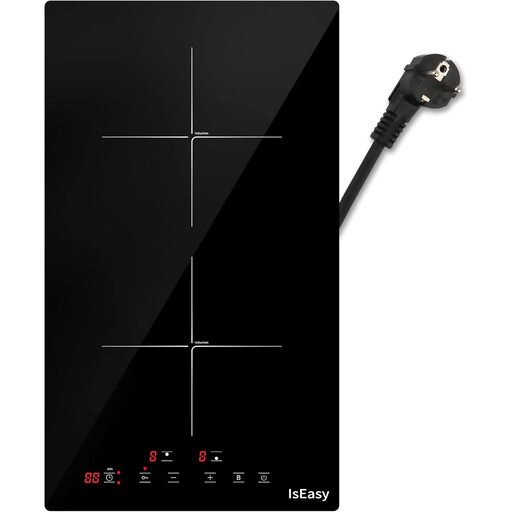
IsEasy Domino induction hob, 2 zones
A built-in option with two cooking zones if you’re looking for a fixed hob rather than a portable single-zone model.
3400 W; 9 heat settings; 29,5 cm; 220–240 V; product name specifies “Built-in, Plug-in”.
Before buying, check the connection details and instructions for the specific model.
View at Joybuy
 No image available
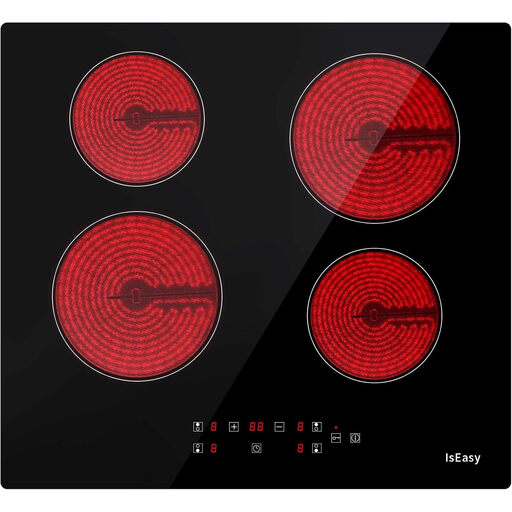
IsEasy ceramic hob, 59 cm, 4 zones
The four cooking zones make this a good option if you need a built-in hob with several zones.
6000 W; 9 heat settings; touch controls; child lock; frameless.
View at Joybuy
Frequently asked questions
Is a keep-warm function enough if someone is eating later?
No. The name of a function or the temperature set on the hob doesn’t prove that the polenta is at that temperature. The Federal Institute for Risk Assessment recommends keeping hot food at a minimum of 60 °C throughout. If you can’t ensure this, the Institute gives thorough, rapid cooling to no more than 7 °C or keeping food hot at a minimum of 60 °C as a guide.
Do I still need to stir polenta on a low heat?
Yes. A low heat setting doesn’t mean you can skip the stirring. An Alnatura recipe recommends leaving polenta to cook on the lowest heat and stirring occasionally; appliance specifications don’t prove that the hob will stir it for you or prevent it from catching.
What should I check before connecting a built-in hob?
Check the connection type and instructions for the specific model. Bosch states that the PXY801DW4E must be connected without a plug by a qualified electrician. Where work on the home’s electrical system is required, Section 13 of the Low Voltage Connection Ordinance sets out who is permitted to carry it out; this doesn’t mean that the same applies to a portable hob designed to plug into a socket.
Can I use my existing pan on an induction hob?
Only if the pan base is suitable for induction and the pan size is within the requirements of the specific appliance. Rommelsbacher specifies a ferromagnetic pan base for the CT 2010/IN; this induction requirement doesn’t apply when checking an electrically heated ceramic hob.
Do hobs have an EU energy label like ovens?
No. According to the consumer advice centre, EU energy labels are available for ovens, but not hobs. The label for a cooker combination rates the oven, not the hob.


