
Lieferung heute & morgen

Qualitätsgarantie

Willkommens-Angebote freischalten: KOSTENLOSE Lieferung | Bis zu 80 % RABATT | Kostenlose 30-Tage-JoyPlus-Testphase
App herunterladen
The idea of fully automating pool cleaning is appealing to many pool owners. A cordless pool robot promises maximum freedom and convenience—no tangled cords, no limitations. However, the market is filled with models whose real-world performance often falls short of their marketing claims. Before making a purchase, it's crucial to understand the common pitfalls that frequently lead to disappointment and unnecessary expense.
As your Joybuy Product Recommendation Officer, I'm here to help you distinguish marketing hype from proven performance. This guide focuses on the objective criteria that define a reliable battery-powered pool robot.
Many devices look impressive on paper but only reveal their weaknesses during operation. Pay close attention to these three points to avoid a bad purchase:
To separate the wheat from the chaff, you should base your selection on three fundamental technical parameters. These determine the real-world cleaning performance and longevity of your device.
The battery's capacity, measured in milliampere-hours (mAh), is an important indicator, but not the only one. What's crucial is the device's ability to maintain consistently high suction power throughout a complete cleaning cycle of 90 to 180 minutes. Look for models with high-quality lithium-ion batteries and check the manufacturer's stated runtime for the standard or automatic mode, not just the eco mode.
A powerful robotic pool vacuum needs an effective filtration system. Its efficiency is measured in microns (?m).
Models with a dual filtration system that combines both filter types deliver visibly better water quality. The capacity of the filter basket also determines how often it needs to be emptied.
A modern pool robot for floors and walls should feature systematic navigation. Technologies like gyroscope sensors or path-planning algorithms (e.g., S-shaped patterns) ensure the entire pool surface is covered without gaps. Check if the device is explicitly designed for cleaning the floor, walls, and waterline. Models with caterpillar treads often provide better traction here than those with wheels. A pool robot with app control can offer additional benefits, such as creating cleaning schedules or manual steering.
Instead of making a one-size-fits-all recommendation, we have identified models that meet specific user profiles and purposefully avoid the pitfalls mentioned earlier.
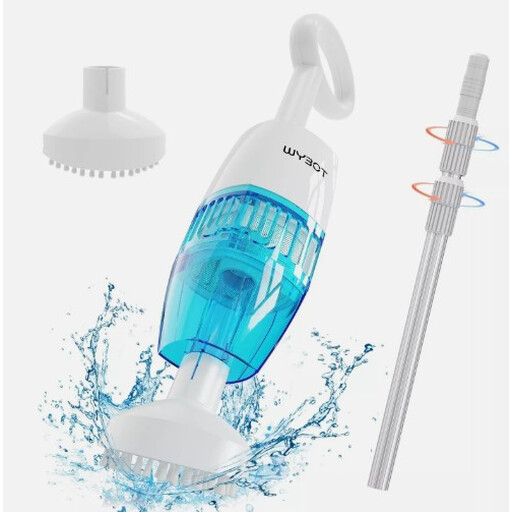
Why it's a good fit: Ideal for targeted cleaning of steps, corners, hot tubs, or small above-ground pools where a fully automatic robot would be overkill. It's a practical supplement or a cost-effective starter option.
This device doesn't promise fully automatic navigation or wall climbing. It is a specialised tool for manual spot cleaning and delivers exactly what it advertises: flexible control and reliable suction for hard-to-reach areas.
Up to 60 minutes of runtime with a 5200 mAh battery. The included 1.5m telescopic pole allows for convenient handling without getting wet.
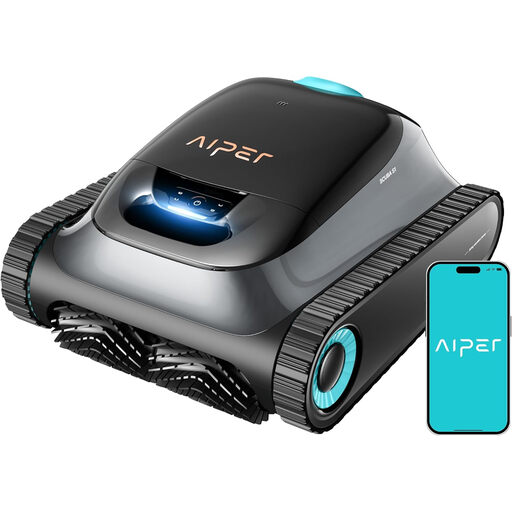
Why it's a good fit: For owners of standard in-ground or large above-ground pools who are looking for a reliable "set-and-forget" solution. This model offers comprehensive cleaning of the floor, walls, and waterline with modern technology.
The Aiper Scuba S1 uses systematic WavePath navigation instead of a random pattern. Its caterpillar treads provide the necessary traction for effective wall and waterline cleaning. The battery runtime is transparently stated for different modes.
Dual filtration system (3?m + 180?m) for crystal-clear water and smart app control for scheduling and mode selection. Over-the-Air (OTA) updates continuously improve the device's software.
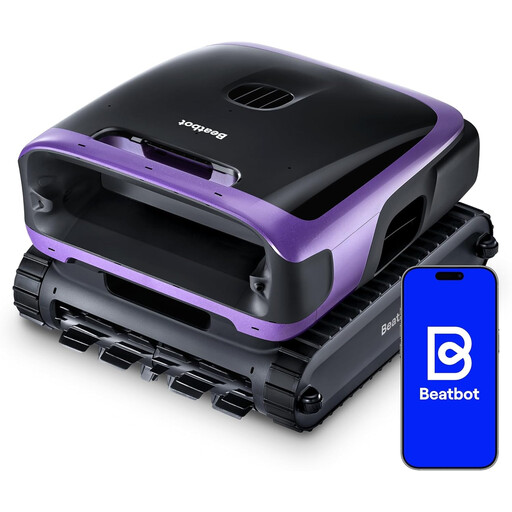
Why it's a good fit: For owners of large pools (up to 300 m?) who prioritise runtime, debris capacity, and advanced features. This model is aimed at users seeking a comprehensive and technologically leading cleaning solution.
This model counters all pitfalls with superior technology: A 10,000 mAh battery provides up to 5 hours of floor cleaning, according to the manufacturer. Its navigation is optimised for large areas, and the JetPulse system even cleans the water's surface—a feature most other robots don't offer.
Cleans the floor, walls, waterline, and water surface. The suction power is rated at 25,700 LPH, and the debris container holds 6 litres, reducing maintenance intervals.
You can find a carefully curated selection of devices that meet objective performance criteria in our main category.
A battery's lifespan depends on frequency of use, charging cycles, and storage. Most modern lithium-ion batteries are designed for several hundred charging cycles, which corresponds to a lifespan of several years with seasonal use. The actual runtime per charge varies between 60 and 270 minutes, depending on the model and the selected cleaning mode (e.g., floor-only or floor and walls).
Yes, many higher-end models are designed to do so. Whether a robot can climb walls depends on its suction power, downward pressure, and method of propulsion (wheels vs. caterpillar treads). Look for product descriptions that explicitly mention the ability to clean walls and the waterline. This is a crucial feature for comprehensive pool hygiene.
App control offers significant added value. It allows you to schedule cleaning cycles, select different modes (e.g., floor-only, wall-only, automatic) remotely, and monitor the robot's status. On some models, firmware updates (OTA) can also be installed via the app, improving the device's performance and functionality over time.