
Lieferung heute & morgen

Qualitätsgarantie

Willkommens-Angebote freischalten: KOSTENLOSE Lieferung | Bis zu 80 % RABATT | Kostenlose 30-Tage-JoyPlus-Testphase
App herunterladen
Sand on the floor, leaves after a windy day, or deposits on the steps: a suitable pool cleaner significantly reduces the manual maintenance effort. However, the choice should not be based solely on battery promises, app features, or eye-catching performance figures. What really matters are pool size, cleaning surfaces, filter structure, and actual handling.
“Up to” 60, 120, or 180 minutes describes a maximum value under certain conditions. When climbing walls, dealing with heavier dirt, or using multiple cleaning modes, the actual runtime can differ. A small cordless pool cleaner may be sufficient for an above-ground pool, whereas a large in-ground pool will require several cleaning cycles.
So check the following:
Not every pool robot is a pool wall cleaner or waterline cleaner. Models designed for flat, level floors work differently from devices that climb walls and brush the waterline. For an above-ground pool with a flat floor, a floor robot is often sufficient. An in-ground pool with steps, slopes, or different surfaces needs a suitably specified construction.
A large filter basket can hold many leaves, but still needs regular emptying. A fine filter traps smaller particles like dust or sand, but can clog more quickly. So pay attention to filter fineness in micrometres, filter volume, and how the filter element is cleaned. A pool vacuum with an easily removable filter is often more practical in daily use than a hard-to-reach filter system.
For small above-ground pools, children's pools, and whirlpools, a manual pool vacuum or electric pool vacuum is suitable. These devices are guided deliberately over the floor, steps, and corners. For larger areas, a cordless pool robot that autonomously covers the floor is a good option.
Take note of the manufacturer's specifications:
A cordless pool cleaner avoids cables in the water and makes targeted cleaning easier. With an electric pool vacuum, the device should be fully submerged before the motor is switched on. Charging should only be done out of the water and with the supplied charger.
For daily use, the following details are also relevant:
A pool robot app control can enable cleaning modes, schedules, or status displays. However, it does not replace checking the filter and brushes.
Brushes loosen stubborn deposits, while the suction transports the loosened dirt into the filter. For robots that clean walls and the waterline, the drive, sensors, and grip on the respective pool surface are crucial. Check whether the manufacturer approves the device for liners, tiles, concrete, or other surfaces.
The IPX8 rating describes protection against continuous submersion under specified conditions. It does not mean that the charger or charging station can go into the water. No people or pets should be in the pool during cleaning.
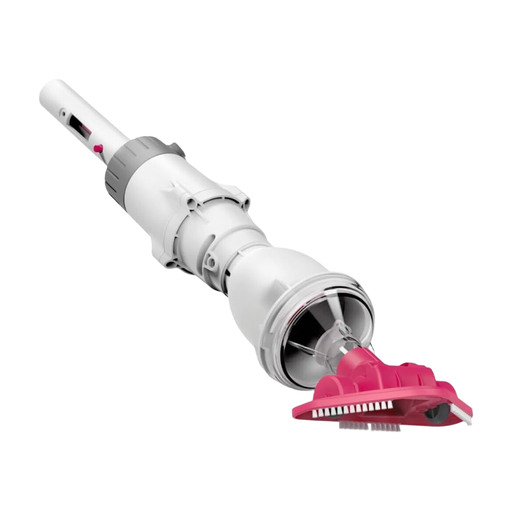
Why this product fits the profile: According to the product specifications, this manual, cordless pool vacuum is intended for pools, children's pools, and whirlpools up to 10 m³. With a standard pole and brush attachment, it is suitable for targeted floor, corner, and step cleaning.
The clearly stated suitability up to 10 m³ prevents the device from being planned for a significantly larger pool. The filter chamber holds 0.42 litres.
Cordless operation, up to 30 minutes runtime, and a stated filter volume of 0.42 litres.
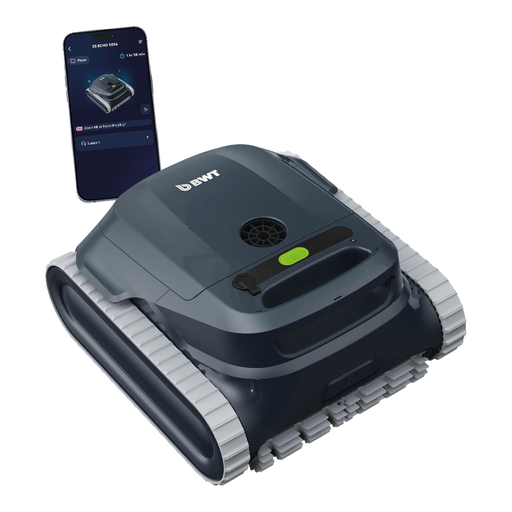
Why this product fits the profile: According to the product description, this cordless pool robot is designed for floor, walls, and waterline. App control, multiple cleaning cycles, and a stated runtime of up to three hours offer flexible settings for regular maintenance.
The specified cleaning surfaces make it clear that this is not just a floor cleaner. The 180-µm filter and 4-litre filter capacity are concretely stated.
Replaceable battery, app control, ultrasonic navigation, and floor, wall, and waterline cleaning.
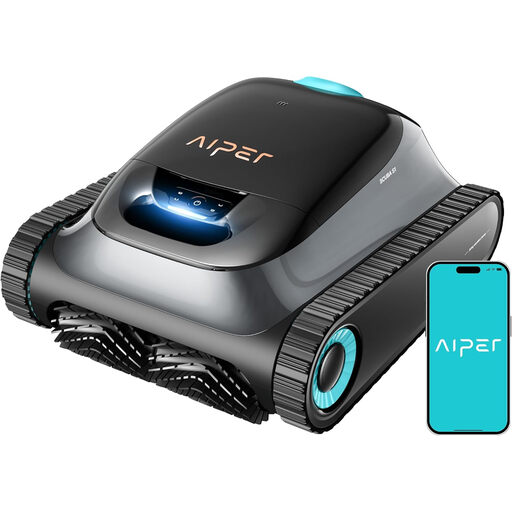
Why this product fits the profile: According to the product specifications, this model is intended for in-ground and above-ground pools and covers the floor, walls, waterline, and shallow areas. App control and multiple modes support regular maintenance.
The specifications distinguish between a standard and an ultra-fine filter. This helps categorise coarse dirt, sand, and fine particles rather than relying on generic filter advertising.
Stated runtime of up to 240 to 270 minutes in Eco mode, 3-µm filter, and app functions with scheduling.
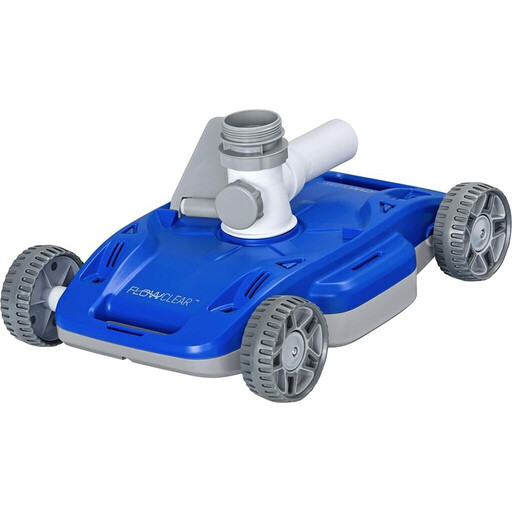
Why this product fits the profile: According to the product description, this automatic pool cleaner uses the suction power of the filter pump and is intended for above-ground pools up to 457 cm in diameter. This eliminates the need for a separate battery.
The required pump flow rate of at least 3,785 l/h and the 7.5 m hose are concretely stated. Before buying, you can check the compatibility of your existing system.
Automatic floor cleaning, 7.5 m hose, filter bag, and a corrosion-resistant ABS housing according to the product specification.
We have compiled a complete, regularly updated list of products that fully meet these strict selection criteria and the safety regulations in force in the EU.
After each use, rinse the filter chamber, filter element, and brushes with clean water. Allow the parts to dry completely and store the pool cleaner protected from direct sunlight. For battery-operated devices, the following applies:
For small, shallow above-ground pools, a manual pool vacuum or a compact floor robot is often sufficient. What matters are a low weight, a suitable runtime, and the stated pool size. For walls and the waterline, the device must be explicitly approved.
The lifespan depends on factors such as charge cycles, storage, water temperature, and maintenance. Follow the manufacturer's charging instructions, do not leave the robot in the water permanently, and store it dry. A replaceable battery can make long-term maintenance easier.
The power consumption depends on the battery capacity, charging time, and frequency of cleaning. A cordless model does not require a continuous power supply in the pool, but must be charged after use. With an automatic cleaner connected to the filter pump, the additional energy requirement depends on the existing pump and its operating time.