
Lieferung heute & morgen

Qualitätsgarantie

Willkommens-Angebote freischalten: KOSTENLOSE Lieferung | Bis zu 80 % RABATT | Kostenlose 30-Tage-JoyPlus-Testphase
App herunterladen
A pool robot can make the regular maintenance of an in-ground or above-ground pool much easier. However, the devices vary considerably in terms of cleaning coverage, filtration, runtime and operation. A low price alone says little about whether an automatic pool robot is suitable for your pool.
Figures such as “up to five hours” often refer to a specific cleaning mode, usually floor cleaning. Wall or waterline programmes may require more energy. So check which mode the runtime applies to and whether the pool area can be covered within a single charging cycle.
A pool robot for floors and walls must be able to cope with the pool material, shape and transition between the floor and wall. Adhesion can vary in liner pools, on smooth tiles, uneven surfaces or in shallow areas. The minimum water depth is also relevant: some devices require at least 20 or 30 centimetres.
Leaves and larger particles can be collected with a standard filter. Fine sand, dust and certain algae residues, on the other hand, require a finer filtration stage. A pool robot with dual filtration can be more practical here, provided the fine filter is cleaned regularly and replaced when necessary. The filter fineness should be specified in microns, rather than described only with advertising claims such as “particularly clean”.
Look for a clear indication of whether the device cleans only the floor, also the walls or even the waterline. A pool robot with waterline cleaning requires a suitable drive design and sufficient grip. Sensors and systematic movement patterns can be useful for pools with complex shapes. App control is particularly appealing if cleaning modes, schedules or the device status can be adjusted conveniently.
Filter fineness is specified in microns. A lower figure generally indicates finer filter openings. However, this comes with more cleaning effort and potentially shorter runtime. For a pool with lots of leaves, a sufficiently large filter basket is also important, so that the pool vacuum robot does not need emptying after only a short time.
A combination of coarse and fine filters is practical: larger particles are retained first, while an ultra-fine filter collects smaller deposits. Also check whether replacement filters are available.
A cordless pool cleaner eliminates the need for a long power cable in the pool. However, the battery must be charged after use and stored in a dry place. Check:
The device should be switched off before carrying out maintenance. The charging connection must remain dry. The products may only be operated within the water temperature range specified in the relevant instructions.
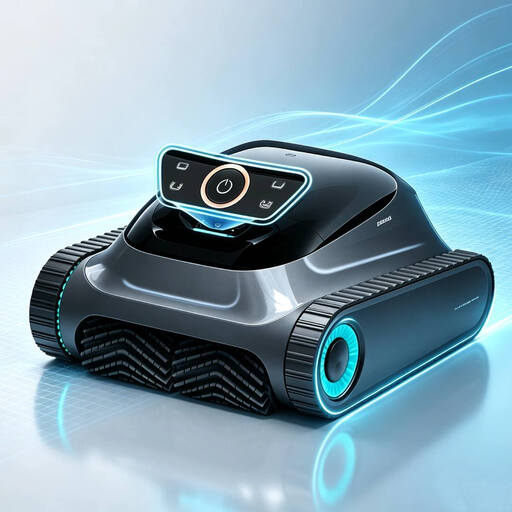
Why this product suits the profile: This automatic pool robot is designed for in-ground and above-ground pools. It offers app control, several cleaning modes and a stated Eco runtime of up to 240 to 270 minutes. According to the product description, this is a tested open-box device that may show minor signs of use.
The product details explicitly list floor, wall and waterline cleaning, as well as dual filtration with 3-micron and 180-micron filters. The open-box status should nevertheless be taken into account before buying.
App control with scheduling, OTA updates and a replaceable dual-layer filter system.
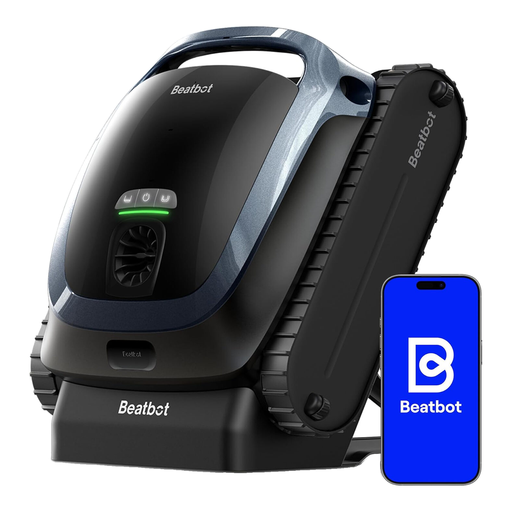
Why this product suits the profile: For owners of in-ground pools with regular maintenance needs, the stated waterline cleaning, Smart Surface Parking function and app set-up are relevant features.
The specifications distinguish between up to four hours of floor cleaning and up to 3.5 hours for walls and the waterline. This means the runtime is not presented as a blanket figure for all programmes.
Double-pass waterline scrubbing, 16 sensors according to the product description and a high-capacity filter basket.
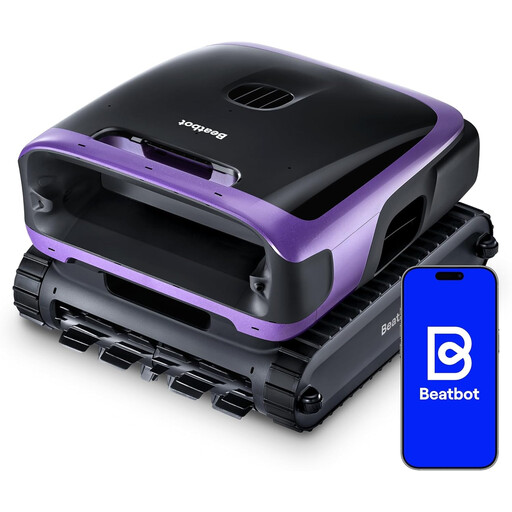
Why this product suits the profile: This model is aimed at users with larger pools and frequent debris. It is specified as covering up to 300 m², with a battery capacity of 10,000 mAh and a six-litre debris container.
The specifications separately state the maximum area, runtime of up to five hours and filter capacity. This makes it easier to check whether the size and intended use really match.
Stated suction power of 25,700 l/h, water-surface parking function and cleaning for floors, walls, the waterline and shallow areas from 20 cm.
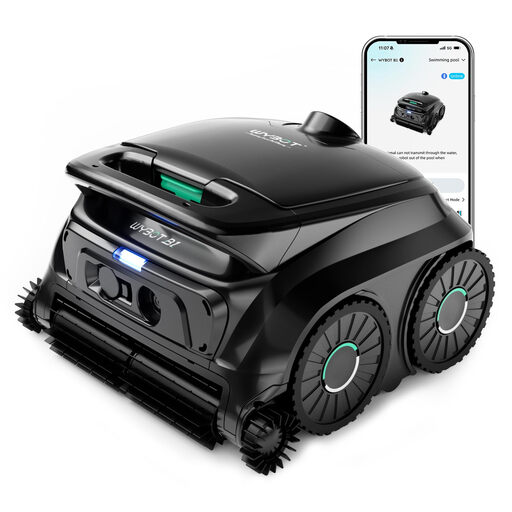
Why this product suits the profile: According to the product description, this compact model is designed for smaller in-ground and above-ground pools. Floor and wall cleaning, app control and a stated runtime of up to 100 minutes cover typical maintenance cycles for smaller pools.
The stated target group and runtime are intended for smaller pools. This helps prevent planning to use a compact device for a considerably larger pool area.
Side-mounted front brushes for edges and corners, self-parking function and removable battery according to the product details.
We have put together a complete, regularly updated list of products that fully meet these strict selection criteria and the safety regulations applicable in the EU.
The ongoing costs of a pool robot mainly consist of electricity, replacement filters and, where applicable, brushes or battery components. Actual costs depend on charging power, cleaning intervals and length of use. A filter basket should be checked and rinsed after every cycle. Fine filters can become clogged if cleaned incorrectly, reducing suction power as a result.
After drying, store the robot away from direct sunlight and frost. Use only the specified charger and do not open the battery yourself. No one should be in the pool while it is being cleaned. Keep children and pets away from the device outside the pool and from the charging station.
It is not possible to give a reliable general lifespan. It depends on the battery, filter maintenance, water chemistry, storage and frequency of use. Check the warranty terms, availability of replacement filters and whether the battery can be replaced.
This is possible if the manufacturer approves the relevant pool type. The key factors are the pool shape, wall material, minimum water depth and ability to clean the walls. For soft or highly flexible pool walls, compatibility should be checked before buying.
Power consumption depends on battery capacity, charging frequency and charging efficiency. There are also costs for replacement filters and wear parts. A device with a long runtime can reduce the number of charging cycles, but it is not automatically cheaper to run overall. The decisive factor is whether the filter size, cleaning coverage and pool area are suitably matched.