
Lieferung heute & morgen

Qualitätsgarantie

Willkommens-Angebote freischalten: KOSTENLOSE Lieferung | Bis zu 80 % RABATT | Kostenlose 30-Tage-JoyPlus-Testphase
App herunterladen
A tent that pitches itself—the promise of a pop-up tent is equally tempting for casual campers, families, and festival-goers. No more fumbling with poles, no complicated sorting of parts. But the post-purchase reality often looks different: the supposed instant tent turns out to be a leaky, unstable structure that’s a struggle to pack away.
As your Joybuy Product Recommendation Officer, I see it as my duty to save you from exactly this kind of disappointment. Instead of falling for exaggerated marketing claims, you should focus on verifiable facts. Here are the three most common traps to avoid when buying a pop-up tent.
Many manufacturers advertise their tents as "waterproof" without specifying what that means. A tent that can withstand a light drizzle might fail during a typical summer thunderstorm, resulting in soaked gear and an abrupt end to your trip.
A quickly pitched tent is useless if it turns into a sauna at the first sign of sun. Budget models often skimp on ventilation openings or use materials without UV protection, leading to unbearable heat build-up inside and significantly reducing sleeping comfort.
The setup might be over in seconds, but the takedown often becomes a test of patience. Classic throw-style tents with spring steel frames, in particular, require a special folding technique that is nearly impossible to master without practice. The tent ends up not fitting back into its bag and gets damaged.
To avoid buyer's remorse, focus on three core technical features. These objective criteria will help you separate the wheat from the chaff and find a reliable tent for your needs.
The water resistance of a tent fabric is measured in millimetres of hydrostatic head (mm). This value describes the water pressure the material can withstand before moisture penetrates.
Also, look for sealed seams, as these are often the weak points.
Modern tents offer more than just rain protection. A crucial factor for comfort is the outer shell material.
The term "Pop-Up Tent" covers various systems. The mechanism is crucial for stability and ease of use.
Based on the criteria above, we have identified models that are well-suited for specific user profiles.
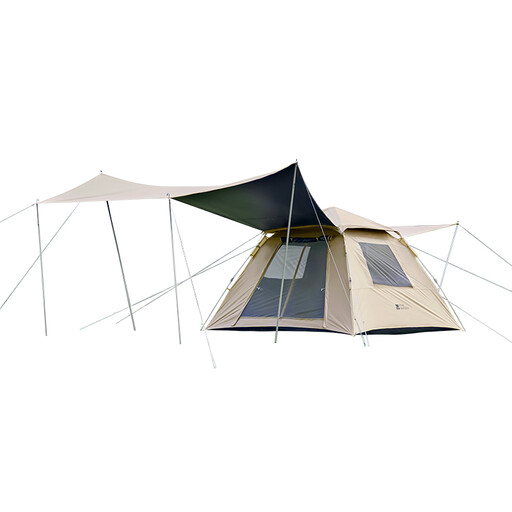
Why This Fits Their Persona: Ideal for a family camping tent where comfort and restful sleep are top priorities. The blackout technology ensures darkness in the morning, which is especially beneficial for children. The spacious interior offers ample room.
Unlike tents with vague waterproofing claims, this model offers a realistic PU2000mm hydrostatic head. The well-designed five-sided ventilation with large mesh windows effectively prevents heat build-up, a common weakness in basic pop-up tents.
Complete darkness thanks to a 6-layer fabric for undisturbed sleep. A sturdy fibreglass automatic frame that, according to the manufacturer, can withstand winds up to force 6.
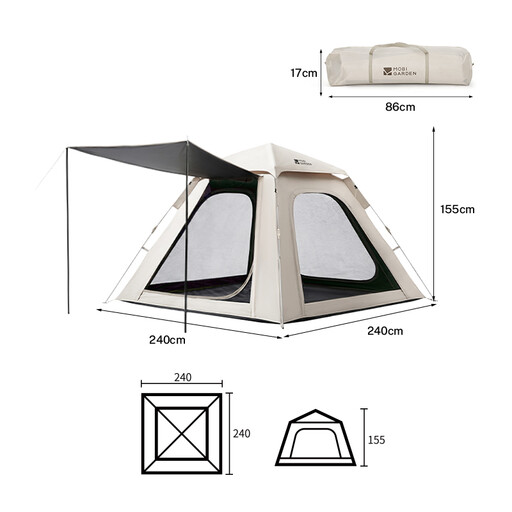
Why This Fits Their Persona: Perfect for festival-goers who want to sleep in after a long night. The extremely fast setup and straightforward takedown save valuable time. The discreet grey colour is practical and less prone to showing dirt.
While many throw-style tents become a test of patience during takedown, this model's automatic frame is designed for easy folding. The UPF50+ UV protection shields the material from days of sun exposure, preventing the tent from becoming brittle after a festival.
Automatic pop-up mechanism for setup in seconds. The blackout tent blocks light and heat for maximum sleeping comfort at any time of day. Ample space for up to 4 people (4-person pop-up tent) plus luggage.
We have compiled a complete, up-to-date list of products that fully meet these strict selection criteria and relevant safety regulations.
The level of waterproofing depends directly on the stated hydrostatic head. A rating of PU2000mm combined with sealed seams offers reliable protection during most rain events in our climate. However, for expeditions in extreme weather, tents with higher ratings are necessary. Always check the weather forecast before any trip.
This is a valid concern. Models with an automatic fibreglass frame, like the ones featured here, are generally much easier to take down than classic throw-style tents with a flexible steel ring. The mechanism is more logical, requiring less force and no complicated folding technique. Nevertheless, it's always a good idea to practice the takedown once at home.
A blackout tent offers two key comfort advantages. First, it blocks almost all sunlight, allowing for longer, deeper sleep—ideal for late sleepers or families with young children who take afternoon naps. Second, the dark coating reflects solar radiation, which keeps the tent's interior significantly cooler on hot days compared to conventional tents.