
Lieferung heute & morgen

Qualitätsgarantie

Willkommens-Angebote freischalten: KOSTENLOSE Lieferung | Bis zu 80 % RABATT | Kostenlose 30-Tage-JoyPlus-Testphase
App herunterladen
A spontaneous trip to the lake, a weekend at a festival, or a relaxing day at the beach—a quick-setup tent is a practical solution for many outdoor activities. However, especially with pop-up and instant tents, there are significant differences in quality that often only become apparent after purchase. Many models over-promise and under-deliver, particularly when it comes to protection from sun and rain. This guide will help you navigate the common pitfalls and make an informed decision.
Before you choose a model, you should be aware of the most common flaws that can quickly turn a promising product into a disappointment.
To avoid the problems mentioned above, you should carefully check three technical features before buying. These define the durability and functionality of your tent.
The Ultraviolet Protection Factor (UPF) for textiles is the most reliable indicator of sun protection. Look for a rating of UPF 50+. This standard means the material is specified to block more than 99% of UV radiation. Unlike vague marketing claims, this value offers a verifiable level of protection.
The waterproofness of a tent fabric is indicated by its water column rating in millimetres (mm). A value of PU2000mm (polyurethane coating, 2000 mm water column) is considered reliably waterproof for typical European weather conditions. Equally important are sealed seams, as moisture can quickly penetrate through unprotected stitch holes during rain. A waterproof camping tent should feature both.
Modern automatic tents often use a sturdy fibreglass pole system that opens like an umbrella. This design is generally more wind-resistant and durable than the classic, disc-shaped pop-up tents that unfold with a twisting motion. For a comfortable climate inside the tent, a good ventilation concept is essential. Look for models with large, opposing mesh windows and doors. These allow for effective cross-ventilation while keeping insects out.
Here are some product recommendations tailored to different user profiles that meet the quality criteria mentioned above.
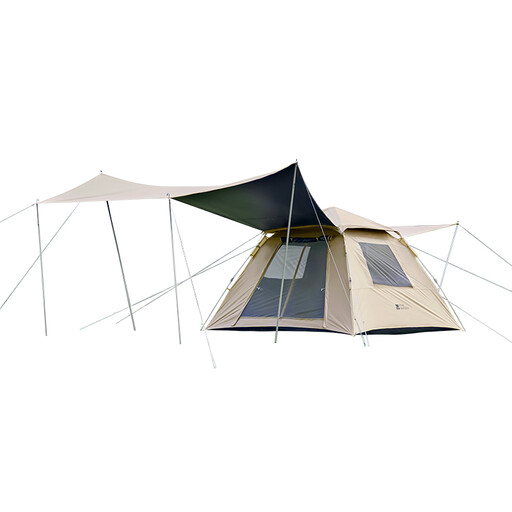
Why This Fits Their Persona: Ideal for families looking for a straightforward and spacious shelter for camping trips or picnics. Accommodates 2-5 people and combines rapid setup with a high level of protection.
The 6-layer blackout fabric provides UPF 50+ protection, blocking ≥99.9% of UV rays according to the manufacturer. The ventilation system, with five large mesh panels, effectively prevents heat buildup.
Automatic fibreglass frame for quick setup and stability; PU2000mm waterproof rating; generous interior space with an additional tarp for an extended, sheltered outdoor area.
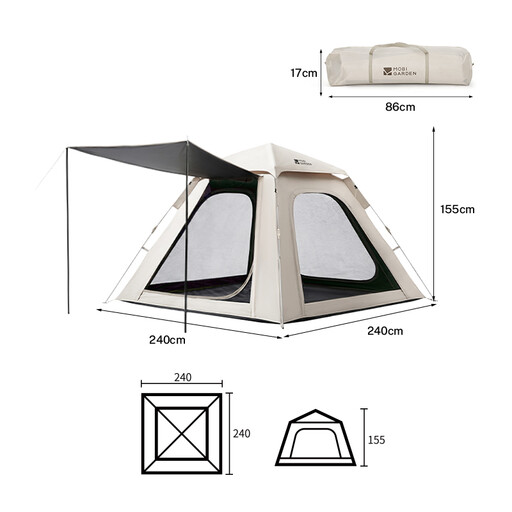
Why This Fits Their Persona: Perfect for users who value a robust construction and thoughtful design details. This 2-5 person tent is engineered for durability and functionality in various weather conditions.
The heavy-duty fibreglass automatic frame is rated for wind forces up to level 6, avoiding the typical instability of budget models. The full blackout coating is paired with a five-sided ventilation system.
Square interior of approx. 5.76 m? for optimal space utilisation; PU2000mm water column with sealed seams; UPF 50+ protection from multi-layer composite fabric.
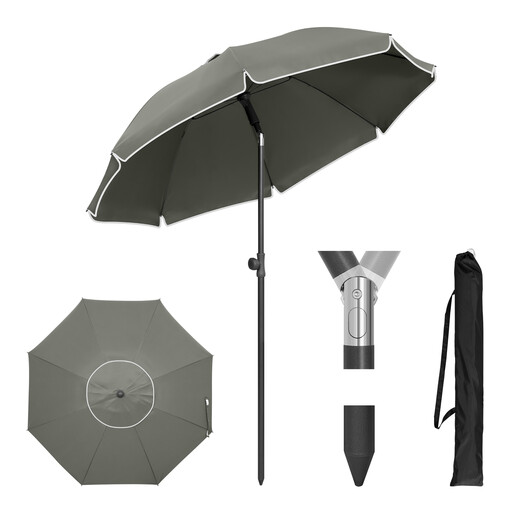
Why This Fits Their Persona: An excellent alternative to a classic beach shelter for anyone needing an extremely portable and flexible sun protection solution for the balcony, garden, or a day at the beach.
It offers clearly defined UPF 50+ protection that blocks over 99% of UV rays. As an open parasol, it inherently avoids any heat buildup and provides maximum ventilation.
Extremely lightweight and portable thanks to the included carry bag; tool-free setup in about 30 seconds; flexible positioning with tilt and height adjustment.
We've compiled a complete, up-to-date list of products that fully meet these strict selection criteria and safety requirements.
Waterproofness depends directly on the stated water column rating and the quality of the construction. A rating of PU1500mm to PU2000mm is sufficient for most rain showers in Europe. Make sure the product description explicitly mentions "taped seams," as this is a critical weak point for water ingress. Without sealed seams, even a fabric with a high water column rating can leak.
Yes, but only in combination with good ventilation. The dark coating blocks sunlight, reducing the greenhouse effect inside the tent. However, without sufficient air circulation, the air warmed by body heat and the outside temperature will become trapped. An effective blackout tent must therefore have large, strategically placed mesh windows that allow for cross-ventilation to exhaust the warm air.
Takedown is often more challenging than setup. There is no universal method, as the mechanisms vary. The most important advice is to follow the manufacturer's instructions carefully and to practise taking it down at home once before your first trip. Modern automatic tents with a central hub system are often more intuitive to collapse than the classic, disc-shaped pop-up tents, which require a specific folding and twisting motion.