If you want to eat popcorn right at the gate, choose a ready-to-eat option; however, that doesn’t automatically mean it’s high in protein. If protein is your main consideration when choosing a snack, compare the nutritional information with that of other ready-to-eat snacks, which don’t have to be popcorn. The microwave popcorn options described by REWE and EDEKA need to be cooked in a microwave before eating.
Who is this choice relevant to?
Travellers who prioritise protein
If you’re choosing a snack after a workout or on a long journey, the protein content per 100 g and per pack is more useful than a claim on the front of the pack. Whether a product meets the EU requirement for a “high protein” claim depends on the proportion of its total energy value that comes from protein.
Travellers without access to cooking facilities
For a wait, boarding or a connection, you need a snack you can eat straight away. The microwave popcorn varieties described by REWE and EDEKA need to be prepared first.
Travellers keeping an eye on ingredients and nutritional values
If you want to avoid milk ingredients or compare salt and sugar, the protein figure alone isn’t enough. The information varies between the popcorn varieties and protein pop chips considered here.
What should you look for when buying?
Ready-to-eat popcorn
A good choice if: You want to eat popcorn at the airport without having to prepare it.
The trade-off: The product type alone doesn’t prove that it’s high in protein; compare the nutritional information for the specific variety.
Ready-to-eat protein snacks
A good choice if: The protein content matters more to you than popcorn made from maize.
The trade-off: These products aren’t popcorn. The KoRo Protein Pop Chips Sour Cream listed by REWE also contain milk ingredients and provide 2,9 g of salt per 100 g.
Microwave popcorn
A good choice if: You have access to a suitable microwave before eating.
The trade-off: An unopened bag isn’t a ready-to-eat snack for the gate; the bag and its contents may be hot after cooking.
When choosing a crunchy snack for your flight and keeping protein in mind, first decide whether popcorn itself is important or whether another type of product would also suit you. Then consider whether it’s ready to eat, along with its nutritional values and ingredients, to choose the right variety.
| Criteria |
What to check |
Who it matters to |
| Protein content |
Compare protein per 100 g and per pack. For a “high protein” claim, EU Regulation (EC) No 1924/2006 requires at least 20% of the energy value to come from protein. |
After a workout, I want to know how much protein the snack contains in the pack I’m actually buying. For around 36% of consumers, protein content is the top priority when choosing. |
| Ready-to-eat convenience |
Check the product type: popped popcorn and ready-to-eat snacks don’t need a microwave; microwave popcorn does. |
During a connection, I want to be able to eat my snack without using an appliance. Around 29% of consumers value this most. |
| Ingredients and nutritional values |
Read the ingredients list and nutritional information, particularly details of milk ingredients and the salt and sugar content per 100 g. |
If I avoid certain ingredients or want to keep an eye on salt and sugar, this determines which variety I choose. For around 21% of consumers, this check is a priority. |
| Popcorn as a product type |
Tell popcorn made from maize apart from protein pop chips or flips; if you choose popcorn, also check whether it’s already popped. |
Popcorn itself matters more to me than getting as much protein as possible. For around 14% of consumers, this preference makes the difference. |
Which buying mistakes can you avoid?
-
Assuming popcorn is high in protein just because it’s popcorn
The microwave popcorn varieties described by REWE and EDEKA provide 7,5 to 8,9 g of protein per 100 g. The number of grams alone doesn’t tell you whether the product meets the requirement for a “high protein” claim.
Compare the nutritional information for the specific variety. Under EU Regulation (EC) No 1924/2006, the requirement for this claim relates to the proportion of the total energy value that comes from protein.
-
Planning to have microwave popcorn at the gate
The Chio, GUT&GÜNSTIG, Heimatgut and REWE Beste Wahl varieties considered here need to be cooked in a microwave before eating.
If you can’t be sure of having access to a suitable microwave while travelling, choose a product that’s explicitly labelled as ready to eat. Also follow the heat warnings on the pack when preparing microwave popcorn.
-
Comparing only the protein content
The KoRo Protein Pop Chips Sour Cream listed by REWE contain milk ingredients and provide 2,9 g of salt per 100 g. REWE Beste Wahl’s sweet microwave popcorn provides 22 g of sugar per 100 g.
For the specific pack, check the ingredients, allergens, salt and sugar as well as the protein content. Make sure you compare figures on the same basis, such as per 100 g.
-
Assuming a snack is allowed in your hand luggage
Choosing a ready-to-eat snack doesn’t automatically answer questions about hand-luggage rules, especially if you also want to take dips or drinks with you.
BER Airport recommends checking your airline’s rules and the latest guidance from the German Federal Police before you travel.
Brands and product ranges to consider
The details below relate to the specific products named, not the brands’ entire ranges.
KoRo
Protein Pop Chips Sour Cream are ready-to-eat crisps, not popcorn.
- REWE gives the protein content for this variety as 21 g per 100 g.
- This variety contains milk ingredients and provides 2,9 g of salt per 100 g.
Chio
The salted microwave popcorn is an option if you’re somewhere with a microwave.
- REWE gives the protein content for this variety as 8,9 g per 100 g, with 11 g of fibre.
- This variety needs to be cooked and provides 1,5 g of salt per 100 g.
GUT&GÜNSTIG
The salted microwave popcorn is sold in a pack of three.
- EDEKA gives the protein content for this variety as 8,1 g per 100 g.
- It needs a microwave and provides 2,5 g of salt per 100 g.
REWE Beste Wahl
The sweet microwave popcorn is an option to prepare, not something to eat straight away at the gate.
- REWE gives the protein content for this variety as 7,5 g per 100 g.
- It provides 22 g of sugar per 100 g; hot steam may escape when you open it after cooking.
Heimatgut
The salted organic microwave popcorn is an option if you’re somewhere with a microwave.
- REWE gives the protein content for this variety as 7,8 g per 100 g, with 11 g of fibre.
- It needs to be cooked and provides 2 g of salt per 100 g. Hot steam and oil may escape when you open it.
A crunchy alternative at Joybuy
If you’re looking for a ready-to-eat, crunchy snack for your journey and aren’t set on popcorn, flips are another option. The following product is in this category.
 No image available
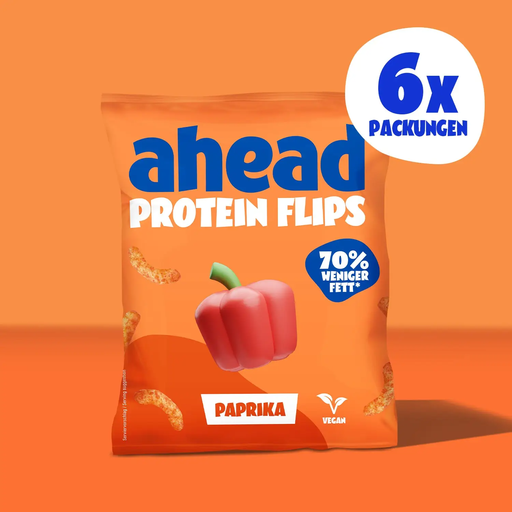
ahead Protein Flips Paprika, 6 × 50 g
If you want something to nibble on at the gate without preparing it, and flips are an option instead of popcorn, this product is described as ready to eat.
The pack contains six 50 g bags. These paprika flips aren’t popcorn; check the ingredients and nutritional information on the pack to see if they suit you.
View at Joybuy
Frequently asked questions
Is ordinary popcorn a high-protein snack?
Not automatically: what matters is the proportion of the total energy value that comes from protein, not just the number of grams per 100 g. For a “high protein” claim, EU Regulation (EC) No 1924/2006 requires at least 20% of the energy value to come from protein; check the information for the specific product.
Can I eat microwave popcorn straight away at the gate?
The microwave popcorn varieties considered here aren’t ready to eat before cooking. Only plan to take them if you’ll have access to a suitable microwave before eating, and follow the pack’s heat warnings when opening them.
What should I check before taking popcorn in my hand luggage?
Before travelling, check your airline’s rules and the latest guidance on security screening. BER Airport also recommends this; remember to check the rules for any dips or drinks separately.
How do I compare protein content in different pack sizes?
First compare the protein content per 100 g, then consider how much you’re likely to eat from the pack. Under EU food labelling rules, the nutrition declaration for packaged foods includes information such as energy, fat, sugars, protein and salt.


