If you want to decide how much oil and which toppings go into the popcorn for a birthday party, popping corn gives you that flexibility. However, the finished recipe won’t automatically be low in fat. If you want popcorn that’s ready to serve in bowls or cups, Chio lists 6.1 g of fat and 52 g of sugar per 100 g for its Ready Made Sweet variety. For warm microwave popcorn, you’ll need a suitable appliance and should compare the nutritional information for each variety.
Which preparation method suits you?
Hosts with time to make their own popcorn
If you want to control the amount of oil and seasoning, popping corn could be a good choice. Seeberger says its popping corn can be prepared in a pan or a popcorn maker. Make time to prepare it before serving.
Hosts with a microwave
If you want to serve warm popcorn and have a microwave available, microwave popcorn could be a good option. Chio gives a cooking time of two to three minutes for its varieties. According to Chio, the sweet variety contains 12 g of fat per 100 g and the salted variety 17 g.
Hosts who want to serve portions straight away
Ready-to-eat popcorn can be served in bowls or cups without cooking. According to Chio, the nutritional information for Chio Ready Made Sweet lists 6.1 g of fat and 52 g of sugar per 100 g. So don’t just check the fat content.
What to look for when buying
Make your own popcorn from popping corn
A good fit if: You have time before the party and want to choose the oil and seasoning yourself.
Bear in mind: You’ll need a suitable way to prepare it, and the fat content of the popcorn you serve will also depend on the ingredients you add.
Ready-to-eat popcorn
A good fit if: You want to put portions on the table without any preparation.
Bear in mind: According to Chio, Chio Ready Made Sweet contains 52 g of sugar per 100 g as well as 6.1 g of fat.
Microwave popcorn
A good fit if: You want to prepare warm popcorn just before serving and have a microwave to hand.
Bear in mind: Handle the bags with care after heating; fat content varies between varieties.
| What to consider |
What to check when buying |
Who it matters to |
| Fat and oil |
For packaged popcorn, compare the fat content per 100 g. If you make your own, the oil you add matters too. |
I want to choose how much oil goes into the popcorn and am happy to spend time preparing it. For around 36% of consumers, this control would be the top priority. |
| Portions and serving |
Check the pack size and the amount you plan to serve, as well as whether the popcorn is ready to serve straight away. |
I want to fill bowls or cups for several guests without making them wait. Around 29% of consumers would prioritise serving convenience. |
| Preparing it warm |
Check that it’s suitable for the microwave, and look at the pack for guidance on appliance wattage and cooking time. |
I want to heat the popcorn just before serving and can use a microwave. For around 21% of consumers, warm popcorn would be the priority. |
| Ingredients and labelling |
Read the current ingredients list and allergen information. If needed, compare sugar and salt per 100 g too. |
If guests avoid certain ingredients, I want to choose a suitable pack by checking its label. For around 14% of consumers, this information would be the most important buying consideration. |
Common selection mistakes
-
Assuming that less fat means “low fat”
A lower fat content than another variety doesn’t automatically meet the requirements for a “low fat” claim. According to Chio, Chio Ready Made Sweet contains 6.1 g of fat per 100 g.
EU Regulation (EC) No 1924/2006 sets a limit of no more than 3 g of fat per 100 g for a “low fat” claim on solid foods. If a product is above this limit, compare the actual figures rather than relying on the wording.
-
Focusing only on fat
A lower fat content on its own doesn’t tell you about the other nutritional values. Chio lists 52 g of sugar per 100 g for Ready Made Sweet.
Compare fat, sugar and salt per 100 g, then decide which information is relevant when choosing for your guests.
-
Underestimating how hot microwave popcorn bags get
When making microwave popcorn, remember that the bag and any escaping steam will be hot once it’s cooked. REWE specifically warns about this with its microwave popcorn.
Follow the cooking instructions on the pack and make sure an adult carefully opens the hot bag.
-
Assuming organic or vegan means lower in fat
These terms describe other product features. HEIMATGUT lists 17 g of fat per 100 g for its Bio Popcorn Sweet and Salty variety.
Check nutritional claims and fat content separately. If ingredients or allergens matter to your guests, also read the label on the current pack.
Brands to help you choose
Chio
Chio sells ready-to-eat and microwave popcorn. The nutritional values listed apply to the specific varieties, not the whole range.
- Chio lists 6.1 g of fat per 100 g for Ready Made Sweet; it can be served without any preparation.
- According to Chio, the same variety contains 52 g of sugar per 100 g. For its sweet and salted microwave popcorn, Chio lists 12 g and 17 g of fat per 100 g respectively.
Seeberger
Seeberger sells popping corn for preparing in a pan or a popcorn maker.
- Making your own popcorn lets you choose the ingredients and seasoning you add.
- The fat content of the popcorn you serve also depends on the oil and toppings you use, and preparation takes time.
HEIMATGUT
HEIMATGUT describes its Bio Popcorn Sweet and Salty variety as vegan and gluten-free.
- The product labelling can help if these dietary features are important to your guests.
- HEIMATGUT lists 17 g of fat and 28 g of sugar per 100 g for this variety. These dietary features don’t indicate a lower fat content.
REWE Beste Wahl
REWE Beste Wahl’s sweet microwave popcorn comes in a 300 g pack for preparing warm.
- The pack size can help you plan portions for several guests.
- REWE lists 13 g of fat and 22 g of sugar per 100 g. The bag and steam will be hot after preparation.
Popping corn for homemade popcorn
These popping corn products are suitable for preparing before the party if you want to choose the oil and seasoning yourself. When comparing packs, remember that the ingredients in the finished popcorn will depend on how you prepare it.
 No image available
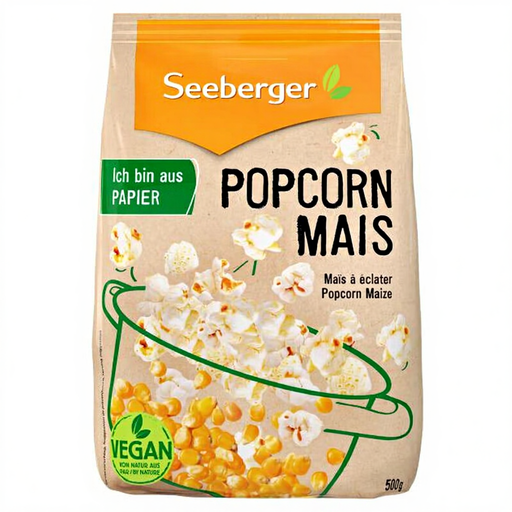
Seeberger popping corn, 500 g
For hosts who want to make and season their own popcorn before the party.
You’ll need oil to prepare it, and the amount you use affects the fat content of the popcorn you serve. If you have allergies, check the current pack labelling.
View at Joybuy
 No image available
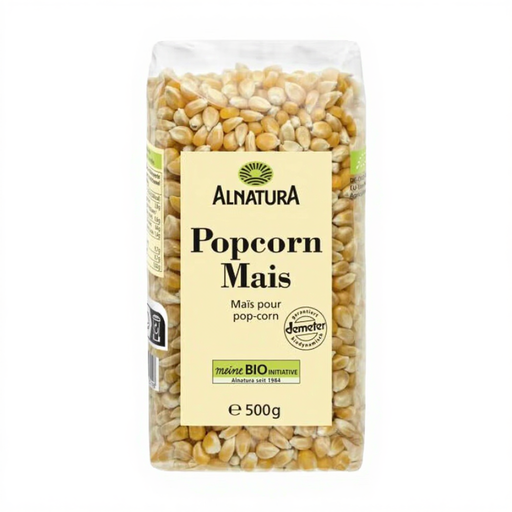
Alnatura organic popping corn, 500 g
For choosing your own seasoning when you plan to prepare it before serving.
Oil is used in preparation. The organic label alone doesn’t tell you the fat content of the finished popcorn; if you have allergies, check the current pack labelling.
View at Joybuy
Frequently asked questions
When can popcorn be labelled “low fat”?
EU Regulation (EC) No 1924/2006 sets a limit of no more than 3 g of fat per 100 g for a “low fat” claim on solid foods. A popcorn product doesn’t meet this requirement simply because it contains less fat than another variety.
How do I compare popcorn varieties in different pack sizes?
First compare the nutritional information per 100 g, then work out separately how much you’ll need for your guests. This way, you won’t confuse the fat or sugar content with the pack size; serving suggestions can also help with your planning.
Is homemade popcorn automatically low in fat?
No. When you make your own popcorn, the fat content also depends on how much oil and which toppings you use. Choose an appliance that’s suitable for your preferred preparation method and follow its instructions.
What should I bear in mind when serving microwave popcorn at a party?
Follow the pack instructions for microwave use and preparation. REWE warns that its microwave popcorn bag and escaping steam will be hot; plan who will safely open and serve the popcorn after heating.
Are “vegan” or “gluten-free” labels enough for checking allergens?
No. If you have food allergies, read the ingredients list and allergen information on the specific pack you’re buying. The German Food Federation explains that ingredients known to cause allergies and requiring labelling are highlighted in the ingredients list; dietary claims don’t replace checking the pack.


