If you don’t have reliable access to a hob or microwave while camping, ready-to-eat popcorn is the simplest option. If you need to avoid certain substances because of an allergy or coeliac disease, check the ingredients, labelling and precautionary allergen information on the specific pack – the fact that it contains corn alone doesn’t answer the question. Popcorn kernels give you more control over the oil and seasoning, but you’ll need a pan, oil and a permitted heat source. Microwave popcorn requires a microwave.
Who needs to know about the differences?
Campers who need to avoid allergens
For them, the ingredients and any possible traces in the specific pack matter more than the flavour. Germany’s Federal Ministry of Agriculture, Food and Regional Identity explains the mandatory labelling rules for the 14 allergens covered by the regulations. The Bavarian Health and Food Safety Authority distinguishes between ingredients added deliberately and substances present unintentionally.
Campers who need to avoid gluten
For people with coeliac disease, the fact that corn is the main ingredient isn’t enough. A gluten-free claim and any precautionary information about possible traces must apply to the exact variety you buy. The term ‘gluten-free’ is regulated under EU Regulation (EU) No 828/2014.
Campers without a kitchen setup planned
Ready-to-eat popcorn doesn’t need any equipment. Popcorn kernels, on the other hand, need a pan, oil and a heat source; microwave popcorn is only an option if there’s a microwave available at your campsite.
What should you look for when buying?
Ready-to-eat popcorn
A good choice if: You want to take a snack you can eat straight away, without cooking equipment.
Bear in mind: Ingredients and possible traces vary by variety.
Popcorn kernels
A good choice if: You can choose your own oil and seasoning, and are allowed to cook at your campsite.
Bear in mind: You’ll need a suitable pan, oil and a heat source.
Microwave popcorn
A good choice if: There’s a suitable microwave available at your campsite.
Bear in mind: You won’t be able to prepare the pack there without a microwave.
When choosing popcorn for camping, consumers tend to have one main priority: suitable labelling, the recipe, how it’s prepared or how well it keeps over several days.
| Priority |
What to check when buying |
Who it matters to |
| Allergens |
Ingredients, highlighted allergens and any possible traces listed on the specific pack. |
If you need to avoid certain allergens, the word ‘popcorn’ alone isn’t enough to help you decide. Around 28% of consumers put checking for allergens first. |
| Gluten-free claim |
The labelling on the exact variety, as well as the ingredients and any information about possible traces of gluten. |
If you have coeliac disease, you shouldn’t rely on corn being the main ingredient. For around 22% of consumers, the suitability of the specific pack for a gluten-free diet comes first. |
| Vegan or simple recipe |
Vegan labelling and the ingredients list; for sweet varieties, you may also want to compare sugar per 100 g. |
If you want to avoid animal-derived ingredients or choose a simple recipe, don’t assume that this means the product has other qualities too. The recipe is the main priority for around 17% of consumers. |
| Preparation |
Whether you’ll have access to a cooking area, pan and oil, or a suitable microwave. |
If you’re camping without reliable kitchen facilities, your snack needs to work with the equipment you’ll actually have. Around 22% of consumers make this their main consideration. |
| Storage and packaging |
Storage instructions; if there’s a specific product recall, check the product and batch details. |
If you’re away for several days, you’ll want to store opened packs properly and be able to check whether any warnings apply to them. Around 11% of consumers put these packaging considerations first. |
Common selection mistakes
-
Assuming corn means ‘guaranteed allergen-free’
Packaged popcorn may contain other ingredients too. The Bavarian Health and Food Safety Authority says that mandatory allergen labelling applies to ingredients added deliberately; the absence of a precautionary trace warning doesn’t prove that accidental contamination is impossible.
Check the ingredients, highlighted allergens and any precautionary trace information on each specific pack. If you have a severe allergy, follow the advice given by your healthcare professional.
-
Assuming the same labelling applies to every variety from a brand
XOX describes its Sweet & Salty variety as gluten-free, while also warning that it may contain traces of gluten and milk. Information for one variety doesn’t automatically apply to other recipes from the same brand.
Check the labelling on the exact variety and pack you want to take with you, even if you already know another product from the brand.
-
Packing popcorn kernels or microwave popcorn without checking your equipment
Alnatura’s instructions for its popcorn kernels call for a pan and oil. Seeberger’s sweet microwave popcorn, on the other hand, needs a microwave.
Before you travel, check which preparation methods will be available and permitted. If you’re not sure, ready-to-eat popcorn can be eaten without any equipment.
-
Judging storage or recall information by the brand name alone
Moisture can make opened popcorn less crisp. A recall notice, on the other hand, applies to the specific products and pack details named in it, not to an entire food category.
Seal any leftovers well and store them in a dry place. If there’s an official warning, check the product and batch details against your pack.
Brands and product types to consider
HEIMATGUT
HEIMATGUT sells ready-to-eat organic popcorn. The sweet variety featured here comes in a 30-g pack.
- For this variety, HEIMATGUT lists three ingredients and describes it as vegan and gluten-free.
- The ‘Allergens: none’ statement is the manufacturer’s information for this specific variety, not a guarantee for every individual allergy situation.
XOX
XOX sells ready-to-eat popcorn in a range of flavours. Check the labelling and nutritional information for each variety individually.
- XOX describes the sweet 100-g variety reviewed here as vegan, lactose-free and gluten-free.
- The Sweet & Salty variety warns that it may contain traces of gluten and milk. For the sweet variety reviewed here, XOX lists 57 g of sugar per 100 g.
Alnatura
Alnatura sells organic popcorn kernels to cook in a pan, so you can choose your own oil and seasoning.
- The 500-g variety featured here lists popcorn kernels as its ingredient.
- You’ll need a pan, oil and heat to prepare it. Alnatura warns that the product may contain traces of a range of allergens, including gluten, soya and milk. If you need to avoid these, check the specific pack.
Seeberger
Seeberger sells sweet microwave popcorn. The variety featured here is designed to be prepared in a microwave.
- Seeberger describes this variety as vegan and says to prepare it without the grill function at no more than 1,000 watts.
- You can’t use this type of product while camping without a microwave. Seeberger also warns that cross-contamination is possible.
Popcorn for the pan or microwave at Joybuy
These two products suit different preparation methods: Alnatura popcorn kernels are a good fit for a campsite where cooking is allowed, while Seeberger microwave popcorn is for a campsite with a microwave. In both cases, the labelling on the pack you actually buy is what matters.
 No image available
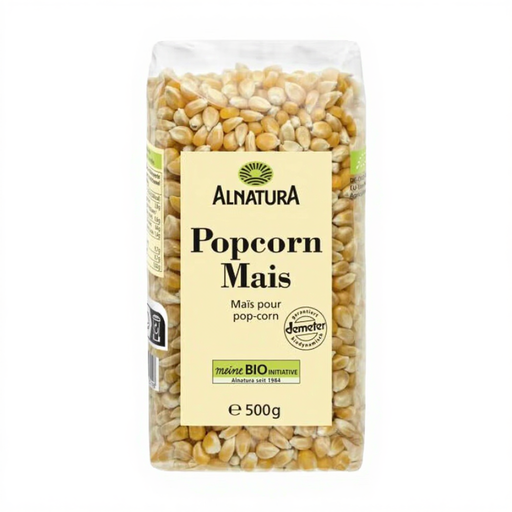
Alnatura organic popcorn kernels, 500 g
A good choice if you want to make popcorn at your campsite and choose the seasoning yourself.
The 500-g variety contains popcorn kernels. To prepare it, you’ll need a suitable pan, oil and a permitted heat source. Alnatura warns that this variety may contain traces of various allergens, including gluten, soya and milk. If you need to avoid any of these, check the full information on the specific pack.
View at Joybuy
 No image available
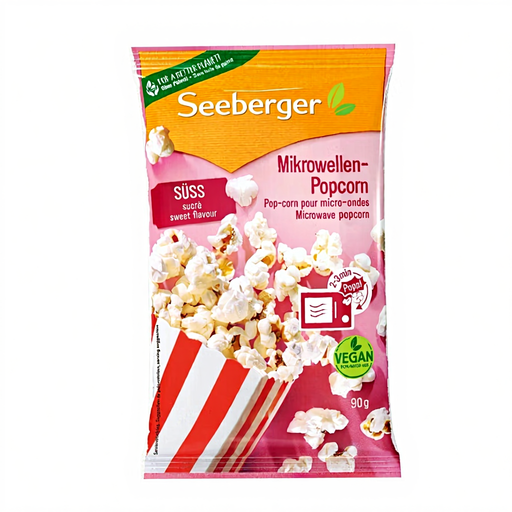
Seeberger Sweet microwave popcorn, 90 g
An option for campsites with a microwave, but not for preparing without one.
This sweet pack contains 90 g. Follow the preparation instructions on the pack you buy, and check its labelling and precautionary trace information if you need to avoid gluten or have allergies.
View at Joybuy
Frequently asked questions
Is popcorn made from corn automatically allergen-free?
No. The fact that it’s made from corn doesn’t tell you whether it contains other ingredients or substances that may have got in accidentally. If you’re buying packaged popcorn, check the ingredients and any precautionary trace information for the specific variety. The Bavarian Health and Food Safety Authority explains that mandatory allergen labelling doesn’t cover accidental contamination in general.
Is corn as the main ingredient enough if you have coeliac disease?
No. If you have coeliac disease, you need to check the labelling on the specific pack. EU Regulation (EU) No 828/2014 governs claims about the absence or reduced presence of gluten; check the ingredients and any information about possible traces too. Alnatura warns that its popcorn kernels may contain traces of gluten, as does XOX for its Sweet & Salty variety.
Which type of popcorn can you have while camping without a kitchen?
You can eat ready-to-eat popcorn without cooking equipment. Popcorn kernels need a pan, oil and a permitted heat source. Microwave popcorn needs a microwave and must be prepared according to the instructions on the pack.
How should I store opened popcorn while travelling?
Seal opened ready-to-eat popcorn well and store it in a dry place so it absorbs as little moisture as possible. Alnatura also recommends storing its popcorn kernels in a dry place; follow the instructions on your pack.
Does a popcorn recall affect other varieties too?
No. What matters is the product and pack information given in the official notice. On 31 July 2025, the relevant Hessian authorities reported elevated aflatoxin levels in a specified 800-g pack of Yörükoglu Popcorn-Mais; this doesn’t mean that other popcorn is affected. If there’s a specific recall, check the details against your pack.


