What to look for when choosing
Start by choosing a preparation method that works for your conference break. Then compare the nutritional information for the specific product and decide on the serving size.
Prepare popcorn kernels yourself
A good fit if: you have cooking facilities and staff time, and want to measure the oil, sugar and salt yourself during preparation.
The trade-off: You can create your own recipe, but you’ll need to organise preparation, cleaning and portioning.
Microwave popcorn
A good fit if: you have microwaves available and enough time for the required preparation cycles.
The trade-off: The recipe is fixed. Depending on the product, you may need to take care when opening the bag because of hot steam, and there may be unpopped kernels left after cooking, as the product information from REWE Beste Wahl and Heimatgut shows.
Ready-to-serve popcorn
A good fit if: there’s no space to prepare food during the break and you need to start serving straight away.
The trade-off: You can’t adjust the ingredients, so the planned portion needs to match the nutritional information for the variety you choose.
| Criterion |
What to check before buying |
Who it matters most to |
| Energy and portion size |
Compare energy, sugar and fat per 100 g with the planned serving size in grams. |
If I want to offer each guest a set amount of snack, I need a reliable portion size as well as the nutritional information. Around 33% of consumers put this need first. |
| Process and equipment |
Match the equipment and staff time required to the length of the break and the number of portions. |
During a short conference break, I want to avoid queues at the serving point. That’s why a predictable process is the top priority for around 27% of consumers. |
| Ingredients and allergens |
Record the information for every variety and all additional ingredients used. |
If guests are choosing from snacks served unpackaged, I need to be able to tell them what each finished combination contains. Clear ingredient information is the main concern for around 27% of consumers. |
| Flavour and variety |
Check the recipe and nutritional information for each sweet or savoury variety you’re considering. |
I want to offer a variety that suits the audience, without assuming what it contains based on the flavour name alone. Choosing the right variety comes first for around 13% of consumers. |
Brands and product ranges to consider
The examples below show different product formats. Choose based on the specific variety, rather than the brand name alone.
Snackline
REWE sells Snackline sweet popcorn in a 250 g pack as a ready-to-serve option.
- No preparation on site is needed before serving.
- REWE lists 478 kcal and 31.3 g of sugar per 100 g for this variety, so the amount you serve matters when planning portions.
REWE Beste Wahl
The range includes sweet microwave popcorn in a 300 g pack.
- You can prepare it if suitable microwaves are available at the venue.
- REWE warns that hot steam may escape after preparing this product; use the information on the pack you’ve chosen when comparing nutritional values.
Seeberger
REWE sells Seeberger popcorn kernels in a 500 g pack, as well as salty microwave popcorn in a 90 g pack.
- The two product formats allow for different processes: preparing it yourself or using a microwave.
- To assess the energy in a finished portion, you’ll need the nutritional information for the specific product and, for popcorn kernels, the additional ingredients used.
Heimatgut
REWE sells Heimatgut organic salty microwave popcorn in a 90 g pack.
- The product name identifies this specific variety as organic microwave popcorn.
- According to the product information, unpopped kernels may remain after preparation. The organic claim is no substitute for comparing nutritional values.
Popcorn kernels at Joybuy
These popcorn kernels suit the self-prepared option for conference catering, provided you’ve planned for cooking facilities and enough time to serve them. Remember to factor in any additional ingredients and the serving size when calculating the nutritional values of the finished portion.
 No image available
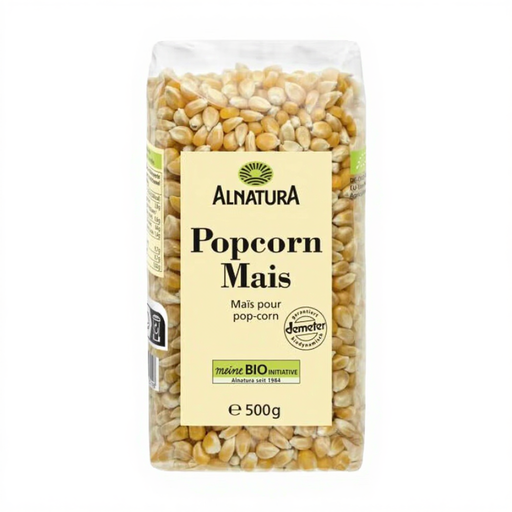
Alnatura organic popcorn kernels, 500 g
For catering where you prepare the popcorn yourself and want to plan the additional ingredients and serving size.
Pack size: 500 g. Check the nutritional and ingredient information on the pack for your intended preparation method, and remember to include any oils or seasonings you add.
View at Joybuy
Frequently asked questions
Can popcorn be described as ‘low calorie’ for conference catering?
Only if the specific product meets the requirements for this nutrition claim. Under EU Regulation (EC) No 1924/2006, solid foods described as ‘low energy’ or using equivalent wording must contain no more than 40 kcal (170 kJ) per 100 g; serving a small portion alone doesn’t meet this condition.
What allergen information do I need for popcorn served unpackaged?
Allergen information must relate to the snack you’re actually offering, including any toppings or seasonings used. The European Commission says this requirement also applies to non-prepacked foods; § 4 of Germany’s LMIDV requires the relevant information to be provided in a clearly visible, prominent and legible way.
Is microwave popcorn suitable for a short conference break?
It can work if the microwaves available can prepare the required portions within the time allowed for the break. You’ll also need to consider how to open the bags safely: REWE warns that hot steam may escape after preparing its REWE Beste Wahl microwave popcorn.
Is popcorn made from kernels automatically lower in calories?
No. You can control the amount of oil, sugar and salt when preparing popcorn from kernels, but the energy in the portion you serve depends on the recipe and portion size. So compare the information for the kernels and remember to include all additional ingredients.
Which information on the pack can help with portion planning?
When comparing different popcorn varieties, energy, fat, sugar and salt per 100 g are particularly useful. Also decide how many grams each guest will receive; this is the only way to relate the nutritional information to the portion you plan to serve.


