What matters when choosing popcorn?
If you have diabetes and are choosing popcorn, start with the carbohydrate content of the portion you plan to eat. Then compare the other nutritional values and ingredients. If you have an allergy, the current labelling must also be suitable for your specific trigger.
| What matters |
What to check when buying |
Who it matters most to |
| Carbohydrates per portion |
Compare the carbohydrate content per 100 g and calculate it for the amount you actually plan to eat. |
I want to include my popcorn portion in my carbohydrate planning, rather than focusing only on the sugar content. For around 42% of consumers, portion planning is the top priority. |
| Sugar, fat and salt |
Compare the nutritional information and check the ingredients list for sugar, dextrose, oil and seasonings. |
When comparing sweet and salted popcorn, I want to know which ingredients have been added and how the nutritional values differ. Around 33% of consumers put this comparison first. |
| Allergens and traces |
Check the current packaging for the ingredients list, highlighted allergens and any precautionary allergen information relating to your trigger. |
If I have a confirmed allergy, I need to check whether the specific recipe and any possible traces are relevant to my trigger. For around 25% of consumers, checking for allergens takes priority. |
Brands and product examples to help you choose
The examples below show why it’s better to compare specific popcorn recipes by their ingredients and nutritional information than by relying on a general label.
GUT&GÜNSTIG
EDEKA sells sweet and salted microwave popcorn under this own-label brand, with different recipes.
- According to EDEKA, the salted variety contains 48 g of carbohydrates, 1.1 g of sugar, 21 g of fat and 2.5 g of salt per 100 g. For the sweet variety, EDEKA lists 60 g of carbohydrates and 16 g of sugar per 100 g, with sugar and dextrose among the ingredients.
- EDEKA points out that online information may differ from the packaging. Check the current pack before eating.
Wunderlich
REWE sells Wunderlich as sweet, ready-to-eat popcorn.
- The ingredients list provided by REWE includes corn, sugar, sunflower oil and flavouring. This makes it possible to compare the recipe with other specific popcorn products.
- To decide whether the product is suitable for a particular allergy or your planned carbohydrate intake, check the current packaging and consider your portion.
Popcorn kernels on Joybuy
These popcorn kernels are a good choice if you want to make popcorn yourself and control the seasoning. For carbohydrate planning, the amount you use and actually eat still matters. If you have an allergy, always go by the current packaging.
 No image available
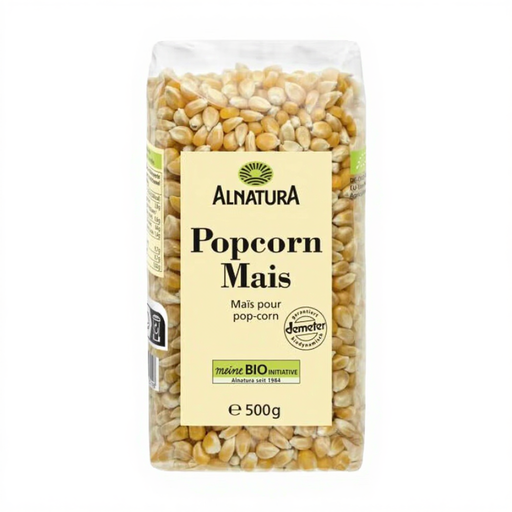
Alnatura organic popcorn kernels, 500 g
When you make popcorn yourself, you can choose the sugar, salt and seasoning. Factor in the carbohydrates based on the amount of corn you use and eat. Possible traces listed include gluten, soya, milk, nuts, sesame and lupin. If you have a relevant allergy, check the current packaging.
View on Joybuy
Frequently asked questions about popcorn and diabetes
Is popcorn always off limits for people with diabetes?
No, there’s no general rule that people with diabetes must avoid popcorn. diabetesDE emphasises that special foods for people with diabetes aren’t necessary. When choosing popcorn, what matters is the carbohydrate content of the portion you eat and your individual dietary or treatment plan.
Does low-sugar popcorn also mean low-carb popcorn?
No. According to EDEKA, its GUT&GÜNSTIG salted microwave popcorn contains 1.1 g of sugar per 100 g, but 48 g of carbohydrates. So, as well as “of which sugars”, check the “carbohydrates” figure and work it out for your portion.
How can I tell whether popcorn is suitable for my allergy?
Check the current packaging for the ingredients list, highlighted allergens and any precautionary allergen information relating to your specific trigger. According to the German Food Federation, a statement such as “May contain traces of …” doesn’t prove that the allergen is present, but it does indicate that accidental presence cannot be ruled out with certainty.
Is homemade popcorn automatically allergen-free?
No. You can choose the corn and any additions yourself, but you still need to consider whether the ingredients you use and any possible accidental presence are relevant to your specific trigger. Choosing your own recipe doesn’t, by itself, prove that it’s allergen-free.


