Fat-conscious snackers who want to eat straight away
You want to enjoy popcorn without a stove or electricity, so you compare the fat content of ready-to-eat bags. For sweet varieties, sugar content should also inform your choice.


If low fat content and food that needs no preparation are important when you’re camping at a festival, ready-to-eat popcorn is worth considering. The sweet examples listed by EDEKA and REWE contain 4.5 and 4.8 g of fat per 100 g respectively, but also 30 and 36.6 g of sugar. You can season popcorn kernels yourself, but you’ll need equipment and, for the pan method described, oil. Microwave popcorn is only an option if you can use a microwave. Compare the nutritional information on the packaging and check your festival’s rules in advance.
You want to enjoy popcorn without a stove or electricity, so you compare the fat content of ready-to-eat bags. For sweet varieties, sugar content should also inform your choice.
You have a suitable pan or popcorn maker and want to choose how much oil and seasoning to use. The nutritional information for dry kernels doesn’t describe the finished popcorn.
You want something salty to eat straight away and are also considering popped crisps. These aren’t popcorn, so check their own nutritional information.
First, decide whether you need popcorn you can eat straight away or whether you can actually prepare it at the campsite. Then compare products intended to be eaten in the same way, using the information per 100 g.
A good fit if: you want to snack without electricity or cooking equipment.
The trade-off: Alongside their fat content, the sweet examples from EDEKA and REWE contain 30 and 36.6 g of sugar per 100 g respectively.
A good fit if: you have the equipment and a permitted way to prepare them, and want to control the ingredients yourself.
The trade-off: The instructions for Seeberger popcorn kernels published by REWE use oil for the pan method; the fat content of dry kernels doesn’t apply to the finished popcorn.
A good fit if: you can use a microwave where you’re staying.
The trade-off: According to EDEKA, the savoury GUT&GÜNSTIG example contains 21 g of fat and 2.5 g of salt per 100 g.
| What to consider | What to check when buying | Who it matters to |
|---|---|---|
| Fat in the finished snack | Compare fat and saturated fat per 100 g of ready-to-eat popcorn; for sweet varieties, check the sugar content too. | I want to eat popcorn straight away and am particularly mindful of its fat content. For around 36% of consumers, this is the main consideration when choosing a ready-made snack. |
| Eating without preparation | Check the serving instructions, pack size and storage instructions rather than assuming you’ll have access to a microwave or stove. | If neither electricity nor cooking equipment is reliably available, I need a snack that doesn’t require preparation. Around 29% of consumers say this is their top priority. |
| Choosing your own ingredients | Check that you have a suitable pan or popcorn maker and that preparation is allowed at the festival; include any oil and toppings in your nutritional comparison. | I want to choose how much oil and seasoning to use, and I can prepare popcorn. This option is a priority for around 21% of consumers. |
| Savoury flavour | For savoury alternatives, check the product type and the fat, salt and ingredients per 100 g. | A salty snack matters more to me than popcorn; popped crisps are also an option. Around 14% of consumers put this preference first. |
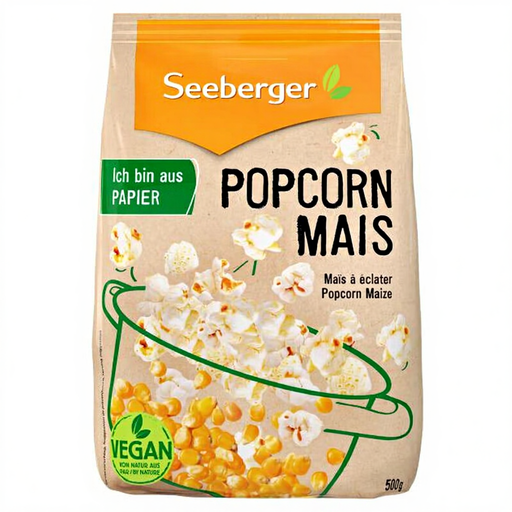
According to the information published by REWE, the 3.8 g of fat per 100 g for Seeberger popcorn kernels refers to the dry kernels. The pan method described adds oil.
Don’t compare this figure directly with ready-to-eat bags. If you make popcorn yourself, remember to account for the oil and any other ingredients.
Alongside 4.5 and 4.8 g of fat, the sweet bagged popcorn examples listed by EDEKA and REWE contain 30 and 36.6 g of sugar per 100 g respectively.
For sweet popcorn, check the fat and sugar content together. For savoury varieties, the salt content matters too.
A microwave popcorn bag is only an option at the campsite if you can prepare it there.
Check that you can use a microwave before you buy. If you want something you can eat without preparation, look for ready-to-eat popcorn instead.
EDEKA notes that product information may differ from the packaging. The German Federal Centre for Nutrition says glass bans are common at festivals, but they aren’t a rule at every event.
Check the current packaging, including the ingredients and allergen information, as well as the rules at your specific festival on containers and food preparation.
Among the products considered, EDEKA lists both sweet, ready-to-eat popcorn and savoury microwave popcorn.
Seeberger popcorn kernels are an option if you have the right equipment to prepare them yourself.
The REWE product considered is sweetened, ready-to-eat popcorn.
The savoury products considered are popped crisps, making them an alternative for consumers who aren’t set on popcorn.
Here you’ll find popcorn kernels to pop yourself and sweet caramel popcorn. When choosing what to take camping, consider not only the information on the packaging, but also how the popcorn needs to be prepared and what equipment you’ll actually have available.
 No image available
For preparing yourself, provided you have a suitable pan or popcorn maker and a permitted way to cook. REWE lists 3.8 g of fat per 100 g of dry Seeberger popcorn kernels; the pan method described there uses oil. Before buying, check the pack size and, if you have allergies, the information on the current packaging.
 No image available
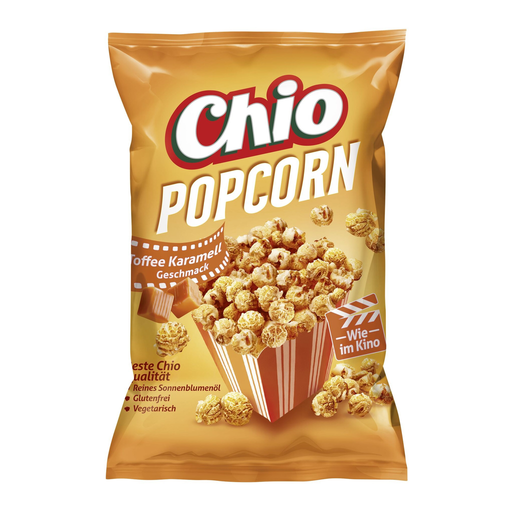
An option for consumers considering sweet popcorn with a caramel flavour. Compare the fat and sugar per 100 g on the packaging, and check the serving instructions if you want to eat the popcorn at the festival without preparing it.
Not necessarily. EDEKA lists 21 g of fat per 100 g for the savoury GUT&GÜNSTIG microwave popcorn considered, compared with 4.5 g for its ready-to-eat sweet popcorn. The bagged REWE popcorn considered contains 4.8 g, according to REWE. Compare the information for each type of popcorn on the current packaging.
No. The 3.8 g per 100 g listed by REWE refers to dry Seeberger popcorn kernels. The pan method described there uses oil, and the amount of oil and any other ingredients will affect the finished popcorn.
Focus on fat and saturated fat per 100 g, as well as sugar for sweet popcorn and salt for savoury varieties. According to the German Food Federation, information per 100 g makes it possible to compare packaged foods. If you’re buying dry kernels, you’ll also need to take the preparation method into account.
Read the ingredients list and allergen information on the current packaging. REWE notes that the Seeberger popcorn kernels considered may contain traces of tree nuts and peanuts; you can’t assume the same applies to another product.