Campers keeping an eye on fat content
When comparing popcorn varieties by fat per 100 g, check the product type and the figures for the snack as sold. Sugar and salt are worth checking separately.


Without a reliable microwave or suitable cooking equipment, ready-to-eat popcorn is the straightforward choice for camping. Making popcorn from kernels lets you control how much oil you add, but you’ll need the right equipment. Microwave popcorn requires a suitable microwave. When choosing a variety, compare the fat, sugar and salt per 100 g on the pack – the preparation method alone doesn’t prove that it contains less fat.
When comparing popcorn varieties by fat per 100 g, check the product type and the figures for the snack as sold. Sugar and salt are worth checking separately.
If you don’t have access to a microwave or suitable cooking equipment, you can eat ready-to-eat popcorn straight from the pack. Microwave popcorn and popcorn kernels need to be prepared first.
If sugar, salt or allergens matter to you as well as fat, check the information on the specific pack. Figures can vary between sweet and salty varieties.
A good choice if: You don’t want to rely on being able to prepare popcorn at the campsite.
The trade-off: A lower fat figure doesn’t tell you how much sugar and salt the product contains. For Chio Ready Made Sweet & Salty, Chio lists 5.9 g of fat, 51 g of sugar and 1.8 g of salt per 100 g.
A good choice if: You can use a microwave that’s suitable for the product and fancy warm popcorn.
The trade-off: Without a microwave, you can’t prepare the bag as intended. Also follow the guidance about hot steam when opening it.
A good choice if: You want to make your own popcorn with suitable equipment and control how much oil you add.
The trade-off: The fat content of unpopped kernels doesn’t automatically tell you how much fat the finished popcorn contains once oil has been added.
| Criteria | What to check when buying | Who it matters to |
|---|---|---|
| Fat content | Compare fat per 100 g across similar types of popcorn. If the pack says “reduced fat”, check what it’s being compared with. | If I’m looking for a variety with less fat, I don’t want to compare unpopped kernels with ready-to-eat popcorn. Around 42% of consumers prioritise fat content when choosing. |
| Preparation | Check whether you can use a suitable microwave or cooking appliance. If neither is available, ready-to-eat popcorn may be an option. | Without cooking facilities, I want to be able to open the pack and eat it straight away. For around 33% of consumers, being ready to eat is the priority. |
| Other information on the pack | Check sugar and salt per 100 g, as well as the ingredients and any highlighted allergens on the specific pack. | With sweet or salty varieties, I don’t want to choose based on fat alone. Around 25% of consumers prioritise checking a wider range of nutritional information and ingredients. |
The name of a production method alone doesn’t tell you how much fat the finished popcorn contains compared with a similar product. According to the Verbraucherzentrale, a “reduced” nutrition claim requires at least a 30% reduction compared with a similar product.
Check the fat per 100 g and, if the pack explicitly claims a reduction, what it’s being compared with.
For Ready Made Sweet & Salty, Chio lists 5.9 g of fat, 51 g of sugar and 1.8 g of salt per 100 g. A single nutritional figure doesn’t tell you everything about a product.
When comparing similar products, check fat, sugar and salt using the same basis for each.
Microwave popcorn bags are designed to be prepared as instructed. If you don’t have a suitable appliance where you’re staying, they’re no substitute for ready-to-eat popcorn.
Check what preparation facilities are available at the campsite before you buy, and read the appliance and safety instructions for your chosen product.
EDEKA notes in its product information that details may differ from those on the packaging. For the specific variety you’re buying, the information on the pack is what counts.
Before buying, check the variety, pack size, nutritional information and preparation instructions.
XOX sells ready-to-eat Party Popcorn, including Party Popcorn Karamell XXL.
Chio offers ready-to-eat popcorn and microwave popcorn.
Seeberger offers both popcorn kernels and microwave popcorn.
EDEKA’s own-brand range includes sweet microwave popcorn in a multipack.
REWE Beste Wahl sells sweetened microwave popcorn.
These Joybuy products include popcorn kernels for making your own and sweet microwave popcorn. Before choosing, check what equipment you can use at the campsite; neither kernels nor microwave popcorn is ready to eat as sold.
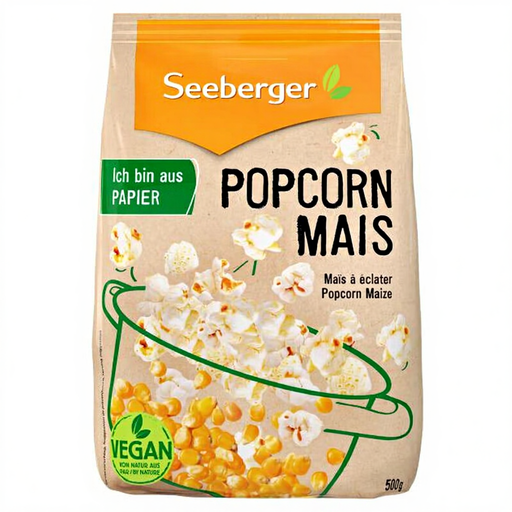 No image available
A good option for making your own popcorn if you have suitable cooking equipment.
The pack contains 500 g of popcorn kernels. If you prepare them with oil, the fat content of the finished popcorn will also depend on how much you add.
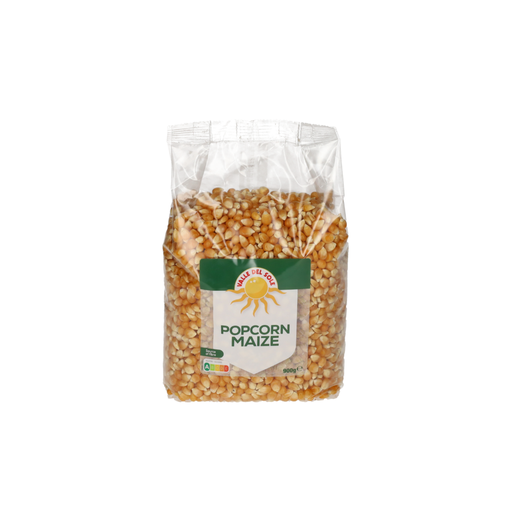 No image available
Popcorn kernels for making your own, using suitable equipment.
The product title says 900 g, while the description also mentions 500 g. Check the pack size before buying. If you prepare the kernels with oil, you can’t work out the fat content of the finished popcorn from the figure for unpopped kernels alone.
No image available
A suitable option for camping if you have a microwave, but not for eating without preparation.
The pack contains 90 g. Check the wattage instructions before heating, and take care of hot steam when opening the bag. Compare fat and sugar using the current nutritional information.
A claim such as “reduced fat” needs a clear basis for comparison. According to the Verbraucherzentrale, the reduction must be at least 30% compared with a similar product. A lower-looking fat figure or an air-popped process doesn’t make the same claim on its own.
Yes, as long as you can use a microwave that’s suitable for the product. Check the wattage and preparation instructions on the bag, and heed the warning about hot steam when opening it. If you don’t have a microwave, ready-to-eat popcorn is the option you can enjoy straight away.
Not if sugar or salt matters to you too. For Ready Made Sweet & Salty, Chio lists 5.9 g of fat, 51 g of sugar and 1.8 g of salt per 100 g. Compare the nutritional values of similar products per 100 g, rather than drawing an overall conclusion from a single figure.
Check the ingredients, any highlighted allergens, the best-before date and the preparation instructions on the specific pack. For microwave popcorn, also check the appliance details and warnings, especially advice about hot steam and about children or people with swallowing difficulties.