What to look for when buying
First decide how much preparation you’re happy to do yourself. Then compare the ingredients and nutrition information for the specific variety you’re considering. The figures for unprepared kernels aren’t the same as the nutritional value of a finished bowl with oil or toppings.
Popcorn kernels
A good fit if: You want to choose the oil and seasoning yourself.
The trade-off: Preparation takes time and you’ll need a suitable container or appliance. Any added ingredients count towards the finished portion.
Microwave popcorn
A good fit if: You have access to a microwave and want to keep preparation to a minimum.
The trade-off: The recipe is already set, so check the instructions and nutrition information for the variety you choose.
Ready-to-eat popcorn
A good fit if: You want a specific sweet or sweet-and-salty variety without having to prepare it.
The trade-off: Once you’ve bought it, you can’t adjust the amount of sugar, oil or seasoning yourself.
| What to consider |
What to check when buying |
Who it matters most to |
| Ingredients and portion |
For popcorn kernels, read the ingredients list and consider how much corn you’ll use, along with any ingredients you plan to add. |
I want to choose what goes into my bowl, and how much, during my coffee break. Around 50% of consumers prioritise control over ingredients and portions. |
| Preparation time |
For microwave popcorn, check that it’s suitable for your microwave and read the instructions on the pack. |
I want something easy to prepare during a short break, even if the recipe is already set. Quick preparation is the top priority for around 30% of consumers. |
| Flavour |
For sweet and sweet-and-salty varieties, compare the ingredients list and the sugar and fat figures in the nutrition information. |
I mainly want a particular sweet-and-salty flavour without having to season it myself. Around 20% of consumers prioritise this flavour. |
Popcorn kernels at Joybuy
These products are popcorn kernels for you to prepare yourself, so you can choose the oil and seasoning for your coffee break.
 No image available
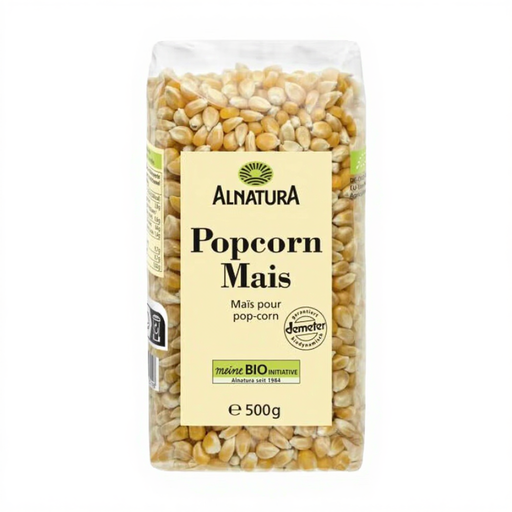
Alnatura popcorn kernels, 500 g
For a coffee break when you want to control the amount of oil and seasoning yourself. Popcorn kernels are the only ingredient listed; Alnatura states that the unprepared kernels contain 344 kcal, 1.4 g of sugar and 0.02 g of salt per 100 g. These figures don’t include anything you add.
View at Joybuy
 No image available
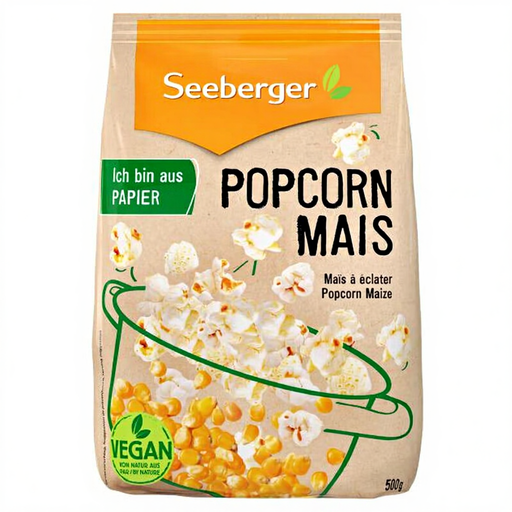
Seeberger popcorn kernels
If you want to make popcorn in a pan or popcorn maker and season it yourself, these kernels could be a good option. Seeberger describes the recipe as having no added sugar or salt. Check the nutrition information and pack size on the specific product before buying.
View at Joybuy
 No image available
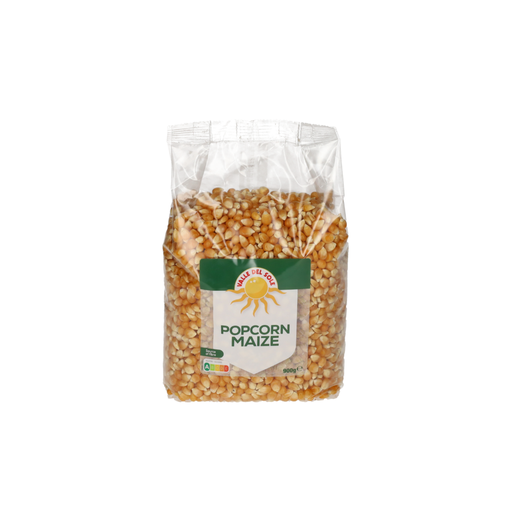
Valle del Sole Popcorn Maize (Butterfly)
These popcorn kernels could be a good choice if you want to season them yourself for your coffee break. The product name specifies the Butterfly variety. Check the pack size and nutrition information for the specific pack before comparing quantities or energy figures.
View at Joybuy
Frequently asked questions
Can popcorn be described as ‘low in calories’?
Not simply because it’s popcorn or because it’s prepared with less fat. Under EU rules, the European Commission says that the claim ‘low energy’ – or a claim likely to mean the same to consumers – can only be used for solid foods containing no more than 40 kcal (170 kJ) per 100 g.
Which nutrition figures should I compare for popcorn?
Start by comparing the energy, fat, sugar and salt per 100 g, and check the ingredients list too. The German Food Federation explains that nutrition information for packaged foods also includes saturated fat, carbohydrates and protein. For your coffee break, it’s also important to consider how much you actually eat.
Can I make popcorn kernels in the microwave without a popcorn maker?
Yes, as long as you use a suitable container and follow the instructions for it. Lidl explains how to make popcorn kernels in a microwave-safe container with a lid and a way for steam to escape. The kernels need room to pop.
Is homemade popcorn automatically vegan and allergen-free?
No. The finished portion depends on the specific corn product and everything you add to it. If you have allergies, read the allergen and ‘may contain’ information on the pack, and check the ingredients in your toppings too.
Why is it difficult to compare dry kernels and ready-made popcorn per 100 g?
Figures for dry kernels describe an unprepared product, while ready-made popcorn may contain additional ingredients. Alnatura’s figure of 344 kcal per 100 g applies specifically to unprepared popcorn kernels. For your bowl, you’ll need to take the amount of corn used and any additions into account separately.


