What should you look for when buying popcorn?
First decide whether you want to control the additions yourself, open a pack and eat it straight away, or make warm popcorn in the microwave. Then compare the nutritional information for products in the category that suits you.
Popcorn kernels
A good choice if: You want to choose the oil and seasoning yourself.
Worth considering: Preparation takes time, and the nutritional values of the finished popcorn depend on your recipe.
Ready-to-eat popcorn
A good choice if: You want a pack for your snack cupboard that needs no preparation.
Worth considering: A lower fat content can go hand in hand with a high sugar content, as the nutrition information for Chio Ready Made Popcorn Süß shows.
Microwave popcorn
A good choice if: You want to make warm popcorn and have a suitable microwave.
Worth considering: The recipe is already set; savoury varieties aren’t low in fat simply because they contain little sugar.
| What you’re looking for |
What to check when buying |
Who it matters to |
| Control the additions yourself |
Popcorn kernels and a preparation method suited to the product and appliance; take any oil you’ll need into account. |
When I make popcorn myself, I want to choose how much oil and seasoning goes into my snack. This is the priority for around 42% of consumers. |
| Snack without preparation |
For ready-to-eat popcorn, compare the fat and sugar per 100 g, as well as the pack size. |
I want to be able to open a bag straight away for my snack cupboard, without losing sight of the fat content. Around 33% of consumers say this is their first priority. |
| Choose savoury popcorn |
For savoury varieties, check the fat, saturated fat and salt per 100 g. |
I want savoury popcorn, but I don’t want to mistake a low sugar content for low fat or salt. This is the most important consideration for around 25% of consumers. |
Popcorn for your snack cupboard at Joybuy
Here are two options for your snack cupboard: sweet microwave popcorn to prepare at home, and popcorn kernels that let you control the additions yourself.
 No image available
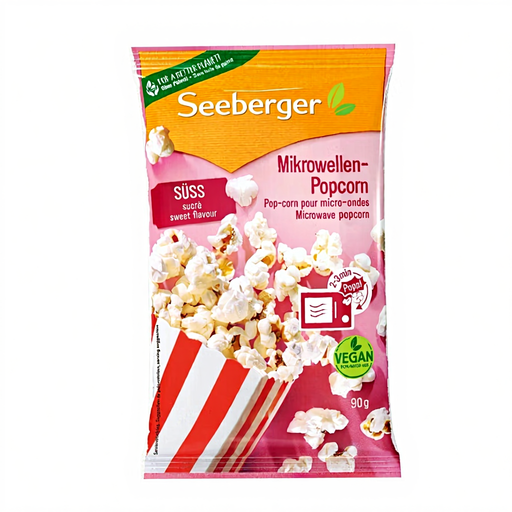
Seeberger Sweet Microwave Popcorn, 90 g
For anyone who wants to make sweet popcorn in the microwave. The pack contains 90 g; check the nutritional information on the specific pack when making your choice.
View at Joybuy
 No image available
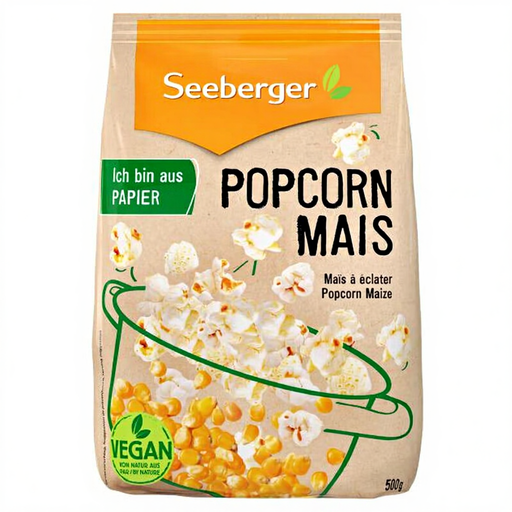
Seeberger Popcorn-Mais, 500 g
For anyone who wants to make popcorn themselves and control the seasoning. The pack contains 500 g of popcorn kernels; the fat content of the finished popcorn also depends on how you prepare it and which ingredients you add.
View at Joybuy
Frequently asked questions about popcorn and fat
What does “reduced fat” mean on a popcorn pack?
“Reduced fat” is a nutrition claim with legal requirements, not simply another way of saying that the fat content looks low. The Federal Ministry of Agriculture, Food and Regional Identity refers to the requirements of the EU Health Claims Regulation. Check the specific claim and what it’s being compared with, rather than trying to work it out from the nutritional information alone.
How do I compare two packs of popcorn?
First compare the nutritional information per 100 g for products in similar categories, then take portion size into account. The Chemical and Veterinary Investigation Office in Stuttgart lists fat, saturated fat, sugar and salt among the details included in nutrition labelling for packaged foods. With popcorn you prepare yourself, added ingredients change the nutritional values of the finished snack.
Is savoury popcorn automatically lower in fat than sweet popcorn?
No, you can’t tell from the flavour alone. HEIMATGUT lists 18 g of fat per 100 g for its savoury organic microwave popcorn, while EDEKA lists 21 g for GUT&GÜNSTIG savoury microwave popcorn. Chio lists 6.1 g of fat, but also 52 g of sugar per 100 g, for its ready-to-eat Ready Made Popcorn Süß. Compare the nutritional values in the context of the type of product you want to buy.
Which nutritional information should I rely on when shopping?
Check the specific pack you’re buying. EDEKA notes that its online information may differ from the details on the pack; Chio cites recipe changes as a reason for different labelling on packs in shops. So be sure to check the ingredients and allergen information on the product itself too.


