If you want to control the fat and seasoning
With popcorn kernels, you choose which ingredients to add when you prepare them. And it’s not just the kernels that matter: any oil you use and toppings you add later are part of the finished snack too.


If you want to decide for yourself how much oil and seasoning goes into your popcorn for a late-night snack, popcorn kernels you prepare at home are a good choice. Ready-to-eat, air-popped popcorn saves time, but you’ll need to check the ingredients list and nutritional information for the specific variety to see whether it suits a fat-conscious choice. With sweet ready-made popcorn and products labelled ‘reduced fat’, it’s also worth comparing fat, sugar and salt per 100 g.
With popcorn kernels, you choose which ingredients to add when you prepare them. And it’s not just the kernels that matter: any oil you use and toppings you add later are part of the finished snack too.
Ready-to-eat popcorn means there’s no need to pop it yourself. Check the ingredients list and nutritional information for the specific variety, rather than assuming that the description ‘air-popped’ tells you how much fat it contains.
Flavour may be your priority for a late-night snack. If you’re also keeping an eye on fat, compare added oils as well as fat and sugar per 100 g across these varieties.
A good choice if: You want to control the amount of oil and seasoning in your late-night snack.
Bear in mind: It takes time to prepare and you’ll need a suitable appliance. The nutritional information for the kernels doesn’t include anything you add later.
A good choice if: You want a snack without having to prepare it yourself and are interested in how it’s popped.
Bear in mind: ‘Air-popped’ alone doesn’t tell you how much fat, sugar or salt the finished variety contains.
A good choice if: Sweet flavour and convenience matter more to you than controlling every ingredient.
Bear in mind: Sugar and added oils can affect the nutritional values, so compare the specific variety.
There are three different priorities to consider when choosing between these options:
| Priority | What to check when buying | Who it matters to |
|---|---|---|
| Control the amount of fat | Fat and saturated fat per 100 g; for popcorn kernels, also consider how much oil you plan to use. | If I want a snack in the evening, I want to decide for myself how much oil goes into the kernels. Around 42% of consumers would put control over the fat used in preparation first. |
| Ready to eat straight away | Whether the popcorn is ready to eat and what nutritional information is given for the variety you’ve chosen. | After a long evening, I don’t want to pop popcorn and then have to tidy up. For around 33% of consumers, being able to eat it straight away would be the main reason to buy. |
| Sweetness and ingredients | Sugar and fat per 100 g, as well as any added oils in the ingredients list. | I want sweet or flavoured popcorn, but I also want to know what’s been added to give it that flavour. Taste and transparency about ingredients would be the main priorities for around 25% of consumers. |
A reduced-fat claim is based on a comparison. By itself, it doesn’t tell you how much sugar, salt or energy the popcorn contains. The Federal Ministry of Agriculture, Food and Home Affairs points out that nutrition claims have to meet specific conditions.
Check what the claim is being compared with. For similar products, compare fat, saturated fat, sugar, salt and energy per 100 g.
The nutritional information for plain popcorn kernels doesn’t include oil, butter or toppings. Both dmBio and Rapunzel recommend preparing popcorn with oil.
When choosing, take into account what you plan to add when popping the kernels and afterwards.
The sweet Heimatgut popcorn described by dm contains coconut oil and cane sugar. This specific product contains 17 g of fat, 14 g of saturated fat and 28 g of sugar per 100 g.
For sweet or coated varieties, check the ingredients list and nutritional information on the specific pack before comparing them with other options.
Popcorn kernels for making your own sweet or savoury popcorn.
Popcorn kernels to prepare with your choice of seasoning.
Ready-to-eat popcorn with no preparation needed.
Sweet, ready-to-eat popcorn as an example of a flavour-led choice.
Flavoured popcorn with a manufacturer’s claim comparing its sugar content.
This selection includes popcorn kernels and a hot-air popcorn maker for preparing popcorn at home. With both, what you add while popping the kernels or afterwards also affects the finished snack’s nutritional content.
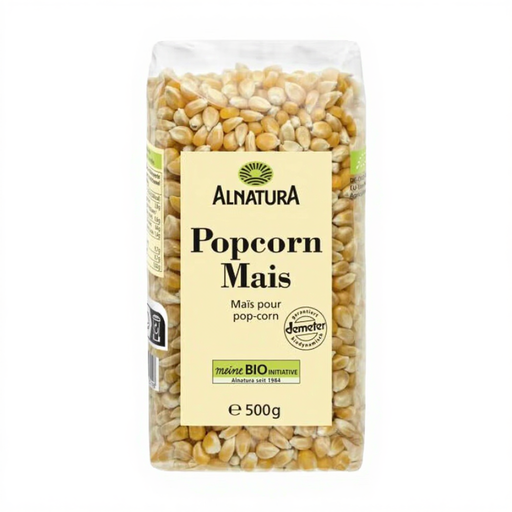 No image available
For anyone who wants to make their own popcorn for a late-night snack and control what goes into it.
Pack size: 500 g. The oil and other ingredients you use will affect the nutritional values of the finished popcorn. If you have allergies, check the labelling on the specific pack.
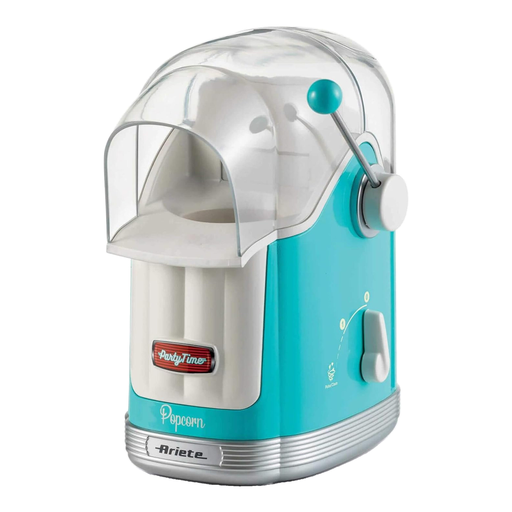 No image available
For making your own popcorn with hot air if you’d rather not use oil when popping it.
This appliance isn’t a ready-to-eat snack: you’ll need popcorn kernels and have to clean it after use. According to the product description, oil, butter and other fats should not be put in the appliance. Adding them afterwards will change the finished snack. Take care around hot surfaces and supervise children near the appliance.
It’s a claim comparing the fat content, not a statement about all the nutritional values. The Federal Ministry of Agriculture, Food and Home Affairs points out that nutrition claims have to meet specific conditions. Check what the claim is being compared with, and look at the sugar, salt and energy values per 100 g too.
No. ‘Air-popped’ describes the popping method. Even if a manufacturer says it uses no oil, you should still check the ingredients and nutritional information for the finished variety.
Treat the information on the pack as applying to the popcorn kernels, then take into account any ingredients you use during preparation or add afterwards. The instructions from dmBio and Rapunzel call for oil, and the amount used isn’t included in the nutritional values for the unprepared kernels.
No, you can’t assume this applies to the whole category. dm lists possible traces of milk, soya, sesame, lupin and cereals containing gluten, among other things, for its dmBio popcorn kernels. If allergens are a concern for you, check the ingredients and allergen advice on the specific pack.