If you want to control the amount of oil, sugar and seasoning yourself, popcorn kernels are a good choice. However, making popcorn yourself doesn’t automatically make it low in calories. When comparing ready-made and microwave popcorn, compare similar varieties using the energy value per 100 g, then consider how much you actually plan to eat.
Who should pay attention to the differences?
People keeping an eye on their portion size
Whether you’re having a film night or want a snack on the go, you’ll want to know how much popcorn you’re actually eating. Nutrition information per 100 g gives you a consistent basis for comparison, while the stated portion size offers an additional guide.
People who want to season it themselves
You want to choose the oil, sweetener and seasoning yourself. Lidl describes popcorn kernels as allowing you to add ingredients separately; the finished popcorn’s nutritional profile will depend on your recipe.
People checking ingredients and allergens
If you’re shopping for yourself or someone else, the ingredients in flavoured varieties and any possible traces may be important. Check the information on the current packaging rather than relying on the product name alone.
What should you look for when buying?
First, decide whether you want to choose the additions yourself or opt for a ready-made product with a set recipe. For comparing packaged popcorn varieties, the nutrition information per 100 g gives you a consistent basis.
| Criteria |
What to check when buying |
Who it matters to |
| Energy and portion size |
Compare similar varieties by their kcal per 100 g, then take your planned serving size into account. |
For a film night, I want to estimate the energy in the whole bowl, not just in a small pack serving. For around 40% of consumers, comparing quantities comes first. |
| Choosing the ingredients yourself |
For popcorn kernels, check which ingredients you’ll need to prepare them, then decide how much oil and sweetener to use. |
When I make popcorn at home, I want to choose the oil and seasoning myself. Having control over the ingredients is a priority for around 30% of consumers. |
| Preparation and taking it with you |
Choose between preparing it at home and buying a packaged variety; for the latter, check the pack size and ingredients. |
For a day out or an impromptu film night, I want a snack that’s ready to eat without having to prepare it myself. Around 20% of consumers prioritise convenience. |
| Allergens and seasoning |
Read the ingredients list for the specific variety, as well as any highlighted allergens and possible traces. |
If ingredients or possible traces matter to me, I need to check the current packaging, especially for seasoned varieties. This is the most important selection criterion for around 10% of consumers. |
Which assumptions should you avoid?
-
Assuming ‘less fat’ means fewer calories
A claim about reduced fat doesn’t tell you how much energy the specific product contains. Lorenz says its Naturals lightly salted crisps have 30% less fat than conventional crisps, but they still contain 475 kcal per 100 g. This example is about crisps, not popcorn.
Check the kcal per 100 g for the popcorn variety you choose, along with how much you plan to eat.
-
Comparing only the stated portion size
Portion sizes can differ between packs. As the German Food Federation explains, nutrition information per 100 g provides a consistent basis for comparing products.
Compare the information per 100 g first, then take your planned portion into account.
-
Forgetting the additions in homemade popcorn
When you use popcorn kernels, you choose the recipe yourself. Oil, butter or sugar therefore all count when assessing the finished snack; the preparation method alone doesn’t determine its energy content.
Before you start, decide which additions you want to use and how much.
-
Skipping the ingredients list on seasoned varieties
A flavoured variety may contain different ingredients from plain popcorn kernels. The German Food Federation notes that relevant allergens are highlighted in the ingredients list; a ‘may contain’ statement refers to possible accidental presence.
Read the current packaging information for every variety, including any ‘may contain’ statements.
Brands and products to help you decide
Lidl / SilverCrest
Lidl describes how to prepare popcorn kernels and sells a SilverCrest popcorn maker. Both are relevant when deciding whether to make popcorn yourself.
- When preparing popcorn from kernels, you can choose the seasoning and other additions yourself.
- The popcorn maker described by Lidl allows you to add oil, so the appliance alone doesn’t determine the energy content of the finished snack.
funny-frisch
The funny-frisch Protein Chips considered here belong to a different snack category from popcorn.
- funny-frisch states that these crisps contain 21 g of protein per 100 g.
- The manufacturer’s claim that these crisps have 40% less fat than conventional crisps applies to this product. It doesn’t tell you anything about the nutritional values of popcorn.
Lorenz
Lorenz Naturals lightly salted crisps are an example of why a claim about fat content shouldn’t replace checking the energy value. This product isn’t popcorn.
- Lorenz lists this crisps product as containing 475 kcal per 100 g.
- The 30% fat reduction also stated by Lorenz applies to conventional crisps, not to other Lorenz products.
Popcorn kernels on Joybuy
These products are popcorn kernels for preparing at home. You choose the additions yourself; the quantities you use and your portion size also matter when assessing the finished snack.
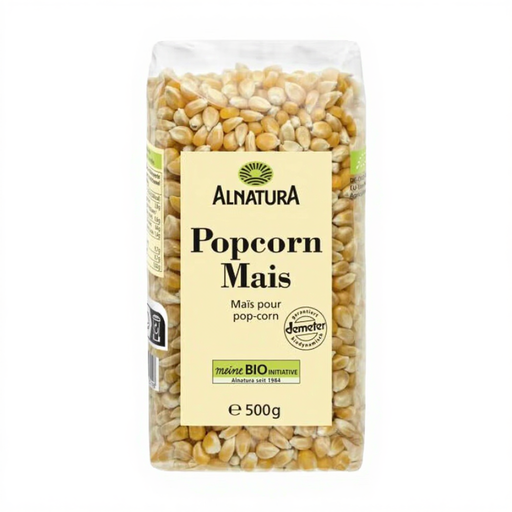 Image unavailable
Alnatura organic popcorn kernels, 500 g
For popcorn where you want to choose the seasoning and additions yourself.
The product name states that the bag contains 500 g of popcorn kernels. If you want to estimate the energy content of a prepared portion, remember to include any oil and other additions you use.
If you have allergies, check the ingredients and trace information on the current packaging.
View on Joybuy
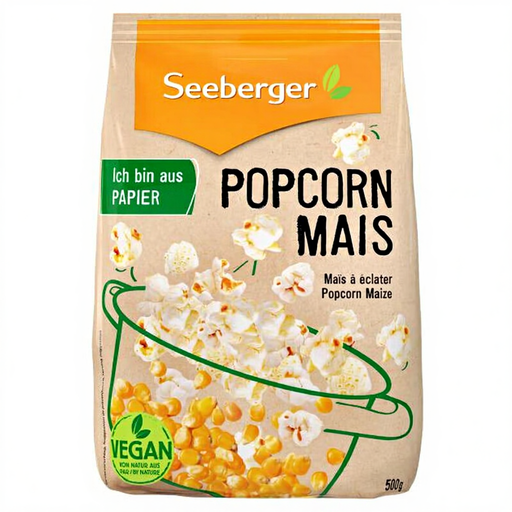 Image unavailable
Seeberger popcorn kernels, 500 g according to the product title
For homemade popcorn that you can season to your taste.
Check the pack quantity before buying: the product title says 500 g, but the product description lists 5 kg as ten packs of 500 g each. For an energy comparison, you’ll also need the kcal per 100 g stated on the packaging.
If you have allergies, check the current trace information too.
View on Joybuy
Frequently asked questions
How do I compare two packaged popcorn varieties?
Start by comparing similar varieties using their nutrition information per 100 g, especially the energy value. The German Food Federation describes this as a consistent basis for comparison; then take into account how much you actually plan to eat.
Is homemade popcorn automatically low in calories?
No. Popcorn kernels let you choose the oil, sweetener and seasoning yourself, but the quantities you use and the portion you eat still matter when assessing the finished snack.
What should I bear in mind with microwave popcorn?
Only use a microwave-safe container and follow the preparation instructions for the product or container, particularly the guidance on ventilation. Keep an eye on it and stop heating once the popping has stopped.
What should I check for flavoured popcorn and allergens?
Read the ingredients list and any ‘may contain’ statements on the current packaging for the specific variety. A ‘may contain’ statement doesn’t mean that the named substance is definitely present; it warns that accidental presence is possible.
Does ‘less fat’ also mean fewer calories?
Not necessarily. A claim about fat content doesn’t replace comparing energy values. Despite stating that its Naturals lightly salted crisps have ‘30% less fat’, Lorenz lists them as containing 475 kcal per 100 g. For popcorn, check the values for the specific variety you choose.


