Households with regular film nights
If you’re planning popcorn for several evenings or people, compare individually wrapped microwave portions with larger bags of ready-to-eat popcorn. What matters is how much you’re likely to need each time.


For an impromptu night in with no preparation, ready-to-eat popcorn is a handy choice. If you have regular film nights, individually wrapped microwave portions make planning easier, provided you have a microwave. Popping corn lets you decide how much to make and how to season it, but you’ll need to prepare it first. Whether a larger pack makes sense depends mainly on how many portions you need and how you’ll store any leftovers.
If you’re planning popcorn for several evenings or people, compare individually wrapped microwave portions with larger bags of ready-to-eat popcorn. What matters is how much you’re likely to need each time.
If you want your snack ready to enjoy with your TV dinner, ready-to-eat popcorn needs no extra preparation.
If you’re keeping an eye on sugar, salt, fat, allergens or specific ingredients, compare the details on the exact pack you’re buying. For larger quantities, it’s also worth considering whether you can store any leftovers properly.
When choosing between ready-to-eat popcorn, microwave popcorn and popping corn, first consider whether you want it ready straight away or are happy to prepare it.
A good choice if: You want to start your TV dinner without a microwave or any preparation time.
Bear in mind: If there’s any left after opening, it needs to be kept dry and sealed tightly.
A good choice if: You want to prepare individual bags for different evenings and have a microwave.
Bear in mind: Follow the heating instructions on the pack. Hot steam may escape when you open it.
A good choice if: You want to decide how much to make and how to season it.
Bear in mind: It isn’t ready to eat straight away and needs to be prepared suitably.
| What to consider | What to check | Who it matters to |
|---|---|---|
| Amount to keep in stock | Total weight, number of individual bags and storage instructions. | I want enough popcorn at home for several film nights, without having to store open leftovers for too long. This is the main consideration for around 27 % of consumers. |
| Hot preparation | A suitable microwave, plus the pack’s heating and opening instructions. | I want to prepare a single warm portion as my TV dinner begins, without measuring out popping corn myself. Quick, hot preparation is the main priority for around 33 % of consumers. |
| Ingredients and nutritional information | Ingredients, highlighted allergens, and sugar, salt and fat per 100 g. | For sweet or savoury varieties, I want to know what’s in the specific pack and which details are relevant to me. Around 20 % of consumers make this their main consideration when buying. |
| Portions and leftovers | Amount per bag and whether opened leftovers can be sealed tightly. | For a night in on my own, I may need less than I would for several people, and I don’t want to open an unnecessarily large pack. The right portion size is the priority for around 20 % of consumers. |
A large bag isn’t automatically the right choice for a single film night. If leftovers are left open for too long, moisture and unsuitable storage can affect their quality.
Estimate how many portions you’ll need for the next few evenings, then check whether opened leftovers can be stored somewhere dry in a tightly sealed container. The Julius Kühn Institute recommends keeping dry goods in a cool, dry, insect-proof place for a short time.
The bags need to be heated and may be hot afterwards. Hot steam may escape when you open them.
Check that you have a microwave, and follow the time, power and opening instructions on the pack you’ve bought.
Labels such as organic or vegan don’t tell you how much sugar, salt or fat a popcorn contains per 100 g.
Also check the ingredients list and nutritional information. If allergens are relevant to you, refer to the labelling on the specific pack.
With supermarket own brands, the range and packaging details may differ from the information shown online.
When you shop or your delivery arrives, check the size, ingredients and best-before date on the actual product.
Chio offers ready-to-eat popcorn and microwave popcorn for different preparation times.
The 300 g pack of sweet microwave popcorn is an option for households that want to prepare popcorn just before their TV dinner.
EDEKA lists ready-to-eat sweet popcorn in a 200 g pack and salty microwave popcorn in a 3 × 100 g pack under GUT&GÜNSTIG.
Lidl describes how to prepare popping corn yourself in a microwave or air fryer.
ALDI Nord has a range of snacks and own-brand products. For this purchase, the key is finding a specific popcorn pack that suits you.
The funny-frisch Popchips considered here are potato snacks, not popcorn.
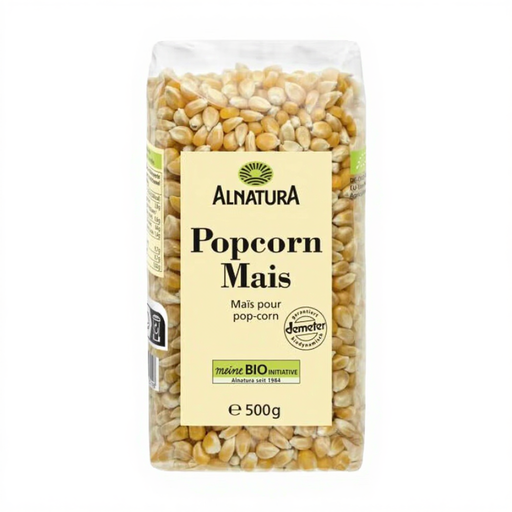
If you want to prepare popcorn for your TV dinner and choose how much to make each evening, this pack of popping corn could be a handy option to keep in stock.
 No image available
Popping corn for households that want to prepare their own popcorn for film nights; not ready to eat straight away.
Pack size: 500 g. Before buying, check the ingredients, allergen and preparation details on the specific pack.
A larger pack is a good fit if the amount suits your planned film nights and you can store any leftovers properly. Compare the total amount with the individual portions. For example, EDEKA lists its salty microwave popcorn as 3 × 100 g, which can be prepared in separate portions.
Follow the preparation time and appliance settings on the specific pack. The bag may be hot after heating, so open it carefully and keep any escaping steam away from your body.
For packaged popcorn, check the ingredients list and allergen labelling on the specific pack. The Federal Office of Consumer Protection and Food Safety explains that substances or products that cause allergies and are among the 14 main allergens subject to labelling requirements must be listed in the ingredients.
Follow the storage instructions and best-before date on the pack. Once opened, dry goods should be stored in a cool, dry place in a tightly sealed container. The Verbraucherzentrale distinguishes between a best-before date and a use-by date: a best-before date relates to the qualities guaranteed by the manufacturer when the pack is unopened and stored correctly.