When packing popcorn in a nursery lunchbox for a child with an allergy, what matters is not the brand or a general ‘free from’ claim, but whether the current pack is suitable for the specific substance they need to avoid and complies with the nursery’s rules. Making popcorn at home from popping corn gives you control over any extra ingredients, but requires preparation. For ready-to-eat and microwave popcorn, you’ll also need to check the ingredients, labelling and, where relevant, preparation instructions.
Who needs to take care with their choice?
Parents of a child with a diagnosed allergy
You’ll need to check the current ingredients list, allergen labelling and any relevant ‘may contain’ warnings against your child’s individual requirements. The consumer advice centre explains which details on food packaging and about nursery meals are important when making these checks.
Nursery staff with food policies to follow
Any snack brought in needs to fit the nursery’s procedures and agreed allergen-recording arrangements. The German Nutrition Society includes breakfast and snacks as part of a nursery’s food provision plan.
Families who pack popcorn now and then
You want to keep an eye on ingredients and portion size without making popcorn a regular snack. The Federal Institute of Public Health considers nibbles occasional snacks.
What should you look for when buying?
First, find out which substance the child needs to avoid and whether the nursery allows popcorn in lunchboxes. Then you can decide whether home-prepared popping corn, ready-to-eat popcorn or microwave popcorn prepared by an adult is right for your routine.
| What matters | What to check | Who it matters to |
|---|
| Individual allergy requirements |
Check the current ingredients list, highlighted allergens and any relevant ‘may contain’ warnings against the child’s requirements. |
If my child needs to avoid a particular substance, a general ‘free from’ claim isn’t enough. For around 33% of consumers, meeting individual allergen requirements comes first. |
| Ingredients and nutritional information |
Check added sugar, salt, fat and seasonings, along with the nutritional information per 100 g. |
For an occasional snack, I want to know what’s in it besides corn, and how sweet or savoury it is. Ingredients and nutritional information are the main concern for around 27% of consumers. |
| Preparation |
Follow the instructions for microwave popcorn; let it cool before packing and check for any unpopped kernels. |
I need something an adult can prepare at home and then pack. Around 20% of consumers prioritise ease of preparation. |
| Nursery rules |
Check with the nursery whether you can bring in your own snacks and what information is needed about ingredients and allergen labelling. |
Even if a product is suitable for my child, it still needs to fit what we’ve agreed with the nursery. For around 20% of consumers, this is the priority. |
Which mistakes can you avoid?
-
Assuming a product is suitable just because an allergen isn’t listed
A single statement on the front of a pack doesn’t tell you whether a product meets every individual allergy requirement. Possible traces may also affect your choice.
Identify the specific substance to avoid and check the current pack against your child’s requirements and what you’ve agreed with the nursery.
-
Assuming ‘gluten free’ means free from all allergens
‘Gluten free’ doesn’t answer questions about milk or other ingredients. And a popped potato-and-rice snack isn’t popcorn made from corn.
Check each requirement individually against the product type and the information on the current pack.
-
Treating microwave popcorn as a snack you can pack straight away
The microwave products described here need to be prepared in a hot bag, which produces steam; some kernels may remain unpopped.
An adult should prepare the product according to the pack instructions. If the nursery allows it, wait until it has cooled and check it before packing.
-
Planning popcorn as an everyday snack
The Federal Institute of Public Health considers nibbles, including homemade popcorn, occasional snacks. The German Nutrition Society looks at snacks as part of the nursery’s overall food provision.
Agree on popcorn as an occasional snack with the nursery, rather than using it to replace a regular snack.
Brands and products to help you choose
REWE Beste Wahl
REWE describes its sweet microwave popcorn as being made with corn kernels, sugar and palm fat.
- The published ingredients list lets you compare the exact recipe with other varieties.
- For an individual allergy, the current pack and any ‘may contain’ warnings remain key. The popcorn also needs to be prepared before packing.
Heimatgut
REWE describes Heimatgut’s sweet organic microwave popcorn as containing organic corn, cane sugar, shea butter and sunflower oil.
- The ingredients and sugar content of 20 g per 100 g are provided for this variety.
- According to REWE, some kernels may remain unpopped after preparation. An adult needs to prepare this variety and let it cool before packing.
funny-frisch
funny-frisch labels its popchips BBQ Style as gluten free. This is a potato-and-rice snack, not popcorn made from corn.
- The specific gluten-free claim is easy to check if that’s the requirement you need to meet.
- ‘Gluten free’ doesn’t tell you whether it’s suitable for another allergy; check all the current ingredients and allergen information.
Popping corn to prepare at home
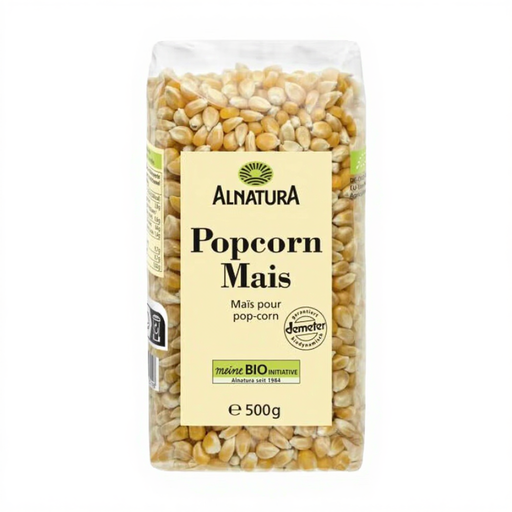
This popping corn is a good option if you’d like to make popcorn at home, as you can choose which extra ingredients to add. The popcorn needs to be prepared at home before it goes in a nursery lunchbox. If your child has an allergy, check the current pack against their individual requirements.
 No image available
Alnatura Organic Popping Corn, 500 g
For families who want to make popcorn at home and choose any extra ingredients themselves.
500 g of popping corn; prepare and leave to cool before packing. If your child has an allergy, check the ingredients and ‘may contain’ information on the current pack against their individual requirements.
View on Joybuy
Frequently asked questions
Is popcorn automatically suitable for every child with an allergy?
No. Suitability depends on the specific substance the child needs to avoid and the information on the current pack. Check the ingredients, declared allergens and any relevant ‘may contain’ warnings against their individual requirements, and check with the nursery before packing the snack.
Does ‘gluten free’ on a popped snack also mean ‘dairy free’?
No. ‘Gluten free’ says nothing about milk or any other allergens. Check the full information for the variety you’re considering; a popped potato-and-rice snack is also different from popcorn made from corn.
Can you pack microwave popcorn in a nursery lunchbox?
Yes, if the nursery allows it and an adult prepares it beforehand according to the pack instructions. Leave it to cool and check for any unpopped kernels; warnings about hot bags and steam apply during preparation.
Should popcorn replace a child’s daily nursery snack?
Popcorn is better as an occasional snack than as a replacement for a regular one. The Federal Institute of Public Health recommends having nibbles only now and then; the nursery’s food provision plan also matters for everyday meals.


