If you want to control how much added fat goes into your popcorn and can prepare it at home, plain popcorn kernels are a good choice. However, the 3.8 g of fat per 100 g listed by Alnatura for its unpopped kernels does not describe popcorn prepared with oil. Ready-to-eat popcorn saves you the preparation time. For similar products, compare fat, sugar and salt per 100 g rather than judging the nutritional values by the packaging.
Which option suits you
If you plan to prepare your popcorn
For a planned office break, popcorn kernels let you decide for yourself how much oil and seasoning to add. The fat content of unpopped kernels does not tell you how much fat will be in the finished portion: Alnatura’s preparation instructions call for oil.
If you want a snack with no preparation
Ready-to-eat popcorn is ideal for a break when you don’t have access to kitchen equipment or time to prepare a snack. Even with a small pack, it’s worth checking the nutritional information per 100 g and considering how much you actually plan to eat.
If you’re choosing between sweet and savoury
If flavour is guiding your choice, don’t overlook sugar, salt and added fat. The Verbraucherzentrale notes that ingredients are listed in order of weight; the nutrition table also lets you compare products per 100 g.
What to look for when buying
First decide whether you’ll prepare your popcorn at home, are allowed to make it at work or need something ready to eat. Then compare the nutritional values of products in the same form: unpopped kernels and ready-seasoned popcorn are not portions prepared in the same way.
| What matters to you |
What to check |
Who it matters to |
| Added fat |
For popcorn kernels, factor in the amount of oil you plan to use per portion; for ready-made popcorn, check the fat and saturated fat per 100 g. |
If you prepare it at home, you may prefer to decide how much oil to use rather than rely on a ready-made recipe. This control over fat is the top priority for around 33% of consumers. |
| Effort at work |
Check whether the popcorn is ready to eat or whether preparation requires time, equipment and permission at your workplace. |
If preparing a snack or using a kitchen isn’t an option during your break, being able to eat it straight away matters most. Around 20% of consumers place the greatest importance on this. |
| Sugar and salt |
Compare the values per 100 g for similar ready-made products; use the Nutri-Score, if available, as an additional guide only. |
When choosing sweet or savoury options, I don’t want to decide based on fat content alone. For around 20% of consumers, checking sugar and salt is the main priority. |
| Seasoning it yourself |
For popcorn kernels, check the preparation instructions and plan the oil and seasoning in advance; for ready-made products, read the ingredients list. |
If you want to choose the flavour and ingredients yourself, you’ll need to allow time for preparation. Around 27% of consumers prioritise having this control over the recipe. |
Common comparison mistakes
-
Assuming the fat content of raw kernels is the same as that of ready-made popcorn
Popcorn kernels only become a snack for your break once they’re prepared. Alnatura’s preparation instructions call for oil, so the nutritional value of unpopped kernels does not show the fat content of the finished portion.
Factor in the amount of oil you’ll use for your portion. Compare ready-to-eat varieties using the same measure of 100 g.
-
Assuming organic, vegan or gluten-free means low in fat
These claims describe other product qualities. The sweet Heimatgut popcorn sold by dm-drogerie markt carries these types of claims and contains 17 g of fat and 28 g of sugar per 100 g.
Use these claims as a guide to the specific qualities they describe. For comparing fat, sugar and salt, the nutrition table is what matters.
-
Assuming the manufacturer’s portion is the same as your own
A pack may contain more than the stated number of portions. Small portion sizes do not replace comparing nutritional values per 100 g.
Start by comparing products per 100 g, then think about how much you’d like to eat during your break.
-
Looking only at the fat content
Sugar and salt also matter when choosing between sweet and savoury options. According to the Bundeszentrum für Ernährung, the Nutri-Score can provide an additional guide when comparing similar foods, but it doesn’t show every individual nutritional value as a buying consideration.
For the products you’re actually considering, check the nutrition table for fat, saturated fat, sugar and salt.
Brands and products to consider
Alnatura
Alnatura offers popcorn kernels for you to prepare yourself.
- According to Alnatura, the raw product is made from popcorn kernels and contains 3.8 g of fat per 100 g when unpopped. You choose the oil and seasoning when you prepare it.
- The instructions call for oil. The fat content of the finished popcorn cannot be determined from the raw product’s nutritional value.
Heimatgut
The Heimatgut product listed by dm-drogerie markt is an example of sweet popcorn that’s ready to eat.
- There’s no need to prepare this ready-made product before your office break.
- For this specific sweet variety, dm-drogerie markt lists coconut oil in the ingredients and gives the nutritional values per 100 g as 17 g of fat, 14 g of saturated fat and 28 g of sugar. These values do not apply to every variety from the brand.
Lidl
Lidl describes a method for preparing popcorn yourself in small portions.
- The microwave method is an option if you have a suitable, permitted place to prepare it.
- With this method, too, the fat content of the finished portion depends on the ingredients used. It does not replace checking a specific product and its preparation instructions.
Popcorn kernels at Joybuy
These three products are popcorn kernels for you to prepare yourself, not ready-to-eat popcorn for a spontaneous office break. As well as checking the pack details, it’s important to consider how you’ll prepare the kernels and how much oil you’ll use.
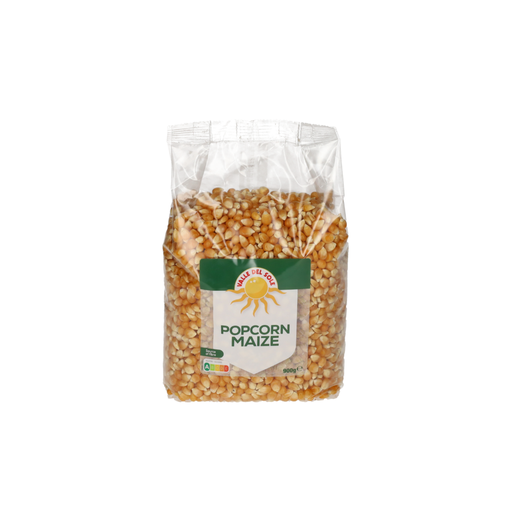 Image unavailable
Valle del Sole Popcorn Maize (Butterfly), 900 g according to the title
For popcorn you’d like to prepare and season yourself before your office break.
The product title states 900 g, while the description says 500 g. Check the exact pack size and the nutritional information for it before buying. The preparation described uses oil, so the nutritional value of the raw kernels does not reflect the finished portion.
View at Joybuy
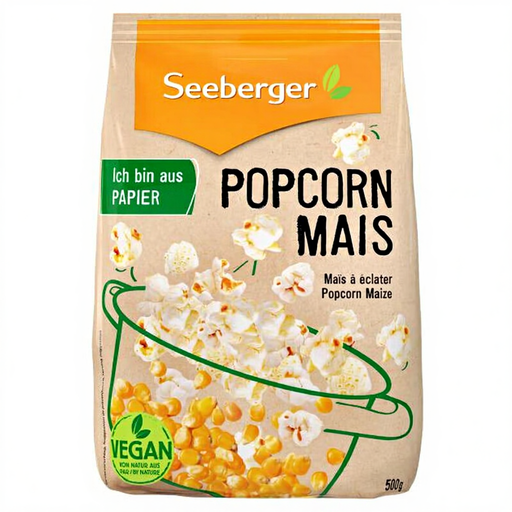 Image unavailable
Seeberger popcorn kernels, 500 g
For a planned break when you want to prepare the kernels yourself and choose the seasoning.
The product title states a pack size of 500 g. If you prepare the kernels with oil, the fat content of the finished portion will also depend on how much you use. The product description mentions peanuts and nuts; if you have allergies, check the labelling on the pack.
View at Joybuy
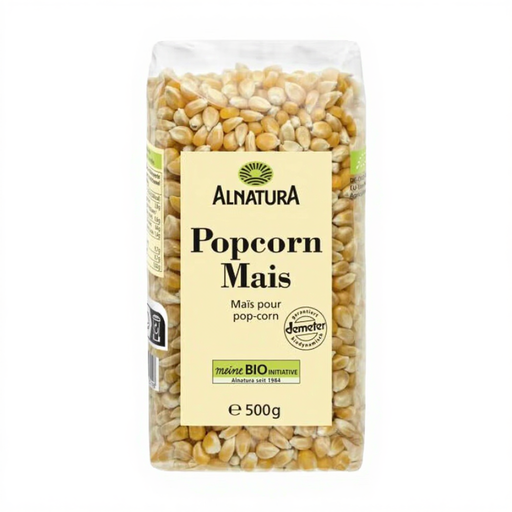 Image unavailable
Alnatura organic popcorn kernels, 500 g
For homemade popcorn when you want to decide how much oil and seasoning to use before your office break.
Alnatura states that its unpopped popcorn kernels contain 3.8 g of fat per 100 g; the preparation instructions use oil. The product description mentions possible traces of gluten, soya, milk, nuts, sesame and lupin. If this is relevant to you, check the labelling on the pack.
View at Joybuy
Frequently asked questions
How can I tell which popcorn is lower in fat?
For ready-to-eat popcorn, compare the fat content per 100 g and check the saturated fat too. Lebensmittelverband Deutschland describes the per-100 g figure as the basis for nutrition labelling; if you make popcorn yourself, you’ll also need to factor in the oil you use.
Are popcorn kernels automatically low-fat once popped?
No. The nutritional value of unpopped kernels does not automatically describe the finished portion. Alnatura states that its popcorn kernels contain 3.8 g of fat per 100 g when unpopped, and its preparation instructions call for oil.
Can I prepare popcorn at the office?
You can, provided preparation is allowed at your workplace and suitable equipment is available. For small portions, Lidl describes a microwave method using a suitable container with the lid resting loosely on top. Follow the instructions and keep an eye on it while it cooks. Alternatively, you can prepare the popcorn at home.
What does ‘low-fat’ mean on a pack of popcorn?
For solid foods, the European Commission’s EU rules allow the claim ‘low-fat’ only when the product contains no more than 3 g of fat per 100 g. The claim alone tells you nothing about sugar or salt, so check the other nutritional values for the specific product.


