Comparing nutrition for your lunch break
If you want to take ready-to-eat popcorn with you, the nutrition information and ingredients list will help you compare fat, sugar and salt. Make sure you compare the figures per 100 g for each variety.


For popcorn to enjoy during your lunch break, compare the fat, saturates, sugar and salt per 100 g, as well as the amount you’ll actually take with you, rather than relying on marketing claims. Ready-to-eat popcorn saves you the preparation; with popping corn, you decide what to add, but you’ll need to prepare and pack your snack in advance.
If you want to take ready-to-eat popcorn with you, the nutrition information and ingredients list will help you compare fat, sugar and salt. Make sure you compare the figures per 100 g for each variety.
If you have time before you head out, you can make your own popcorn from popping corn and choose what to add. You’ll then need a suitable container to take it with you.
If there’s no kitchen available between work, university or your journey, ready-to-eat popcorn could be a good option. Alongside the nutrition information, check that the pack size suits your break.
First decide whether you need popcorn that’s ready to eat or whether you can prepare it in advance. Then compare the nutrition information on the same serving basis.
| What to consider | What to check when buying | Who it matters most to |
|---|---|---|
| Fat content | Fat and saturates per 100 g; added oils in the ingredients list. | You want to choose a lower-fat variety, so you need nutrition information that’s easy to compare. For around 36% of consumers, this comparison is likely to be the main reason for choosing a product. |
| Taking it with you | Ready to eat or needs preparing; pack size and container for carrying it. | If you can’t prepare anything during your break, you’ll need a ready-to-eat snack in a suitable quantity. This is likely to be a priority for around 29% of consumers. |
| Sugar and salt | Sugar in sweet varieties and salt in savoury varieties, in each case per 100 g. | If you’re choosing sweet or savoury popcorn, you’ll want to know what’s in your portion besides fat. Around 21% of consumers are likely to want to compare sugar and salt as a priority. |
| Choosing your own ingredients | Preparation options and what you can add to the finished snack. | You prepare popcorn before heading out because you want to choose the oil and seasoning yourself. This is likely to be the main priority for around 14% of consumers. |
These labels don’t tell you how much fat a product contains. Heimatgut Bio Popcorn salzig, listed by REWE, contains 17 g of fat and 1.5 g of salt per 100 g.
If fat content is a key factor in your choice, compare the nutrition information for each specific variety per 100 g.
The figures for unpopped corn don’t include oil or other ingredients added during preparation. For example, REWE’s product page for Seeberger Popcorn-Mais lists 3.8 g of fat per 100 g of unpopped corn and describes preparing it with oil.
Take the ingredients you use into account before packing a portion of the prepared popcorn to take with you.
Depending on the recipe, sugar or salt may also be important factors in your choice. The nutrition information lets you compare these values across varieties.
For sweet popcorn, check the sugar content too; for savoury popcorn, check the salt content. Compare both per 100 g.
Seeberger Popcorn-Mais, listed by REWE, may contain traces of tree nuts and peanuts, even though popping corn is its main ingredient.
If allergens are relevant to you, check the ingredients and ‘may contain’ warnings on the pack you’re actually buying.
Popping corn for anyone who wants to prepare a snack themselves before their lunch break.
An example of ready-to-eat savoury popcorn in a 60-g pack.
Only worth considering as a crunchy alternative if it doesn’t have to be popcorn.
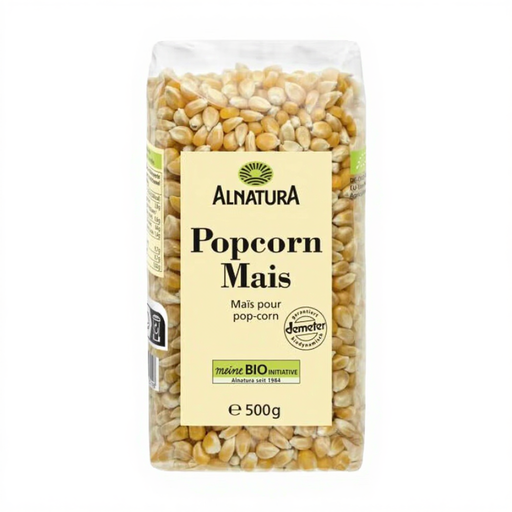
These products are a good fit for a lunch break when you can prepare your popcorn in advance and take it with you: popping corn to pop yourself and sweet popcorn that needs a microwave.
 No image available
For a lunch break when you can prepare the popcorn yourself and take it with you afterwards.
500 g of popping corn. Bear in mind that you may add oil and other ingredients to the finished snack, and that you’ll need a container to carry it in.
 No image available
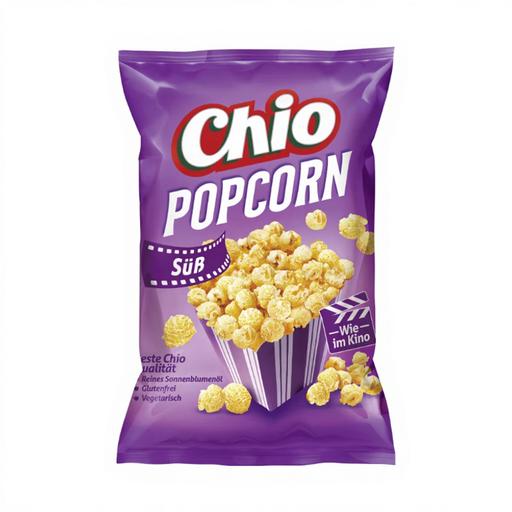
For sweet popcorn to take with you, if you can prepare it in advance in a microwave.
120-g pack. For sweet varieties, compare the sugar content as well as the fat in the nutrition information.
Compare the fat per 100 g on the nutrition table for several popcorn varieties. Check the saturates and ingredients list too; marketing claims alone don’t give you nutrition information you can compare.
No. The fat content of the finished popcorn also depends on how it’s prepared. With popping corn, you can choose the oil and other ingredients yourself, but you’ll need time and somewhere to prepare it before your lunch break.
Read the highlighted allergens in the ingredients list and check for any ‘may contain’ warnings on the specific pack. For example, Seeberger Popcorn-Mais, listed by REWE, may contain traces of tree nuts and peanuts.