Active holiday snackers focused on protein
After being active, you’re looking for a handy snack and want to assess the protein per portion alongside sugar, salt and ingredients. The product name alone won’t answer that question.


If popcorn is a must-have holiday snack, check any advertised high protein content against the nutrition information: in the EU, at least 20% of a food’s energy must come from protein for it to qualify as “High Protein”. Based on the figures published by More Nutrition, More Chunky Popcorn provides around 10% of its energy from protein. If protein matters more to you than choosing popcorn, consider other crunchy snacks. Also compare sugar, salt, ingredients and the portion you plan to eat.
After being active, you’re looking for a handy snack and want to assess the protein per portion alongside sugar, salt and ingredients. The product name alone won’t answer that question.
When several people are sharing, the actual portion size, ingredients and allergen information on the pack all matter. For sweet and savoury options, it’s also worth checking the sugar or salt content.
You want to stick with popcorn and compare the sugar and fibre per 100 g. These figures can help you choose between recipes, but they don’t in themselves prove that a product is high in protein.
First decide whether popcorn itself or the protein content matters more to you. Then you can compare nutrition information, ingredients and portion size to find a snack that suits your holiday plans.
A good choice if: You’re after popcorn for a film afternoon and want to compare these two nutrients.
The trade-off: Despite containing 10 g of protein per 100 g, the figures published by More Nutrition for Chunky Popcorn don’t meet the EU requirement for a high protein claim.
A good choice if: A crunchy snack and its protein content matter more to you than choosing popcorn.
The trade-off: Protein crisps and protein flips aren’t popcorn. funny-frisch lists 1.9 g of salt per 100 g for its Protein Chips Barbecue Style, along with the warning “May contain milk”.
A good choice if: Preparing it together or choosing how much salt and sugar to add is your priority.
The trade-off: The basic recipe described by REWE, using popcorn kernels, oil and salt or sugar, doesn’t automatically make it a protein snack.
| Criteria | What to check when buying | Who it matters to |
|---|---|---|
| Protein content | Compare protein and energy per 100 g. Under EU requirements, at least 20% of the energy must come from protein for a “High Protein” claim; the grams alone aren’t enough. | After being active, I want to know how much protein my snack actually contains rather than relying on its name. For around 33% of consumers, this protein comparison comes first. |
| Ingredients, salt and allergens | Read the ingredients and allergen information on the specific pack, and compare the salt per 100 g as well as per planned portion. | When we’re sharing a savoury snack, I want to check in advance that its ingredients are suitable for everyone. For around 25% of consumers, this check is the priority. |
| Sugar and fibre | For popcorn, compare sugar and fibre on the same per-100 g basis; assess the protein content separately. | For a film afternoon, I want to choose between popcorn varieties based on their nutritional values, even if protein isn’t my main reason for buying. Around 25% of consumers put this comparison first. |
| Portion and preparation | Check the pack and portion size. With homemade popcorn, the ingredients and quantities depend on how you prepare it. | For a day out, I want a snack that’s easy to carry and share; at home, I might prefer to make my own popcorn. For around 17% of consumers, this practical consideration comes first. |
A protein figure in grams doesn’t tell you what proportion of the total energy comes from protein. More Nutrition lists 10 g of protein and 396 kcal per 100 g for Chunky Popcorn. That works out at around 10% of its energy from protein, below the EU requirement of 20% for a “High Protein” claim.
Use the protein and energy figures from the same nutrition table. Multiply the grams of protein per 100 g by 4 kcal, then divide the result by the kcal per 100 g.
Sugar and fibre answer different questions from the proportion of energy that comes from protein. More Nutrition says Chunky Popcorn contains no added sugar and 15 g of fibre per 100 g; that doesn’t mean it’s high in protein.
Decide which nutrient matters most to you, then compare the figures for the products you’re considering on a per-100 g basis.
The recipe may also contain salt and ingredients that need to be checked for allergens. funny-frisch lists 1.9 g of salt per 100 g for Protein Chips Barbecue Style and says “May contain milk”.
Before sharing, check the labelling on the specific pack and work out the nutritional values for the portion you plan to eat.
A high protein content doesn’t tell you about the other nutritional values or ingredients. The fact that something is popcorn or has a crunchy texture doesn’t tell you either.
Also compare energy, sugar, salt and ingredients, then decide whether popcorn or another type of snack suits the occasion.
Chunky Popcorn is a sweet popcorn option for film nights and snacking on the sofa.
Protein Chips Barbecue Style are a savoury crisp alternative, not popcorn.
REWE stocks popcorn varieties under the Heimatgut brand, as well as separate protein crisps.
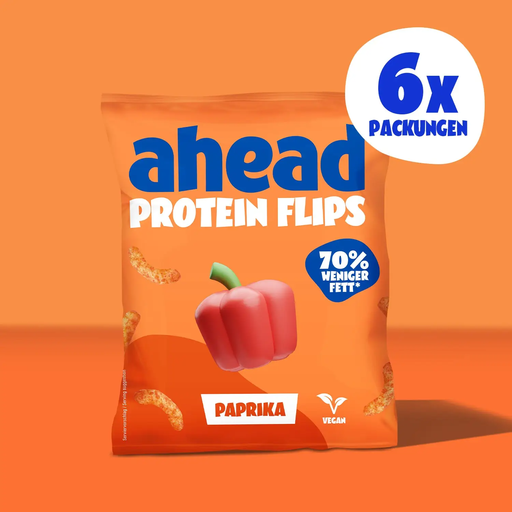
If you’re open to something savoury instead of popcorn for your holiday snack, portioned protein flips are another category to consider. Before choosing, compare the nutrition information and ingredients on the specific pack.
 No image available
A savoury, portioned holiday snack if you’re not set on popcorn. Paprika flavour, with six 50 g bags; protein flips aren’t popcorn. Check the ingredients and nutrition information on the pack to see if they suit you.
Under EU requirements, at least 20% of the food’s energy must come from protein for this claim to be used. Compare the protein and energy figures in the same nutrition table; the protein figure in grams alone isn’t enough.
The figures published by More Nutrition don’t support that claim: 10 g of protein per 100 g provides around 40 kcal from protein. Out of a total of 396 kcal per 100 g, that works out at around 10% — less than the 20% required for “High Protein”.
Check the ingredients, allergen information, salt content and the amount each person is likely to eat on the specific pack. funny-frisch lists 1.9 g of salt per 100 g for Protein Chips Barbecue Style and warns that it may contain milk. This doesn’t mean it’s suitable for everyone with allergies.
Yes. When you make popcorn at home, you decide which ingredients to use and how much of each. REWE describes popcorn kernels, oil and salt or sugar as the basic ingredients. To tell whether a variation is high in protein, you’ll need to check its actual ingredients and nutritional values.