Which option suits you?

If you want to make your own popcorn

You can prepare a snack before the school day and want to control how much oil and seasoning you use. Popping corn lets you make those choices as you prepare it; the nutritional content of the finished snack will depend on what you add.

If you need popcorn that’s ready to eat

You want a snack you can put straight into a school bag without any preparation. Compare the nutritional information per 100 g for similar popcorn products, and read the ingredients list rather than relying on the impression that a particular variety is “light”.

If you’re planning the whole school break

Popcorn should be part of a snack, not a substitute for school lunch. The German Nutrition Society describes a school snack as a complement to other meals, which can also include fruit or vegetables.

What to look for when buying

First decide whether you can make popcorn before school or need a ready-made pack. Then look at the ingredients you’ll add, or the nutritional information for the specific variety.

What matters What to check Who it matters to
Added fat When buying popping corn, factor in the ingredients you plan to add; for ready-made popcorn, compare the fat per 100 g with similar varieties. If you can prepare it before the school day, you may want to choose the oil and seasoning yourself; around 39% of consumers prioritise this control.
Sugar, salt and snacks Consider fat, sugar and salt per 100 g together, and think about how popcorn fits in alongside other meals. If you’re taking popcorn to school for a snack, you’ll want the sugar and salt levels to suit your preferences too. Around 38% of consumers put this into perspective first.
Ready-made snack Check the nutritional information and ingredients list on the current pack; use a Nutri-Score, if there is one, only when comparing similar foods. If you don’t have time to prepare a snack, a ready-to-eat option with clear information on the pack may be your priority; this matters most to around 23% of consumers.

Common selection mistakes

  • Assuming “less fat” means “low fat”

    “Less fat” compares a product with another one; it doesn’t automatically mean that its fat content is low. The wording also tells you nothing about its sugar or salt content.

    Check the specific fat value per 100 g and what it’s being compared with. Sugar and salt are also worth considering when choosing between popcorn varieties.

  • Assuming coated popcorn is a lighter option because of its name

    EDEKA24 lists Werther’s Original Popcorn Salted Caramel as containing 15.4 g of fat, 48 g of sugar and 2.7 g of salt per 100 g. The word “popcorn” alone doesn’t tell you about a variety’s nutritional content.

    Check the information for the specific product before making caramel-coated popcorn a regular school snack.

  • Packing popcorn as a complete school lunch

    A popcorn snack serves a different purpose from lunch. The German Nutrition Society considers snacks as part of the overall food eaten during the school day.

    Plan popcorn as part of a break-time snack, taking breakfast, lunch and, if appropriate, fruit or vegetables into account.

  • Relying on information from an old pack when the range changes

    ALDI SÜD says its product range changes regularly and advises checking the pack or contacting the supplier for information about individual products.

    Check the ingredients, allergen information and nutritional details on the current packaging of the variety you actually buy.

Brands and retailers to consider

Lorenz

Lorenz offers a potato crisp marketed as having less fat. This is a different snack category from popcorn.

  • Lorenz describes Naturals Leicht fein gesalzen as a variety with 30% less fat than conventional potato crisps.
  • The comparison is with potato crisps, so it can’t be used as nutritional information for popcorn.

funny-frisch

funny-frisch popchips BBQ Style is a potato and rice snack, not popcorn.

  • funny-frisch lists the variety as containing 13 g of fat per 100 g.
  • This information isn’t suitable as nutritional information for a popcorn variety.

REWE

A sweetened popcorn product listed by REWE shows why you need to consider sugar as well as fat.

  • REWE lists this product as containing 4.8 g of fat per 100 g.
  • The product information also lists 36.6 g of sugar per 100 g, so fat alone isn’t enough to make a choice.

EDEKA

EDEKA24 lists Werther’s Original Popcorn Salted Caramel, a caramel-coated popcorn.

  • EDEKA24’s information lets you compare this specific variety: 15.4 g of fat, 48 g of sugar and 2.7 g of salt per 100 g.
  • These values apply to the product named, not to popcorn in general.

Lidl

Lidl explains how to make popcorn at home from popping corn.

  • The instructions include a microwave and an air fryer as preparation options.
  • The amount of oil and other ingredients in the finished snack depends on how you prepare it.

ALDI

When the range changes, the information on the specific popcorn pack is what matters.

  • ALDI SÜD advises checking the pack or contacting the supplier for the ingredients in individual products.
  • Don’t assume that information from a variety you bought before applies to another pack.

Popping corn for making at home at Joybuy

These products are popping corn for anyone who wants to make a snack at home and choose the oil and seasoning themselves. The nutritional information for the kernels before preparation doesn’t automatically describe the finished popcorn.
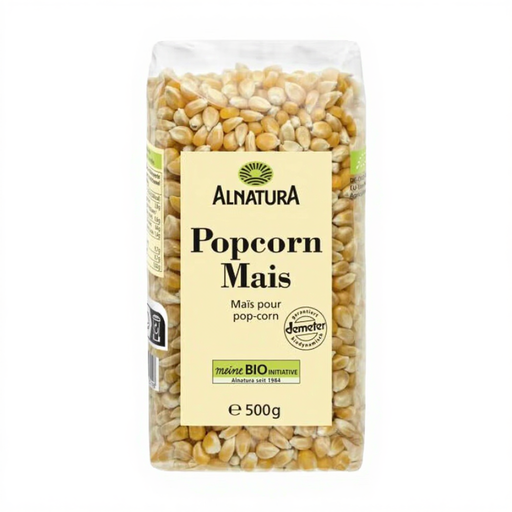
Alnatura popping corn, 500 g

Alnatura Organic Popping Corn Kernels, 500 g

Popping corn to prepare before the school day, when you want to control how much oil and seasoning you use.

The nutritional content of the finished popcorn will also depend on the ingredients you add. If you have allergies, check the information on the specific pack.

View at Joybuy
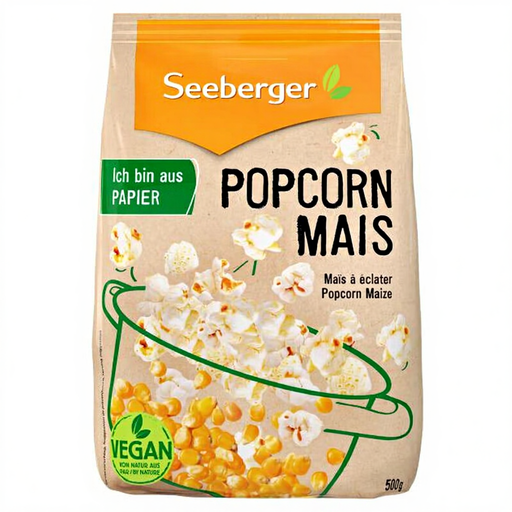
Seeberger popping corn, 500 g

Seeberger Popcorn Corn Kernels, 500 g

Popping corn for anyone who wants to prepare a school snack at home and choose the seasoning themselves.

Remember to factor in added oil when comparing it with ready-made popcorn. If allergens are relevant to you, check the information on the specific pack.

View at Joybuy
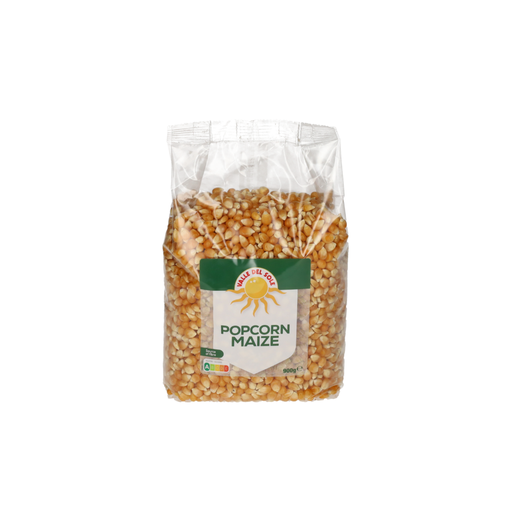
Valle del Sole popcorn maize, Butterfly variety

Valle del Sole Popcorn Maize (Butterfly)

Popping corn to prepare at home when you want to choose the ingredients and seasoning for a school snack yourself.

Before buying, check the pack size and nutritional information for the specific variety. Any oil, sugar or salt added during preparation will be in addition to the information for the maize.

View at Joybuy

Frequently asked questions

Does “reduced fat” popcorn automatically mean “low fat”?

No. A reduction claim compares one product with another, whereas “low fat” refers to an absolute fat content. For solid foods, the Verbraucherzentrale says that “low fat” means no more than 3 g of fat per 100 g. So check the specific nutritional information and, if there’s a reduction claim, what the product is being compared with.

Is a low fat value enough when choosing sweetened popcorn?

No, as sugar and salt are relevant to the comparison too. REWE lists its sweetened popcorn as containing 4.8 g of fat and 36.6 g of sugar per 100 g. Consider these values together rather than judging the product’s composition by its fat content alone.

How can I prepare popcorn for school at home?

With popping corn, you can choose the ingredients and seasoning yourself at home. Lidl describes methods including using a microwave or air fryer. When planning, remember that added oil, sugar or salt will change the nutritional content of the finished snack.

What should I check on a pack of ready-made popcorn?

Compare the fat, sugar and salt per 100 g, as well as the ingredients list for the specific variety. Check the allergen information on the current pack if it’s important to you; with ranges that change, information from a product you bought before isn’t a substitute.