Students who want to control how much fat they add
If you have a saucepan, you can decide how much oil to add when making popcorn from loose kernels. However, the fat value on the pack of dry kernels doesn’t describe the finished popcorn.


If you want to control how much fat you add for a student night and have a saucepan, loose popcorn kernels are a straightforward choice. According to REWE, Seeberger popcorn kernels contain 3.8 g of fat per 100 g as a dry ingredient. Microwave and ready-to-eat popcorn save you the effort of cooking in a pan, but nutritional values vary by product. Compare the pack information per 100 g, and remember to factor in oil and toppings if you’re making popcorn yourself.
If you have a saucepan, you can decide how much oil to add when making popcorn from loose kernels. However, the fat value on the pack of dry kernels doesn’t describe the finished popcorn.
Ready-to-eat popcorn needs no preparation; for microwave popcorn, you’ll need a suitable microwave. Check the fat, energy, sugar and salt per 100 g for the specific product, rather than assuming its format tells you about its nutritional values.
A pack of loose kernels can be enough for several batches. REWE sells Seeberger popcorn kernels in a 500 g pack; the number of portions you get depends on how many kernels you use each time. Remember to plan for oil and any other ingredients, too.
First, work out whether you can make popcorn yourself or need a ready-to-eat or microwaveable option. Then compare the nutritional information for the specific product per 100 g; if you’re buying loose kernels, remember to include the ingredients you add during preparation.
| What you’re looking for | What to check | Who it matters to |
|---|---|---|
| Control how much fat you add | Compare fat and energy per 100 g; if you’re buying loose kernels, factor in any added oil and toppings. | When I make popcorn in a pan, I want to decide how much oil to use and avoid confusing the value for dry kernels with that of the finished snack. For around 50% of consumers, this control is the top priority. |
| Go without a saucepan | Choose between ready-to-eat and microwaveable popcorn, and follow the preparation instructions on the pack. | On a study night without access to a hob, I need an option I can eat straight away or make in a microwave if one is available. This is the top priority for around 30% of consumers. |
| Make your supply last | Check the pack size and how many kernels you need for each batch; remember to factor in any other ingredients. | I want to make several portions from one pack, according to my needs, rather than being tied to a fixed portion size. For around 20% of consumers, this is the main consideration. |
A statement about fat content doesn’t tell you the food’s overall energy value. As the German Food Federation explains, such claims relate to the specific nutrient named.
When comparing popcorn, also check the energy, sugar and salt per 100 g in the nutritional information for the specific product.
The 3.8 g of fat per 100 g of Seeberger popcorn kernels stated by REWE applies to the dry kernels. Oil and toppings change the nutritional make-up of the prepared portion.
If you want to control how much fat you add, pay attention to how much oil you use for your portion.
Whether a product is labelled organic or vegan, or comes from a well-known brand, doesn’t tell you how much fat or energy it contains.
Use these features to assess the product characteristic they refer to, and check the information for the specific product when comparing nutritional values.
For making popcorn yourself, REWE sells Seeberger popcorn kernels in a 500 g pack. According to REWE’s product page, you can prepare the kernels in a saucepan, frying pan or popcorn maker.
REWE sells Chio popcorn as a ready-to-eat sweet option. Its format may suit you if you don’t want to use a saucepan.
Heimatgut offers both ready-to-eat and microwaveable popcorn.
Lorenz Naturals Lightly Salted is a potato crisps product, not popcorn.
funny-frisch Protein Chips Barbecue Style are crisps, not a type of popcorn.
These products offer three options for a student night: loose kernels to prepare yourself, ready-to-eat caramel popcorn and sweet microwave popcorn. The preparation method affects how much control you have over added ingredients; for a nutritional comparison, check the specific pack.
 No image available
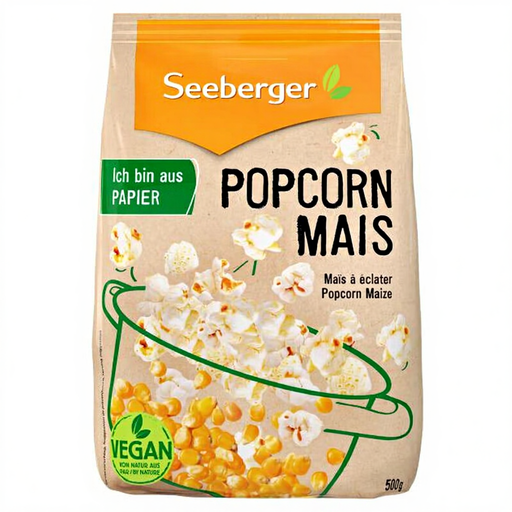
For making popcorn yourself when you want to control how much oil you add. REWE gives the fat content of Seeberger popcorn kernels as 3.8 g per 100 g of dry kernels; this value doesn’t apply to the finished portion. Check the pack size before buying, as product details may differ, and read the allergen information on the specific pack.
 No image available
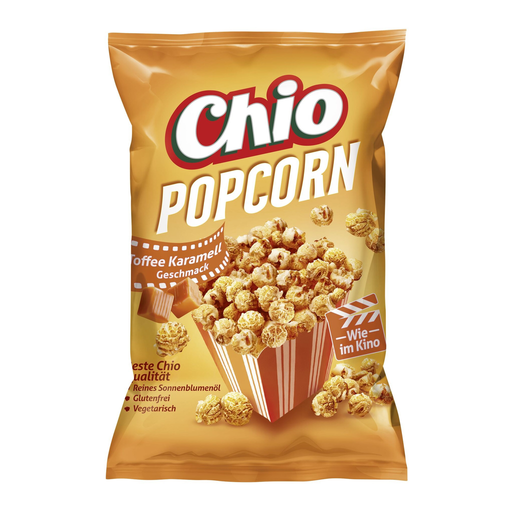
Ready-to-eat caramel popcorn for an evening without having to prepare any yourself; the product title states 120 g. If you’re choosing between products by fat content, compare the energy and sugar per 100 g on the pack, too. The product format alone doesn’t tell you whether it contains less fat.
 No image available
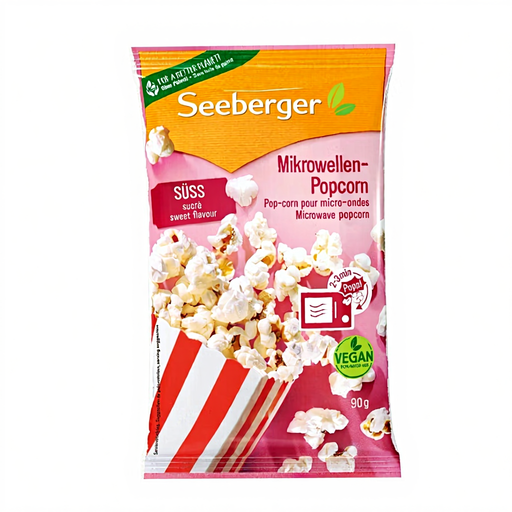
Sweet microwave popcorn for when you have access to a microwave but don’t want to use a saucepan; the product title states 90 g. Follow the preparation instructions and take care of hot steam when opening the pack. To compare fat and energy content, check the nutritional information per 100 g on the pack.
No. A claim about less fat relates to that nutrient; it doesn’t automatically mean the product has a lower overall energy content. So, for each popcorn product, also compare the energy, sugar and salt per 100 g.
Nutritional information per 100 g gives you a common basis for comparing packaged products. Pay particular attention to energy, fat, saturates, carbohydrates, sugars, protein and salt. Information per portion can also be useful, but it depends on the portion size in question.
No. The value for dry kernels doesn’t describe popcorn after oil or toppings have been added. REWE gives the fat content of dry Seeberger popcorn kernels as 3.8 g per 100 g; the nutritional make-up of the finished portion also depends on how you prepare it.
Read the ingredients list and allergen information on the specific pack, even if it contains plain popcorn kernels. REWE lists popcorn kernels as the ingredient in its Seeberger popcorn kernels, but also warns that the product may contain traces of tree nuts and peanuts. Information may differ for other products.