Students taking short breaks on the go
If you want to take popcorn with you without having to prepare it, a ready-to-eat bag is a good option. Brands such as JIMMY’s offer mini bags in individually portioned sizes.


Ready-to-eat popcorn is a good choice for a short study break when you’re out and about; a mini bag makes it easy to take a small portion with you. A larger bag is better for sharing or enjoying over several breaks, while microwave popcorn requires a suitable microwave and time to prepare. Choose the variety that suits you based on its flavour, pack size, and the ingredients and nutritional information on the pack.
If you want to take popcorn with you without having to prepare it, a ready-to-eat bag is a good option. Brands such as JIMMY’s offer mini bags in individually portioned sizes.
If you have time to prepare a snack for your break, microwave popcorn is another option. Follow the instructions on the pack and watch out for hot steam when opening it.
If sugar, salt, fat or specific ingredients matter to you, compare the nutritional information per 100 g and check the allergen information on the specific pack if you have allergies.
First, decide whether you want popcorn that’s ready to eat or something you can prepare at home. Then choose a pack size and flavour to suit your break.
| What to consider | What to check | Who it matters to |
|---|---|---|
| Taking it with you and portion size | Check that the popcorn is ready to eat and look at the pack size; for an individually portioned amount, look for mini bags. | For a short break while I’m out, I want a snack that needs no preparation and a portion that’s right for me. This is the main priority for around 36% of consumers. |
| Flavour | Choose between sweet, salted and sweet-and-salty; check the ingredients list as well as the description on the front of the pack. | If I want a particular flavour, I don’t want to rely on the appearance of the bag to tell me what’s inside. Around 29% of consumers make this their main consideration. |
| Ingredients and nutritional information | Check the ingredients, allergen and may-contain information, as well as sugar, salt and fat per 100 g on the pack. | If I have allergies or want to avoid certain ingredients, the labelling on the variety I choose needs to meet my requirements. This is the priority for around 21% of consumers. |
| Preparing it at home | For microwave popcorn, read the appliance requirements and the instructions for opening the bag. | At home, I’m happy to take the time to pop the corn, but I need a suitable microwave. Freshly prepared popcorn is the main consideration for around 14% of consumers. |
A large bag is easy to share, but it doesn’t provide a single portion. For a short break, a mini bag may be more convenient.
Choose an individually packed portion, or set some aside from a larger bag in advance.
According to XOX, its ready-to-eat Sweet & Salty variety contains 51.8 g of sugar and 1.5 g of salt per 100 g. These figures apply to this specific variety, not to sweet-and-salty popcorn in general.
Compare the ingredients and nutritional information per 100 g on the packs of the varieties you’re choosing between.
Seeberger’s 90 g salted microwave popcorn needs to be prepared first. Hot steam may escape when you open the bag.
Choose ready-to-eat popcorn when you’re out and about. For microwave popcorn, follow the preparation instructions and warnings on the bag.
Product information in an online shop may differ from the details on the actual pack. The specific variety you choose is especially important if you have allergies or need to avoid certain ingredients.
Before eating, check the ingredients list, allergen information and nutritional details on the pack you receive.
Seeberger offers salted microwave popcorn in a 90 g pack.
XOX offers ready-to-eat sweet-and-salty caramel popcorn in a 200 g bag.
Alongside larger bags, JIMMY’s offers mini bags and multipacks.
These two bags of caramel popcorn could suit study breaks when you want to take a snack with you that doesn’t need a microwave. Both contain 120 g; if you only want a small amount, you’ll need to portion it out yourself.
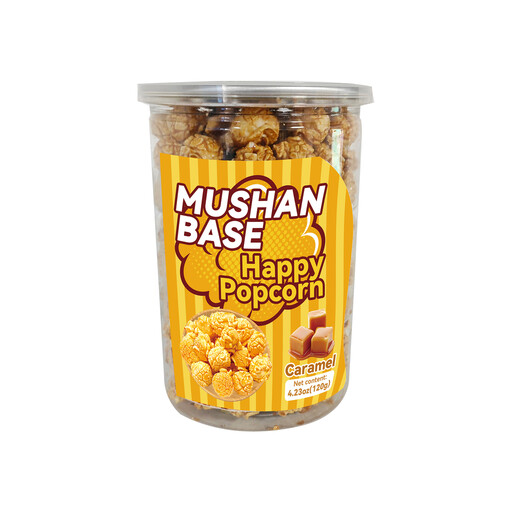 Image unavailable
This 120 g pack could be a good choice for a study break when you fancy caramel popcorn. If you want to take less with you, portion some out in advance; if you have allergies, check the labelling on the pack.
 Image unavailable
This 120 g pack is another option if you’re looking for caramel popcorn for a study break. You can portion out a smaller amount in advance; check the ingredients and allergen information on the specific pack.
Only if you have access to a suitable microwave and enough time to prepare it. For a short break without a microwave, choose ready-to-eat popcorn. When preparing microwave popcorn, follow the instructions on the pack and watch out for hot steam when opening it.
Check the ingredients list and allergen labelling on the specific pack. As the German consumer advice centre explains for pre-packed foods, ingredients are listed in descending order by weight. You should also check the may-contain information for the variety you choose.
As well as flavour, compare the ingredients and nutritional information using the same measure, such as per 100 g. This lets you check the sugar, fat and salt content of each variety, rather than assuming what the recipe contains from its name.