
Lieferung heute & morgen

Qualitätsgarantie

Willkommens-Angebote freischalten: KOSTENLOSE Lieferung | Bis zu 80 % RABATT | Kostenlose 30-Tage-JoyPlus-Testphase
App herunterladen
The search for authentic Asian dishes that can be easily integrated into a daily routine often leads to frozen dumplings. The classic combination of pork and celery, known as jiaozi, is particularly popular for its balanced flavour. However, the selection of products available online can be overwhelming.
This article serves as a guide. It presents a selection of frozen pork and celery dumplings, highlighting their specific features based on manufacturer information. The goal is to provide you with an informed basis for your next purchase.
Before you order Asian dumplings online, a few objective criteria can help with your selection. These points are based on product declarations and allow for a direct comparison.
The proportion of filling to the total product, as well as the ratio of meat to vegetables, are key indicators of the flavour profile. Manufacturers often specify these values in the ingredients list. A higher meat content can suggest a more robust flavour, while a high celery content provides more freshness and texture. Pay attention to the percentage of pork and celery to get an idea of the character of the pork and celery dumplings.
Most frozen dumplings are versatile. The most common methods are:
Check the package instructions to ensure the product is suitable for your preferred cooking method.
A look at the nutritional table per 100g allows for a direct comparison of calories, fat, protein, and salt content. This is particularly relevant if you want to integrate an Asian ready-meal into a mindful diet. The list of additives also provides information on any flavour enhancers, stabilisers, or preservatives used.
Here is a detailed look at three products, based on the information provided by the manufacturers.
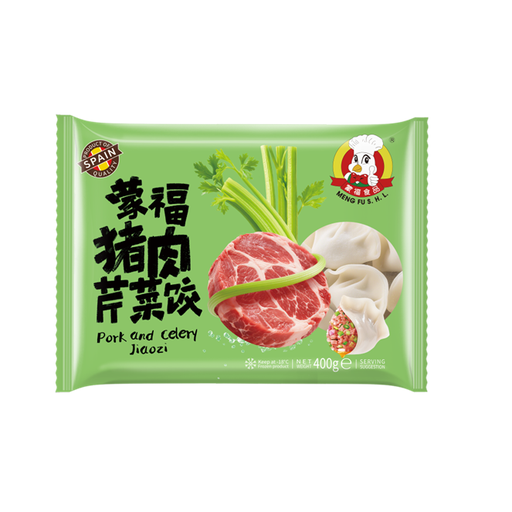
Why It Stands Out This product is distinguished by its high filling content of 64.3%. The filling combines pork (24%) with two types of celery: Chinese celery (18%) and regular celery (18%). This blend suggests a particularly pronounced celery aroma.
Pros
Who It's For For those who prefer an intense and fresh celery flavour in their dumplings and value a high filling-to-dough ratio.
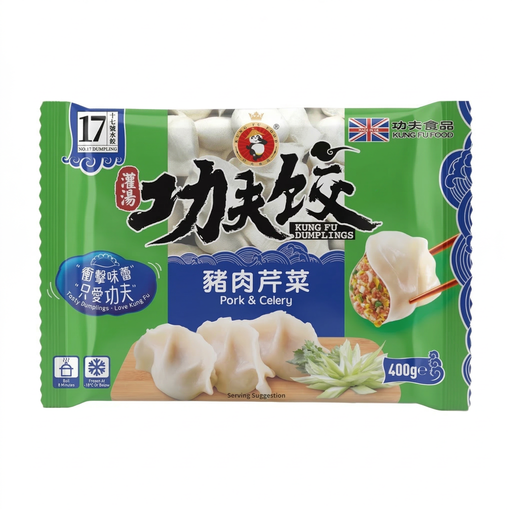
Why It Stands Out The KUNG FU recipe sets itself apart with the addition of Sichuan pepper oil. This ingredient lends the classic filling of pork (23%) and celery (15%) a slightly numbing, aromatic note typical of Sichuan cuisine.
Pros
Who It's For For fans of Sichuan cuisine and anyone looking for a classic dumpling with an added layer of aromatic complexity.
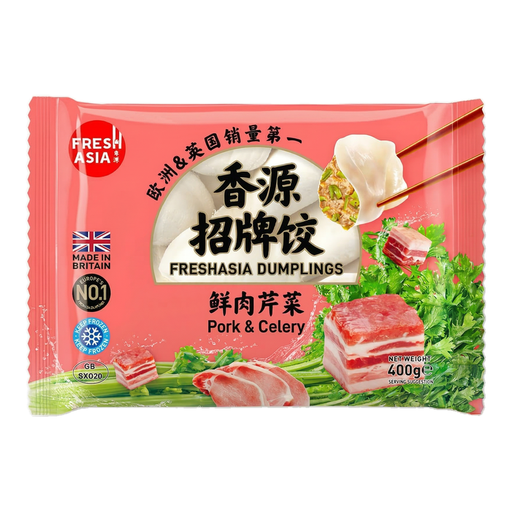
Why It Stands Out FRESHASIA uses a classic recipe that lists pork lard (8.1%) as an ingredient. Lard is often used in traditional recipes to give the filling extra juiciness and a rich flavour. The pork content is 20.1%, and the celery content is 19.4%.
Pros
Who It's For For those who appreciate a traditional-style, juicy filling and prefer a balanced ratio of meat to vegetables.
The pork and celery combination is just one of many possibilities. If you're looking for other fillings like chicken, beef, shrimp, or vegetarian alternatives, there is a wide range to explore.
Looking for other flavours or more Asian frozen products? Explore our entire range of chilled and frozen foods.
Preparation is straightforward. For boiled jiaozi, add the frozen dumplings directly to a pot of boiling water. Once they float to the surface and the dough appears translucent (about 6–8 minutes), they are cooked. For the pan-frying method (potstickers), fry the bottoms in a little oil until crispy, then add about 100 ml of water, cover the pan, and let the jiaozi steam for 5–7 minutes until the water has evaporated.
All three are types of dumplings, but they originate from different Asian cuisines. Jiaozi are the Chinese original, often have a slightly thicker wrapper, and are boiled, steamed, or pan-fried. Gyoza is the Japanese version, which typically has a thinner wrapper, is often smaller, and is most commonly pan-fried. Mandu are Korean dumplings that vary in shape and filling and can also be boiled, steamed, or pan-fried.
After opening, the package should be resealed airtight, for example, with a clip or by transferring the contents to a freezer bag. Continue to store the dumplings at -18°C in the freezer and use them within a few weeks to maintain quality. Products that have been thawed should not be refrozen.