Which oven is right for you?

Meal preppers cooking several portions

If you’re preparing pork fillet and possibly side dishes for several working days, usable capacity and compatible shelves matter. The number of levels alone doesn’t tell you whether your dishes will fit at the same time.

Cooks who focus on temperature

A clearly specified food probe can help you check the meat’s temperature while it roasts. Cooling, chilled storage and transport are separate steps to plan for when preparing lunch portions.

Households without a built-in space

For a freestanding appliance, compare the available worktop space, oven capacity and the dimensions of your roasting dish. This will help you judge whether the specific model can accommodate the number of portions you want to cook.

What should you look for when buying?

Consideration What to check before buying Who is this important to?
Core temperature and safe lunch portions Check whether the specific model has a food probe, or whether you’ll use a separate meat thermometer. Also plan how you’ll keep food chilled during storage and transport. This is essential if you want to check the meat’s temperature as it roasts and take the cooked portions with you later. Around 33% of consumers focus primarily on temperature control and safe storage after cooking.
Several portions in one go Compare the oven capacity and usable space with your dishes and shelves. Treat claims about multiple levels as model-specific manufacturer information, not a guarantee of results. If you want to cook several lunch portions or side dishes together, make sure your planned arrangement will actually fit in the oven. Around 25% of consumers prioritise space for multiple portions.
Appliance type and positioning Measure either the existing built-in space or the intended position, then compare the measurements with those of the exact model. Remember to check the size of your roasting dish too. If you don’t have a suitable built-in space or need to keep the appliance within a limited area, the available space comes first. Around 25% of consumers prioritise the appliance type and size.
Energy use and cleaning For household ovens with the relevant label, compare the kWh per standard cycle for the same stated heating method. Also check the cleaning options available on the specific model. If you use your oven regularly, comparable energy figures and the effort involved in cleaning are worth considering. Around 17% of consumers focus on these factors.

Pitfalls when choosing an oven and planning lunches

  • Assuming ‘three levels’ guarantees the same result across them all

    A manufacturer’s claim about the number of levels isn’t a recipe test using your dishes and quantities. Whether meat and vegetables will fit at the same time also depends on dish dimensions and shelf positions.

    Check the dimensions of your dishes, the instructions and what’s included. Assess the meat’s temperature independently of the number of levels.

    If the dishes don’t fit together, you may need to cook in an additional batch.

  • Comparing the energy labels of different types of appliance directly

    The stated kWh figures relate to standard cycles and the heating method measured in each case. They aren’t a direct comparison of the energy used to cook identical lunch portions.

    Only compare figures based on the same testing criteria, and also take into account the number of portions and how many batches you’ll need.

  • Confusing cooking with cooling afterwards

    Thorough cooking and subsequent cooling are separate food-safety steps. The oven’s heating method doesn’t take care of storage or chilled transport.

    Plan for rapid cooling, chilled storage and a way to keep food cool during your journey, whatever oven you choose.

Brands to consider

Bosch

The built-in models mentioned differ in their fan cooking features and sensor functions.

  • Bosch specifies 3D Hotair on the HBA571BB4, for up to three levels.
  • No sensor is specified for the HBA571BB4. The HRG578CB7, by contrast, is listed by Bosch with a meat probe and steam assistance.

AEG

According to AEG, the TS6PB51ZPB built-in oven from the 6000 SenseCook range comes with a food probe and pyrolytic cleaning.

  • A sensor is explicitly specified for this model.
  • Claims about precise cooking results aren’t independent proof of performance with a particular pork fillet recipe.

NEFF

For the B2CCJ7AK3 built-in oven, NEFF specifies CircoTherm fan cooking for up to three levels and pyrolytic cleaning.

  • The multi-level claim applies to this model.
  • No sensor is specified for this appliance. Features of other CircoTherm models don’t automatically apply to it.

Miele

According to Miele, the H 7364 BP built-in oven comes with a food probe and pyrolytic cleaning.

  • Miele lists a food probe for this model.
  • These features don’t prove that it’s better for meal prep.

Severin

The freestanding TO 2058 mini oven is a compact option if you don’t have a suitable built-in space.

  • Severin specifies a 42 l capacity, convection and four shelf levels.
  • These figures don’t show how many dishes of meat and side dishes will fit at once; the product information consulted doesn’t specify a built-in food probe.

Joybuy products for pork fillet lunches

This selection includes built-in and freestanding appliances for roasting and preparing several portions. Check that your dishes and available space suit the specific model.

Comfee built-in oven, 60 cm, 70 l

Comfee built-in oven, 60 cm, 70 l

An option for preparing several portions, if the dishes and shelves suit your cooking routine.

Features listed in the product name: 3 kW, grill, pizza function, AquaClean steam cleaning, LED display with timer, ECO mode and energy rating A.

View at Joybuy

Bosch HBG578ES3 Series 6 oven

Bosch HBG578ES3 Series 6 oven

A built-in option for cooking several dishes, provided the space and dishes suit the specific model.

Features listed in the product name: 60 cm, AirFry, 3D Hotair and pyrolytic cleaning.

View at Joybuy

Woltu mini convection oven, 28 l

Woltu mini convection oven, 28 l

A freestanding compact option if you don’t have a built-in space, provided the oven capacity and roasting dish are compatible.

Features listed in the product name: temperature control and timer; black.

View at Joybuy
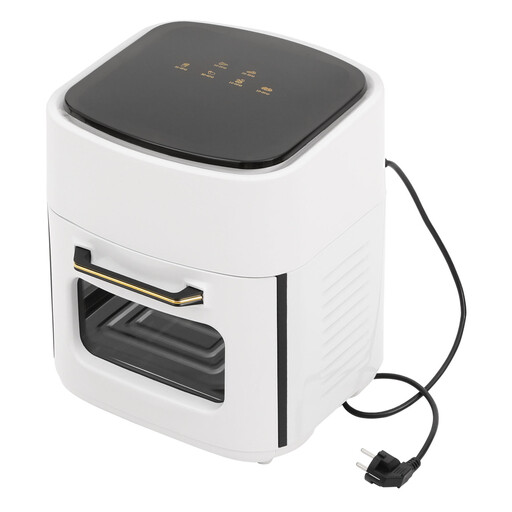
15 l smart air fryer oven, 1400 W

15 l smart air fryer oven, 1400 W

A compact worktop appliance for smaller dishes; check that its capacity suits the number of portions you want to cook.

Features listed in the product name: 360° heat circulation, touch controls, preset programmes, viewing window and dishwasher-safe basket.

View at Joybuy

Haier H6 ID23T3HTB built-in oven, 78 l

Haier H6 ID23T3HTB built-in oven, 78 l

A built-in option for cooking several dishes, if the available space and your dishes are suitable for the appliance.

Features listed in the product name: nine cooking functions and energy rating A+.

View at Joybuy

Frequently asked questions

How can I tell if the pork fillet has been cooked thoroughly?

The German Federal Institute for Risk Assessment (BfR) recommends heating meat to at least 70 °C at its centre for at least two minutes. If needed, check the core temperature with a meat thermometer; the heating method alone can’t confirm it.

What should I do with cooked lunch portions before taking them with me?

For longer storage, cool hot food quickly to below 7 °C and, according to the BfR, keep perishable foods at 2 °C to no more than 7 °C. Keep them chilled while you’re travelling too; the oven doesn’t take care of these steps.

What measurements should I check before positioning the oven?

For a built-in appliance, compare the dimensions of the space with those specified for the exact model. For the Bosch HBA571BB4, Bosch specifies a niche height of 585–595 mm, a width of 560–568 mm and a depth of 550 mm. For a freestanding appliance, check its external dimensions, your roasting dish and the positioning instructions in the manual.

What does the energy label tell me about energy use?

For household ovens covered by the label, it shows details including oven capacity and average energy use per standard cycle for the stated heating methods. The German Environment Agency explains that these figures are for comparison; they don’t show how much energy your particular pork fillet recipe will use.

Does an oven need to have a food probe?

No, a built-in sensor isn’t essential for cooking; you can check the meat’s temperature with a separate thermometer. If you’d like to take the measurement directly at the appliance, check the features of the exact model, as they vary from one oven to another.