If you often cook fillet and several sides at the same time, and have a suitable space for it, a built-in oven with a clearly specified multi-level fan function could be a good option. If you don’t have room for a built-in model, a freestanding fan oven may suit you, provided the fillet, dish and sides all fit inside. With either type, check the meat itself to see whether it is cooked, rather than relying solely on the cooking time or automatic programmes.
Which oven is right for you?
For hosts serving oven-cooked sides
If you want to time the fillet and sides for the same meal, check the usable oven space, the dimensions of your dishes and whether the oven clearly specifies a multi-level fan function. The NDR describes fan-assisted cooking as a way to distribute heat around the oven, but that doesn’t mean every dish needs the same temperature or cooking time.
For cooks who want to check how well the meat is cooked
If you want to know the temperature inside the fillet, plan to measure it with a suitable food thermometer. Programmes and oven settings don’t replace this check; the German Federal Institute for Risk Assessment lists a meat thermometer as one way to check.
For cooks without space for a built-in oven
If a built-in appliance isn’t an option, a freestanding mini or toaster oven could work for you. Compare its usable interior dimensions with those of your dishes, and follow the manufacturer’s instructions for positioning the appliance.
What should you look for when buying?
First decide whether a built-in or freestanding oven is right for your kitchen. Then compare the space available for your dishes, how you’ll check the meat is cooked and the ongoing care it will need.
The percentages show which purchase priority consumers rank highest for this meal.
| Consideration |
What to check before buying |
Who it matters most to |
| Space for the fillet and sides |
Oven interior and the dimensions of your dishes; specified multi-level cooking |
If I’m planning fillet and sides for the same evening, I want to know whether my dishes will fit and how to coordinate cooking times. Around 36% of consumers rank space for the fillet and sides as their top priority. |
| Checking whether the meat is cooked |
Check whether a suitable meat probe is included or can be used separately |
If I want to check how well the meat is cooked, I look for a way to measure its temperature rather than relying on a programme alone. Around 29% of consumers prioritise checking whether their food is cooked. |
| Appliance type and space |
Check the built-in dimensions against the available recess, or the external dimensions against the available space and positioning instructions |
If there’s no suitable recess available in my kitchen, a freestanding appliance needs to fit on the available worktop or floor space. Around 21% of consumers give priority to the appliance type and where it will go. |
| Energy use and cleaning |
Compare energy information for fan-assisted and conventional cooking, as well as care instructions |
If I use the oven regularly, I want to factor energy use and the effort involved in cleaning into my decision. Around 14% of consumers put these ongoing considerations first. |
For household ovens covered by the relevant labelling rules, the energy label includes, among other things, energy use per cycle for fan-assisted and conventional cooking. These standardised figures aren’t a measurement of how much energy your particular fillet meal will use.
Common buying and usage mistakes
-
Assuming multi-level cooking means every part of the meal will be ready at the same time
A multi-level fan function doesn’t mean the fillet and sides need the same temperature or cooking time.
Decide in advance which shelves to use for each dish, and check the meat separately to see whether it is cooked.
Depending on the cooking times, you may need to cook in batches and plan your timings more carefully.
-
Comparing capacity in litres alone
Capacity on its own doesn’t tell you whether your dishes will fit. With freestanding appliances, you also need to consider the space they take up; with built-in models, the recess needs to match the appliance.
Check the appliance and recess dimensions, or the external dimensions, against your kitchen. For a worktop appliance, follow the positioning instructions.
-
Relying on the cooking time or oven display to check the fillet
The oven temperature you set doesn’t automatically tell you what temperature the meat has reached throughout. Raw meat can also contaminate other foods and utensils.
Use a suitable method to measure the temperature inside the meat, and keep raw and cooked meat separate. The German Federal Institute for Risk Assessment recommends heating food to at least 70 °C throughout for at least two minutes.
-
Choosing an oven just because it has lots of extra features
Cleaning and automatic functions vary by model. On their own, they don’t tell you whether an appliance suits the way you cook.
Start by checking the oven space, heating functions and fit. Then compare the care and convenience features with the ones you’re likely to use.
Examples of relevant brands
Bosch
The HBA574BB3 built-in oven is a specific example to consider if you have a suitable recess and want a clearly specified multi-level fan function.
- Bosch lists a usable capacity of 71 l for this model, 3D Hotair for up to three levels, and both pyrolytic and hydrolytic cleaning.
- Bosch states that this model has no sensors. These features don’t mean the fillet and sides need the same cooking time; check the temperature inside the meat separately.
Severin
The freestanding mini ovens TO 2068 and TO 2073 illustrate the different space requirements of appliances that don’t need a built-in recess.
- Severin lists fan-assisted cooking for both models, with a capacity of 20 l for the TO 2068 and 60 l for the TO 2073.
- The larger appliance takes up more space. For both models, check the usable dimensions for your dishes and the positioning instructions; capacity figures aren’t an independent comparison of cooking performance.
Miele
The H 2465 B ACTIVE is an example of a built-in oven you can compare for its fan function and cleaning features.
- Miele lists Fan Plus, PerfectClean and automatic programmes for this model.
- These features don’t tell you the temperature inside your particular fillet or guarantee a specific cooking result. Check the meat separately to see whether it is cooked.
Joybuy products for fillet and sides
This selection includes built-in ovens and freestanding appliances to help you plan a meal with fillet and sides. For each model, check that the oven space, heating function and your dishes are right for what you have in mind.
 No image available
Bosch HBA571BB4 Series 2 built-in oven
An option if you’re looking for a built-in oven with a clearly specified multi-level fan function and have a suitable recess.
71 l capacity; 3D Hotair for up to three levels; pyrolytic self-cleaning; 10 AutoPilot programmes; LED touch control; black.
View at Joybuy
 No image available
Bosch HBG578ES3 Series 6 built-in oven
An option if you’re looking for a built-in oven with clearly specified 3D Hotair and have a suitable recess.
60 cm wide; 3D Hotair; AirFry; pyrolytic cleaning; steel.
View at Joybuy
 No image available
Haier H6 ID23T3HTB built-in oven
A built-in option if you want to consider a larger capacity when planning a meal for several people. You’ll still need to check that your dishes fit.
78 l; nine cooking functions; energy class A+.
View at Joybuy
 No image available
HAUSWIRT C40 Smart Convection Oven
A freestanding fan oven to consider if you’re looking for a separate appliance with a specified thermometer. Check that its method of measuring temperature suits the way you want to check the meat.
35 l; four-level rack; LED display; thermometer.
View at Joybuy
 No image available
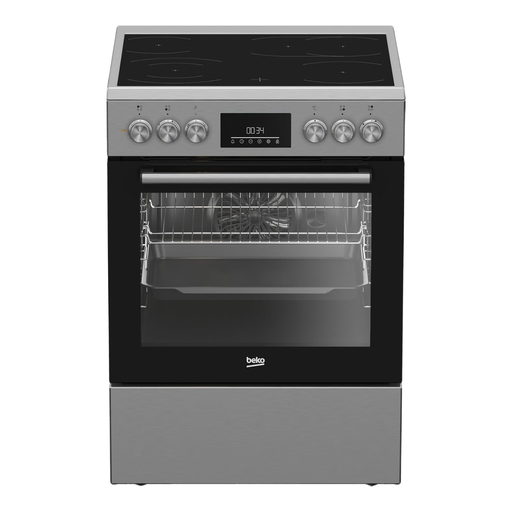
Beko FBM67320XS freestanding cooker with oven
An option if you’re looking for a freestanding cooker with an oven rather than a built-in appliance alone; check the dimensions and make sure it will fit in your kitchen.
60 cm; 72 l; eight heating functions; SteamShine steam cleaning; stainless steel; energy class A.
View at Joybuy
Frequently asked questions
Is an automatic programme enough for pork fillet, or do I need a meat thermometer?
No. An automatic programme doesn’t show the temperature reached inside your particular piece of meat. The German Federal Institute for Risk Assessment recommends heating food to at least 70 °C throughout for at least two minutes, so use a suitable method to check the temperature.
When measuring for a built-in oven, do I only need to measure the visible front?
No. Check the dimensions of the exact model and its recess against your kitchen, and follow the installation instructions. Bosch lists both appliance and recess dimensions for the HBA574BB3.
What does the energy label tell me about the meal I’m planning?
The energy label provides standardised information about the appliance, not the actual energy use of your particular meal. For ovens covered by the relevant rules, the German Environment Agency lists information including oven capacity and energy use per cycle for fan-assisted and conventional cooking (as at 26 October 2023).
Does the EU energy label apply to every freestanding mini oven?
Not automatically: the European Commission specifies mandatory energy labelling for ovens covered by the regulations. For a freestanding compact appliance, check the specific product category and its labelling documents rather than assuming the rules for a built-in oven apply.


