Those cooking a whole fillet
If you prefer to cook a longer piece in a roasting tin, compare the tin’s dimensions with the appliance’s usable internal or tray dimensions. Steba, CASO Design and Severin publish dimensions for specific models.


If the oven you already have is available and there’s room for both the fillet and its roasting tin, using it is a sensible first step before another appliance takes up space. A freestanding mini oven could work for a whole, longer piece, provided the tin fits and there’s enough room around the appliance as specified in the instructions. For smaller pieces, an air fryer may be suitable if the usable basket area is large enough. Whichever appliance you use, the German Federal Institute for Risk Assessment recommends heating meat to 70 °C throughout for at least two minutes. Raw and ready-to-eat foods should be handled separately.
If you prefer to cook a longer piece in a roasting tin, compare the tin’s dimensions with the appliance’s usable internal or tray dimensions. Steba, CASO Design and Severin publish dimensions for specific models.
For a countertop appliance, consider not only its footprint but also the space needed to open the door and the clearances specified in the instructions. Steba requires 10 cm of clearance behind the KB M19; for the Severin TO 2067, the manufacturer specifies 12 cm at the sides and rear, and 30 cm above.
A basket-style air fryer could be suitable for smaller pieces, provided the usable basket area is large enough. Philips gives the HD9252/90 a capacity of 4.1 l, but the capacity alone doesn’t tell you whether a particular piece will fit.
| Consideration | What to check when buying | Who is this important to? |
|---|---|---|
| Fit and space | Measure your tin, including its handles, and compare the dimensions with the usable interior. Also allow for the appliance’s casing, door opening and clearances specified in the instructions. | If I want to cook the fillet whole in my tin, neither the usable length nor the space in my kitchen should be a bottleneck. Around 36% of consumers put fit and footprint first. |
| Cooking and hygiene | Plan how you’ll check the core temperature, and keep utensils used for raw meat separate from those used for ready-to-eat food. The German Federal Institute for Risk Assessment recommends heating meat to at least 70 °C throughout for two minutes. | If you want to check how well the meat is cooked and avoid cross-contamination, pay particular attention to temperature checks and hygiene. Around 29% of consumers name this as a priority. |
| Cleaning after use | Check the specific model for removable parts and cleaning instructions. For electrical appliances, follow the instructions for that appliance. | If I share a kitchen and appliances with others, I want to be able to clean them easily after cooking and leave them tidy. Around 21% of consumers prioritise cleaning after shared use. |
| Running costs and other uses | Consider whether you’ll regularly use any additional heating functions. The German consumer advice centre points out that an oven’s energy consumption is given per standardised baking cycle, not for a particular fillet recipe. | If you plan to use the appliance regularly for other dishes, take running costs and features into account. Around 14% of consumers put this first. |
The oven’s capacity alone won’t tell you whether a long fillet and its roasting tin will fit inside.
Measure the outside of your tin, including the handles, and compare it with the usable dimensions of the specific appliance.
Depending on how well it fits, you may need a smaller roasting tin or have to cook the fillet in batches.
Depending on the model, a freestanding oven needs extra clearance. This can be especially important if you’re placing it under wall cabinets.
Before buying, check the door opening, socket location and installation clearances in the instructions for your chosen model.
The appliance’s temperature setting doesn’t confirm that the meat has been heated sufficiently throughout. Juices from raw meat can also contaminate other food and utensils.
Check how well the meat is cooked regardless of the appliance you choose, and keep utensils used for raw meat separate from those used for ready-to-eat food.
You may need a suitable meat thermometer to check.
The BGE 1580/E is a freestanding mini oven with a 30 l capacity. The details below refer to this model.
The KB M19 is a countertop oven with a capacity of 19 l. The manufacturer’s specifications refer to this model.
The TO 2067 is a 20-l baking and toaster oven with top and bottom heat.
The TO 26 SilverStyle is a freestanding oven with a capacity of 26 l.
The HD9252/90 is an example of a basket-style air fryer for smaller pieces that fit in the basket.
The products below include basket-style air fryers for smaller portions and freestanding mini ovens for other baking tasks. Check that the fillet and tin will actually fit in each model.
 No image available
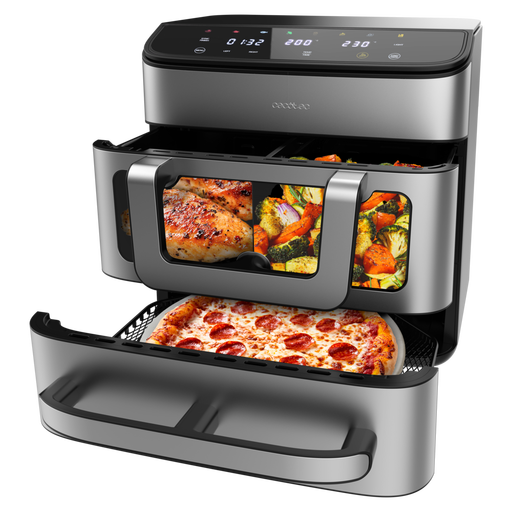
This model could suit smaller pieces if they fit in the 9-l air fryer compartment; the separate pizza oven compartment is an added feature.
 No image available
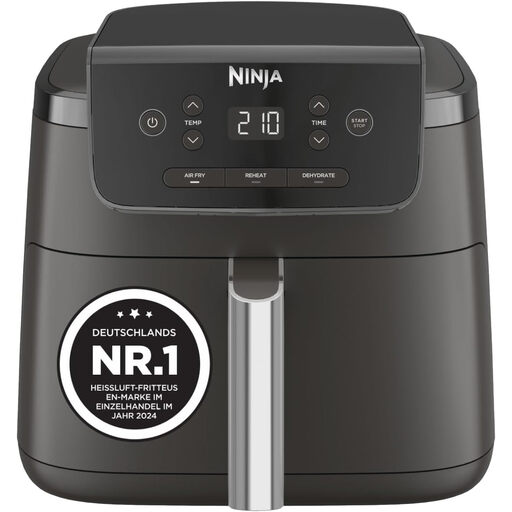
The product description recommends this appliance for one or two people. For pieces of fillet, make sure the usable basket area is large enough.
 No image available
A freestanding mini oven could be a good option if you want to use it for other baking or grilling as well as cooking the fillet, and you have enough room for it where you plan to put it.
 No image available
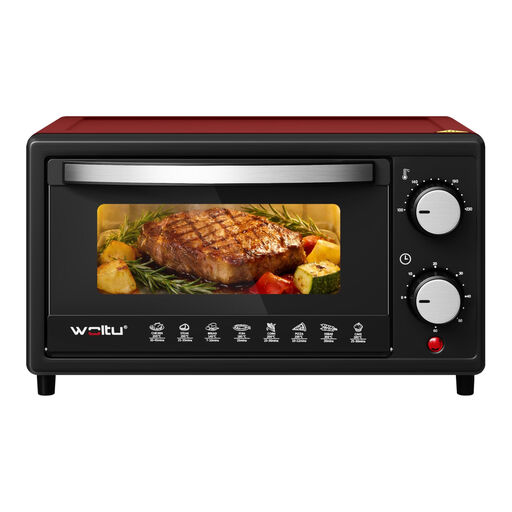
This compact model is an option for smaller portions, provided your tin fits in the oven.
 No image available
If you want to use a countertop oven for other baking tasks too, you can compare this model’s heating modes and the space available for it. Check that your tin will fit before buying.
No. The oven temperature setting doesn’t show the temperature throughout the meat. The German Federal Institute for Risk Assessment recommends heating meat to 70 °C throughout for at least two minutes; checking the core temperature with a suitable thermometer can help. This isn’t an automatic guarantee provided by the appliance.
Only if the instructions for that specific model allow it. The Severin TO 2067 instructions prohibit installing it in a cabinet and require 12 cm of clearance at the sides and rear, and 30 cm above. Other appliances have their own requirements.
Keep utensils used for raw meat separate from those used for ready-to-eat food, and clean any utensils and equipment you’ve used. For the Severin TO 2067, the instructions say to unplug the appliance and let it cool before cleaning. It must not be immersed in liquid. For other models, follow their instructions.
Your statutory rights are against the seller; any additional guarantee offered is voluntary and subject to its terms. If there’s a fault, the first remedy may be for the seller to repair or replace the product. The German consumer advice centre clearly distinguishes between statutory rights and a guarantee.
Where relevant harmonised EU rules require a product to carry the marking, the manufacturer declares that it meets the applicable requirements. Your Europe explains that no central EU body issues a CE certificate for using the marking. The marking doesn’t prove that a particular fillet will be cooked safely.