Those cooking for one
If you usually cook one portion, check the pot size and pressure-cooking requirements against the quantities in your recipe.


For a single portion of pork stew, a compact pressure multi-cooker is a sensible starting point – as long as the ingredients and liquid meet the pressure-cooking requirements for that particular model. If you regularly batch-cook several portions, a larger pot may be more suitable. Compare the usable capacity and check that it has a sauté function and the cooking method you want. The size of the appliance is no substitute for checking that the meat is cooked through, or for cooling and storing leftovers safely.
If you usually cook one portion, check the pot size and pressure-cooking requirements against the quantities in your recipe.
If you want to brown meat in the same appliance before pressure-cooking it in a stew, check that the particular model has both functions.
If you eat alone but prepare several portions at once, consider the usable capacity and how you’ll store the leftovers afterwards. The German Federal Institute for Risk Assessment recommends cooling leftovers quickly and eating them within two to three days.
Consider the quantity you’ll cook, your preferred cooking sequence, cleaning and potential batch portions separately.
| Consideration | What to check before buying | Who it matters most to |
|---|---|---|
| Single portions and filling quantities | Compare the stated and usable capacities, along with the pressure-cooking requirements, against the ingredients and liquid for your planned recipe. | If I usually cook one portion, I want to fit all the ingredients and liquid in the pot while staying within the pressure-cooking requirements. Around 36% of consumers say that a suitable quantity for one portion is their main consideration. |
| Browning and cooking method | Check whether the model has a browning or sauté function, as well as the pressure-cooking or slow-cooking function you want. | If I want to brown meat first and then cook it in the same appliance, I need both functions and a suitable cooking method. Around 29% of consumers prioritise browning followed by pressure cooking. |
| Cleaning and ease of use | Check the cleaning instructions for the inner pot, lid and other parts individually; don’t assume the whole appliance is dishwasher-safe. | If I often prepare small meals, cleaning the appliance after each use matters. Around 21% of consumers mainly look for easy cleaning. |
| Batch portions | Check the usable capacity and pressure-cooking fill markings against the total quantity, and allow space to portion and chill leftovers. | If I eat alone but cook several portions at once, I need enough usable space and a way to chill leftovers safely afterwards. Around 14% of consumers prioritise batch portions. |
Tefal Germany lists a stated capacity of 5.0 l and a usable capacity of 3.2 l for the Tefal Turbo Cuisine CY7548. Rommelsbacher gives the MD 1000 a pot capacity of 6 l and a usable capacity of 4 l. These figures don’t automatically tell you the minimum quantity allowed for a particular pressure-cooking recipe.
Compare your planned total quantity with the usable capacity and the fill markings for your model in the instruction manual.
Slow cooking and pressure cooking are different methods. If you want to continue cooking under pressure after browning, the appliance must have the functions you need.
Check the model’s manual to see whether it supports the sequence of browning and cooking you want.
A keep-warm programme is no substitute for cooling and refrigerating leftovers promptly. The German Federal Institute for Risk Assessment recommends dividing large quantities between several shallow dishes to help them cool.
Divide leftovers into suitable portions for chilling and store them safely.
The Classic Mini manual lists pressure cooking, slow cooking and sautéing; the model has a stated capacity of 3.8 l.
According to Tefal Germany, the Turbo Cuisine CY7548 combines browning, braising, pressure cooking and slow cooking; it has a stated capacity of 5.0 l and a usable capacity of 3.2 l.
For the MD 1000 MeinHans, Rommelsbacher lists browning, braising, slow cooking and two pressure settings, as well as a 6 l pot capacity and 4 l usable capacity.
For the Cook4Me Touch WIFI CZ9128, Krups lists guided recipes, browning, pressure cooking and braising; it has a stated capacity of 6.0 l and a usable capacity of 4.0 l.
This selection includes compact cookers for smaller meals and pressure multi-cookers with different cooking methods and capacities. The quantity you can prepare in a particular model depends on the instructions for that model.
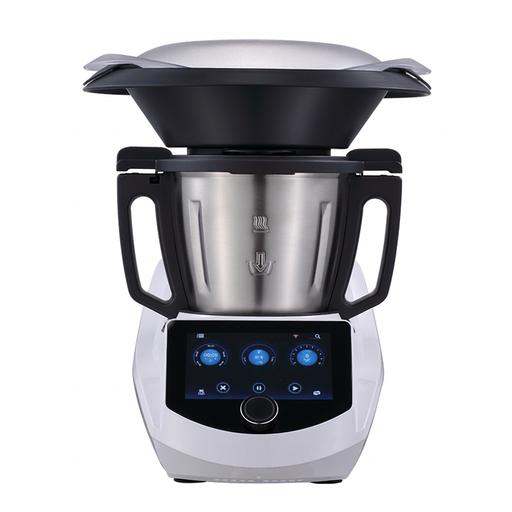 No image available
For stews, if you want to switch between pressure cooking, slow cooking and sautéing in the same appliance.
The product description also mentions preparing stews.
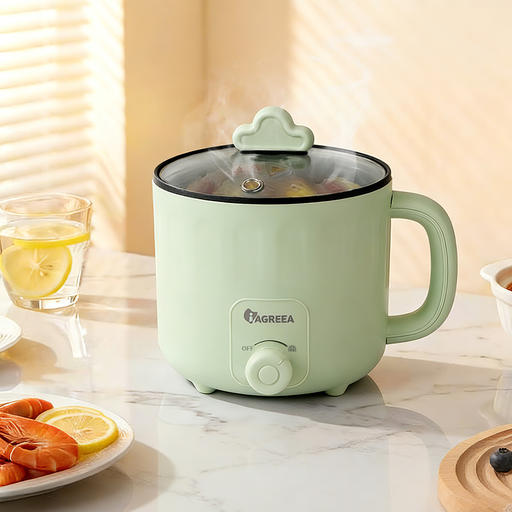 No image available
For small braised dishes, if you’re looking for a cooker for one and don’t need pressure cooking.
The product details list a capacity of 1.6 l, braising and stewing, and a non-stick inner surface. The product information advises against using metal utensils.
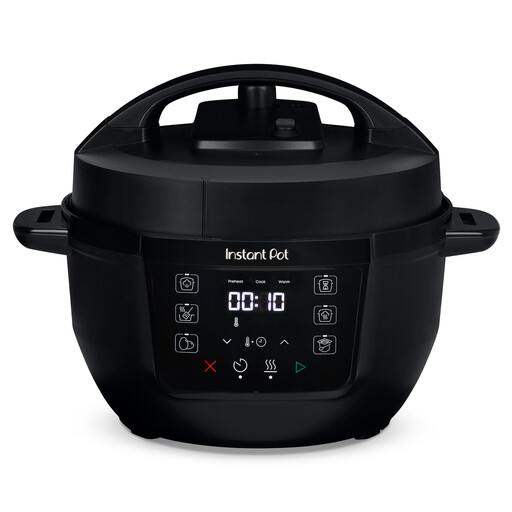 No image available
For small batches, if you want to use pressure cooking, slow cooking and sautéing in one appliance.
The product details list a capacity of 3.8 l and up to four portions. This doesn’t guarantee a minimum quantity for an individual pressure-cooking recipe; check the ingredients and liquid against the manual.
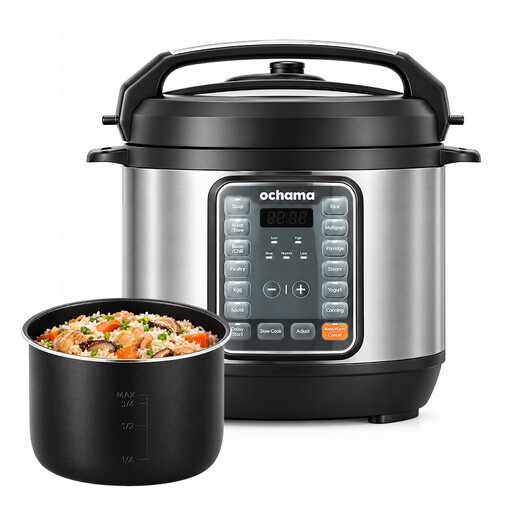 No image available
For different stew recipes, if you want to combine pressure cooking and slow cooking with browning.
The product details list a capacity of 6 l, 1000 W, pressure cooking, slow cooking and sautéing. The 6 l model is described as suitable for families, so it isn’t automatically suited to small portions for one.
 No image available
For meat dishes and stews, if you want to combine pressure cooking with browning or slow cooking.
The product details list a capacity of 8 l, 1200 W, a stew programme and sautéing. The model is described as suitable for up to ten portions, so it isn’t specifically designed for small batches for one.
No. The 3.8 l refers to the stated capacity of the Instant Pot Classic Mini; it doesn’t guarantee a minimum or maximum quantity for every pressure-cooking recipe. Check the ingredients and liquid against the fill requirements in the manual for the specific model.
Set up the appliance according to the safety instructions in its manual, and remember that the inner pot may be hot. Don’t open a pressure cooker until the pressure has fully released; always follow the manufacturer’s instructions for the specific model.
The German Federal Institute for Risk Assessment recommends heating meat thoroughly and, if in doubt, checking its temperature with a meat thermometer. Leftovers should be cooled quickly, stored in the fridge and eaten within two to three days. These food-safety recommendations aren’t an automatic cooking function of the multi-cooker.
No. In Germany, statutory rights relating to faults are claims against the seller. A warranty is an additional voluntary promise and is subject to its own terms and conditions.
Electrical appliances that fall within the scope of the EU Low Voltage Directive must meet the relevant conformity requirements, including CE marking. The European Commission explains that, by affixing the CE marking, the manufacturer declares that the appliance meets the applicable requirements. Check the marking and documentation for the specific product listing; a listing alone doesn’t prove that the product conforms.