For breakfast porridge in a care home, a simple oat base is a good starting point if the kitchen wants to avoid adding salt and control the recipe itself. Check the ingredients list and salt content per 100 g. For individual residents, the recipe must also meet their dietary requirements, take account of allergies and achieve the required consistency.
Who is this choice important for?
Kitchen teams monitoring salt content
You want to keep track of the salt content in the breakfast component and decide for yourself which ingredients to add when preparing it. To do this, you need the ingredients list and the product’s ‘salt’ nutrition information.
Teams catering for individual dietary requirements
For some residents, you need to consider requirements beyond salt content, including dietary needs, allergies and consistency. The German Nutrition Society views catering for residential care settings as a task that involves collaboration between the kitchen and the relevant specialists.
Those responsible for preparing larger quantities
You need a base recipe that lets you adjust the liquid and other ingredients to suit the residents you are catering for. Kölln recommends preparing its porridge mixes with around 50 g of mix and around 200 ml of liquid; follow the pack instructions for other products.
What should you look for when buying?
First, check the dry product’s ingredients list and salt content. Then make sure your planned preparation meets residents’ dietary and consistency requirements.
| What matters |
What to check |
Who it matters most to |
| Salt and ingredients |
Check the ingredients list for added salt and compare the declared total salt content per 100 g. |
If I want to plan a breakfast recipe without adding salt, I also need to know how much salt is naturally present. Around 40% of consumers put this check first. |
| Individual dietary requirements |
Check the ingredients and allergen information for the specific product against the relevant dietary requirements. |
For residents with specific requirements, a low salt figure alone isn’t enough. Around 30% of consumers put suitability for individual dietary needs first. |
| Preparation and consistency |
Check the pack instructions for serving sizes and liquid quantities, and decide on the right consistency for the residents you are catering for. |
If I’m preparing porridge in larger quantities, I need a recipe I can repeat and must allow for individual variations. Around 30% of consumers prioritise this. |
Common selection mistakes
-
Assuming ‘no added salt’ applies to the whole meal
This claim relates to the product itself. The salt content of the prepared meal also depends on the liquid, toppings and other components. According to Lebensmittelklarheit, the salt value in the nutrition table includes both naturally occurring and added salt.
Note the value per 100 g, take account of the amount you actually use, and check any additional ingredients separately.
-
Choosing ready-made mixes on taste alone
Fruit, nut, chocolate and protein varieties can have different ingredients. For example, Kölln says its Hafer-Porridge Früchte may contain nuts and milk.
Check the current ingredients list and allergen information for each variety you buy before assigning it to a resident’s diet.
-
Using standard porridge instead of a required dietary option
Salt content alone doesn’t tell you whether the ingredients meet someone’s individual needs or whether the consistency is right for them.
If there are specific requirements, discuss your choice with the relevant nutrition, medical and care professionals.
Brands and retailers to consider
Kölln
A porridge range with plain, fruit, nut and other varieties.
- Kölln describes its porridge range as containing no added salt. For Hafer-Porridge Früchte, the manufacturer lists 0.04 g of salt per 100 g.
- Ingredients and allergen information vary by variety. Check suitability for specific dietary requirements separately.
Seitenbacher
Wholegrain porridge with fruit and protein varieties.
- The range includes products with different ingredient profiles.
- A protein variety isn’t automatically suitable for catering for care home residents just because of its product type. What matters is the information for the specific product and the resident’s dietary requirements.
Brüggen
A cereal manufacturer that lists porridge as part of its export range.
- Brüggen lists porridge as part of its range.
- When choosing by salt content, ingredients and allergens, check the information for the specific product on offer.
Alnatura
An organic brand with porridge products, including oat and berry porridge.
- Check the ingredients, salt content and allergen information for the specific variety rather than assuming it’s suitable based on the product type.
REWE
A retailer with a porridge category that includes REWE Bio own-brand products.
- The category includes plain and berry porridge, among other products.
- A category label is no substitute for checking the salt, ingredients and allergens of each individual product.
Oat bases for your own porridge recipes
These oat products may work as a base if the kitchen wants to choose the liquid and other ingredients itself. Before using them, check the current packaging and the requirements of the residents you are catering for.
 No image available
Kölln fine tender oat flakes, 500 g
A suitable oat base for a porridge recipe you create yourself, provided the preparation method and dietary requirements are appropriate.
Pack size: 500 g. Check the current salt information and the ratio of oats to liquid for the portion you plan to make.
View at Joybuy
 No image available
Alnatura organic fine tender oat flakes, 500 g
An oat base for kitchens that want to choose the liquid and other ingredients themselves.
Pack size: 500 g. Check the current packaging for salt content, allergen information and preparation instructions.
View at Joybuy
 No image available
Kölln Gluten-Free tender oat flakes, 500 g
This oat base is labelled Gluten-Free, but if you need it for a gluten-free diet, check the current packaging carefully to make sure it’s suitable.
Pack size: 500 g. Before use, also check the salt information and allergen details, and make sure it can provide the consistency required.
View at Joybuy
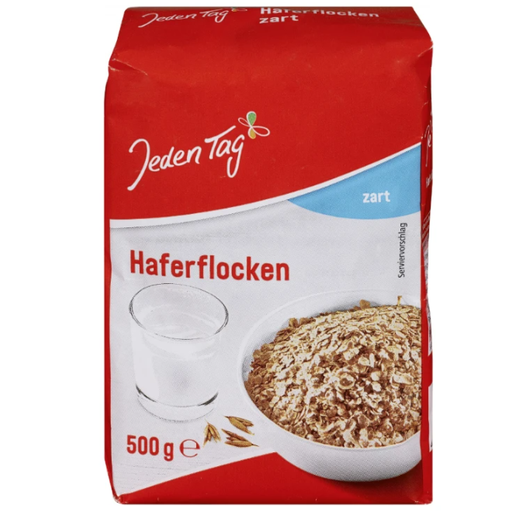 No image available
Jeden Tag fine oat flakes, 500 g
Use this as an oat base only if the product you receive is in the right form for your planned porridge recipe.
Pack size: 500 g. Product names and ingredient descriptions differ depending on whether the product is described as flakes or flour. Confirm the form before ordering, and check the pack for salt information and preparation instructions.
View at Joybuy
Frequently asked questions
Is ‘no added salt’ enough to guide your choice?
No. This claim doesn’t tell you how much salt the product contains in total. Also check the ‘salt’ value per 100 g in the nutrition table. According to Lebensmittelklarheit, this includes naturally occurring salt. Kölln lists 0.04 g of salt per 100 g for Hafer-Porridge Früchte.
Is low-salt porridge suitable for all residents?
No. The ingredients, allergies, dietary requirements and consistency must also be right for each individual. For dietary requirements in residential care settings, the German Nutrition Society recommends coordination between catering staff and the relevant specialists.
How should you assess the salt content of a serving of porridge?
Take into account the amount of product used, all the other ingredients in the meal and the rest of the day’s meals. The German Nutrition Society gives a guideline of up to 6 g of table salt per day for the general population; this doesn’t replace individual dietary requirements.
Should protein porridge always be the first choice for care home kitchens?
No. A protein variety is suitable only if its composition matches the documented nutritional goal and the intended dietary requirements. Seitenbacher offers these varieties, but the product name alone isn’t a reason to recommend them to residents.


