If you want to choose the ingredients and portion size yourself, plain oats are a straightforward base for porridge. A ready-made mix may be more suitable if convenience is your priority. If you have diabetes, neither “sugar-free” nor “no added sugar” tells you on its own whether a product is right for you. Check the carbohydrates in the portion you actually eat, and remember to include milk, plant-based drinks and toppings.
Which information matters to different people?
People who need to count carbohydrates
If you need to account for the carbohydrates in your breakfast as part of an individual diabetes management plan, you’ll need the nutritional information and the weight of your actual portion. diabetesDE highlights the importance of carbohydrate amounts, particularly for people receiving insulin therapy.
People who want to avoid sweetening ingredients
If you’re looking for a porridge mix rather than plain oats, check the fruit, dried fruit and other ingredients as well as the “no added sugar” claim. Also check the sugar value in the nutrition table.
People with additional requirements
If protein content matters to you, or you specifically need gluten-free oats, check the relevant claim on the product itself. Neither of these features replaces checking the sugar, carbohydrate content and portion size.
What should you look for when buying?
Start with the ingredients list and carbohydrates per 100 g, then calculate the amount for your portion. You can then weigh up taste, preparation and any additional requirements when choosing between plain oats and mixes.
| What matters |
What to check when buying |
Who it matters to |
| Carbohydrates in your portion |
Calculate the carbohydrates per 100 g for the weighed amount you’ll eat; also take liquids and toppings into account. |
If I’m calculating a meal as part of an individual diabetes management plan, I need to know the carbohydrates in the finished breakfast. This is the top priority for around 36% of consumers. |
| Sugar and sweetening ingredients |
Compare the ingredients list and “of which sugars”; don’t assume “no added sugar” means “sugar-free”. |
When choosing a mix, I want to know whether it contains fruit, dried fruit or other sweetening ingredients. Around 29% of consumers prioritise this. |
| Additional requirements |
Check the protein content or explicit gluten-free labelling on the product in question. |
If I also need to consider protein or eat gluten-free, I need information about the specific pack. This requirement takes priority for around 21% of consumers. |
| Preparation and taste |
Compare the preparation instructions, the liquid required and the ingredients in a mix with those of plain oats. |
If I need a quick breakfast, I want to know what the mix already contains and what I need to add myself. This is the main priority for around 14% of consumers. |
Common selection mistakes
-
Assuming “no added sugar” means “sugar-free”
These claims mean different things. According to the consumer advice centre, a solid food can be labelled “sugar-free” if it contains no more than 0.5 g of sugar per 100 g. “No added sugar” does not set the same upper limit for the sugar content.
If you’re specifically looking for a sugar-free product, check the claim and the “of which sugars” value per 100 g. Even with mixes labelled no added sugar, read the ingredients list.
-
Checking only sugar instead of total carbohydrates
Even oats without sweetening ingredients contain carbohydrates. According to diabetesDE, the amount of carbohydrate is relevant when planning a meal during insulin therapy.
Calculate the amount based on the portion of oats you actually eat, and include milk, plant-based drinks, fruit and other additions. Don’t use your choice of product as a reason to change a prescribed insulin dose.
-
Choosing fruit mixes based on the front of the pack alone
Dried fruit and other fruit ingredients can contribute to the sugar content. So a mix with no added sugar isn’t automatically sugar-free.
Check the ingredients and nutrition information for the specific fruit mix, and compare it with plain oats if needed.
-
Assuming protein or gluten-free labelling answers the sugar question
Gluten-free labelling relates to a different requirement from sugar content. Protein content also tells you nothing on its own about the carbohydrates in your portion.
Check for the additional feature you need, as well as the ingredients, sugar and carbohydrate content of the specific product.
Brands and product ranges to consider
Kölln
Kölln offers oats and a range of different porridge mixes.
- According to Kölln, its “Feine Basis” contains no added sugar and is made with 74% wholegrain.
- The nut variety is a different product: Kölln says it contains hazelnuts, 51 g of carbohydrates and 1.5 g of sugar per 100 g. So always check which variety you’re buying.
Seitenbacher
Seitenbacher stocks oats and porridge mixes with a range of different recipes.
- For a simple oat base, Seitenbacher itself recommends its organic oats.
- For fruit or protein mixes, check the ingredients and nutrition information for the specific variety separately.
Alnatura
Alnatura offers plain organic oats and other porridge products.
- EDEKA24 lists wholegrain oats as the only ingredient in Alnatura Bio extra-fine oats.
- The ingredients list for these oats doesn’t also describe the composition of other Alnatura porridge products.
REWE Bio / REWE frei von
These two ranges include plain oats and a variety explicitly labelled gluten-free.
- REWE lists 58.5 g of carbohydrates and 1.2 g of sugar per 100 g for its Bio fine oats.
- The gluten-free label on the REWE frei von variety doesn’t answer questions about sugar and carbohydrates; check its own nutrition information for those.
EDEKA Herzstücke / Gut & Günstig
These ranges offer both plain oats and a berry porridge mix.
- EDEKA24 lists 58.7 g of carbohydrates and 0.7 g of sugar per 100 g for Gut & Günstig extra-fine oats.
- EDEKA Herzstücke Haferhimmel Beeren is labelled “no added sugar”, but contains fruit and, according to the product information, 3 g of sugar per 100 g. It should therefore not be considered sugar-free.
Brüggen
H. & J. Brüggen KG makes a range of oat products and also manufactures products for supermarket own-label ranges.
- For a pack made by this manufacturer, you can assess its ingredients and nutritional values using the information on that specific pack.
- The manufacturer’s name alone doesn’t indicate a single, standard porridge recipe.
Oats for homemade porridge
These fine oats make a good base if you want to choose the amount of oats and the other ingredients yourself. If you’re specifically looking for a “sugar-free” product, check that claim and the latest nutrition information for the individual pack separately.
 No image available
Kölln fine oats, 500 g
For porridge where you choose the amount of oats and the other ingredients yourself. The pack contains 500 g of fine oats. For your meal, check the pack’s nutrition information and the amount you actually use.
View on Joybuy
 No image available
Alnatura organic fine oats, 400 g
An oat base for porridge you can make your own. The pack contains 400 g of organic oats. When planning your portion, take account of the amount of oats you use and any additions.
View on Joybuy
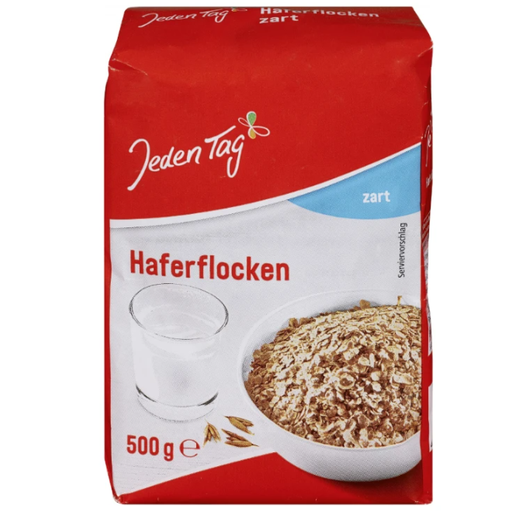 No image available
Jeden Tag fine oats, 500 g
For homemade porridge where you choose the liquid and toppings. The pack contains 500 g of fine oats. For your chosen portion, check the pack’s nutrition information and remember to include any additions.
View on Joybuy
Frequently asked questions
Is porridge with no added sugar also sugar-free?
No. “No added sugar” and “sugar-free” are different claims. For solid foods, the consumer advice centre sets a maximum of 0.5 g of sugar per 100 g for the “sugar-free” claim. So even with a mix labelled no added sugar, compare the “of which sugars” value.
Is a low sugar content enough to choose a product if you have diabetes?
No. Total carbohydrates can be important when planning meals. diabetesDE notes that people with insulin-dependent diabetes need to know the amount of carbohydrates to plan their insulin. Take account of the actual portion, including the liquid and any additions you use.
What should you consider with fruit porridge that has no added sugar?
Fruit porridge with no added sugar can still contain sugar from its ingredients. EDEKA24 lists 3 g of sugar per 100 g for EDEKA Herzstücke Haferhimmel Beeren. Alongside this figure, check the carbohydrates and the amount you prepare.
When is it important to choose oats specifically labelled gluten-free?
If you need to follow a gluten-free diet for medical reasons, look for explicit gluten-free labelling on the specific product. This doesn’t replace checking the ingredients, sugar and carbohydrates separately.


