Breakfast on your own, without measuring
You want to pick up a pre-measured amount for one meal as part of your Easter shopping, and you have water and a mug or bowl ready for making it.


If you’re having breakfast on your own and don’t want to measure anything out, a single-portion porridge sachet is an obvious choice. If you’d rather decide how much to make and prepare several servings, a multipack is likely to suit you better. RUF describes its Porridge Classic as a 60 g sachet made with hot water and left to stand for three minutes, while Kölln offers its High Protein Porridge Coconut Mango Style in five 60 g portions, which the manufacturer says can also be made with cold water. Then check the ingredients, allergen information and nutritional values for the specific variety you choose.
You want to pick up a pre-measured amount for one meal as part of your Easter shopping, and you have water and a mug or bowl ready for making it.
You’re looking for a portion that states its plant-based protein content and are checking for a vegan or lactose-free recipe. Also check the ingredients and any possible traces listed for the specific variety.
You may need to avoid milk, soya, nuts, sesame or cereals containing gluten, for example. The word ‘porridge’ alone doesn’t tell you whether a particular variety is suitable for you.
If you’re shopping for porridge for breakfast on your own this Easter, first decide whether you want a pre-portioned pack or prefer to measure out the amount yourself. Then consider how it’s prepared, along with the ingredients and nutritional values for the variety you’re buying.
| What to consider | What to check when buying | Who it matters most to |
|---|---|---|
| Portion and preparation | Check the portion weight and number of sachets. Also find out whether you need hot water and how long the porridge needs to stand. | I don’t want to weigh anything in the morning and need enough for exactly one meal. For around 50% of consumers, this straightforward routine is the main priority. |
| Ingredients and allergens | Read the ingredients list, highlighted allergens and trace warnings for your chosen variety. If you need to follow a gluten-free diet, look for an explicit gluten-free label. | If I need to avoid certain ingredients, the general term ‘porridge’ isn’t enough to help me decide. Around 30% of consumers prioritise this information. |
| Protein information | Compare protein figures on the same basis, either per 100 g or per portion, and take the pack size into account. | The stated protein content matters more to me than having a pre-measured sachet. Around 20% of consumers put this criterion first. |
A pre-measured amount doesn’t tell you anything about the ingredients. Kölln describes its Coconut Mango Style as vegan and lactose-free, but lists possible traces of allergens including peanuts, soya and milk. According to RUF, its Classic variety contains whole milk powder.
Check the ingredients and allergen information for each variety individually, even if the pack format suits you.
The fact that a product contains oats doesn’t in itself mean it’s suitable for a gluten-free diet. If you need to avoid cereals containing gluten, the label on the specific product is particularly important.
If you need to follow a gluten-free diet, look for an explicit gluten-free label rather than relying on the product name alone.
Kölln states that its Coconut Mango Style contains at least 12 g of plant-based protein per 60 g portion. Seitenbacher lists 30 g of protein per 100 g for its Blueberry Protein Porridge. These figures relate to different quantities.
Compare nutritional information on the same basis and consider how much you actually want to make.
Kölln sells its High Protein Porridge Coconut Mango Style in a pack of five 60 g portions.
RUF sells Porridge Classic and Apple Cinnamon in portion sachets, with different portion weights.
The Seitenbacher protein porridges featured here come in larger packs rather than pre-portioned single servings.
Alnatura sells a range of porridge varieties in 500 g packs, including Oat Porridge Cocoa and Fruit.
Brüggen lists oat products and porridge among its breakfast cereals and own-brand products.
This selection includes porridge packs with a stated portion weight, as well as a 53 g pot. For the 10 × 61 g product, check whether the portions are individually wrapped; for the pot, check how the serving is described on the packaging.
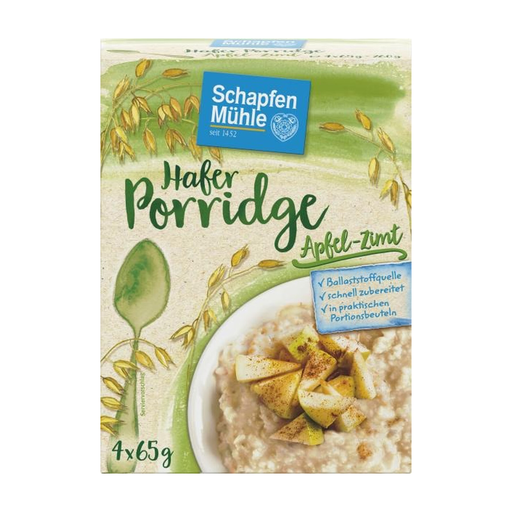 No image available
The pack contains four stated 65 g portions, making it a good choice if you don’t want to weigh out porridge for individual breakfasts.
Before preparing it, check the instructions on the pack. If you have any intolerances, also check the ingredients and allergen information.
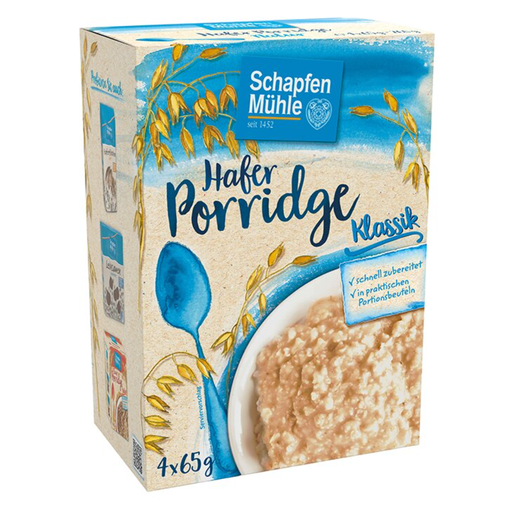 No image available
The 4 × 65 g pack size is handy for several breakfasts, with a set amount for each one.
Follow the pack instructions for the amount of water and standing time, and check the allergen information.
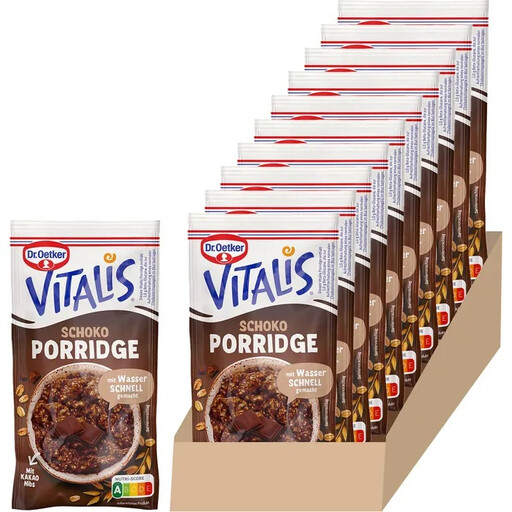 No image available
The 10 × 61 g pack could suit you if you’re planning porridge for several breakfasts.
If you need individually wrapped portions, check the packaging format, as well as the preparation and allergen information, before buying.
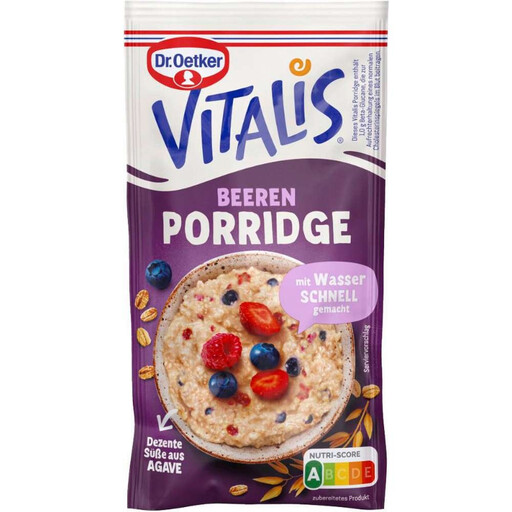 No image available
The 53 g pot is an option if you’d like to make your porridge straight in the pot.
Check the portion information and preparation instructions on the pack, as well as the ingredients and allergen information.
Look for a clearly stated portion size and check whether the pack contains individual sachets or a pot. RUF describes Classic as a 60 g portion sachet, while Kölln sells Coconut Mango Style in a pack of five 60 g portions.
It depends on the variety. Kölln says its High Protein Porridge Coconut Mango Style can be made with cold water, while RUF recommends boiling water for Classic and Apple Cinnamon. Check the instructions on the pack you choose.
No. The fact that a product contains oats doesn’t prove that it’s suitable for a gluten-free diet. If you need to avoid cereals containing gluten, check for an explicit gluten-free label and read the other information on the specific pack.
Read the highlighted allergens in the ingredients list, along with any possible trace warnings for the variety you’ve chosen. Germany’s Federal Ministry of Agriculture, Food and Home Affairs explains the mandatory labelling of certain ingredients that can cause allergies or intolerances; voluntary trace warnings are a separate matter.