Shoppers stocking up with sugar in mind
You’re buying enough for several breakfasts and want to compare the stated sugar content rather than relying on ‘no added sugar’ alone.


When shopping for porridge with less sugar in mind, start by comparing the ‘of which sugars’ value per 100 g: ‘no added sugar’ does not automatically mean a low sugar content. A simple oat base gives you control over how sweet it is, while fruit blends can contain more sugar even without added sugar. Then check the ingredients, allergens and preparation instructions.
You’re buying enough for several breakfasts and want to compare the stated sugar content rather than relying on ‘no added sugar’ alone.
You’re looking for a less sweet base and want to decide for yourself whether to add anything to your porridge, and what to add.
Protein matters to you, but you also want to check the sugar content, ingredients and allergen information for each blend.
Start by comparing the sugar content per 100 g. Whether you then prioritise a versatile base, protein content or particular ingredients depends on your breakfast plans.
| What to look for | What to check | Who it matters to |
|---|---|---|
| Stated sugar content | Compare ‘of which sugars’ per 100 g and read the ingredients list too. | When comparing fruit blends with plain bases, I want to see the sugar content rather than judge by the front of the pack alone. For around 36% of consumers, this comparison comes first. |
| Versatile base | Check the ingredients and preparation instructions against the breakfasts you have planned. | For several breakfasts, I want to choose the sweetness myself rather than use a ready-made fruit blend every time. This flexibility is the main reason to buy for around 29% of consumers. |
| Protein content | Compare protein and sugar per 100 g. | If I want protein to play a bigger part in my breakfast, I also check the sugar content of specialist porridge blends. Around 21% of consumers prioritise protein content. |
| Ingredient suitability | Check the types of grains, nuts, highlighted allergens and ‘may contain’ information. | I need to take certain ingredients or possible traces into account, so I can’t choose based on sugar content or taste alone. Ingredient suitability is the deciding factor for around 14% of consumers. |
Fresh and dried fruit naturally contain sugar. Despite saying ‘no added sugar’, Seitenbacher lists 19 g of sugar per 100 g for its Frucht Porridge.
If low stated sugar content is your main priority, compare the ‘of which sugars’ value per 100 g.
Depending on the variety, blends may also contain other grains, nuts and seeds. ‘May contain’ information can also be important when choosing.
Read the ingredients list and allergen information for the exact variety you’re putting in your basket.
Additions such as honey, syrup, fruit purée or dried fruit change the sugar content of the prepared serving.
When choosing, also think about what you usually use to prepare and top your porridge.
The variety you’ve planned to buy may not be available at your local store when you do your weekly shop.
Check availability at your store and, if you have specific ingredient requirements, make a note of a suitable alternative.
If your planned variety isn’t available, finding an alternative can take extra time.
The Kölln oat porridges considered here, Nuss and Feine Basis, are different wholegrain blends.
The Frucht Porridge considered here is aimed at shoppers who want a ready-made fruit blend rather than a plain base.
The Basis Porridge considered here is a wholegrain cereal flake blend with almonds, psyllium husks and tigernuts.
The range considered here includes a children’s Hafer-Banane porridge with no added sugar.
The Porridge Beere considered here is described as being made with wholegrain oat flakes and having no added sugar.
This Joybuy selection includes fine oat flakes and whole oat groats. For the oat groats in particular, check that their texture and preparation suit your breakfast plans.
 No image available
A simple oat base for putting together several breakfasts your way. The pack contains 500 g of fine oat flakes. Check the pack for information relevant to how you plan to prepare them.
 No image available
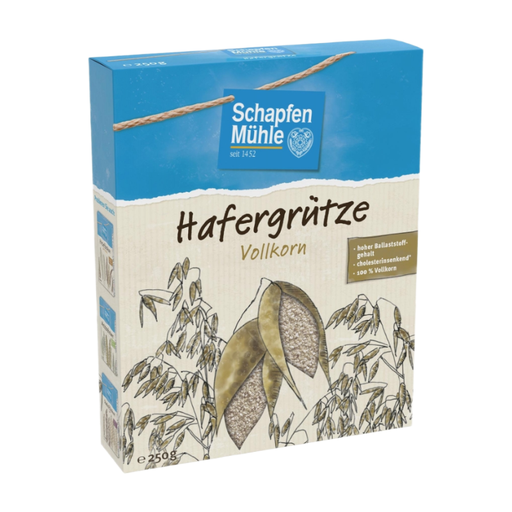
An oat ingredient for a warming breakfast, if its texture and preparation time fit your weekly plans. The pack contains 250 g. Before buying, check the pack to confirm the exact form of the oats and how to prepare them.
No. ‘No added sugar’ doesn’t tell you how much sugar the porridge contains in total; ‘low sugar’ is a different nutrition claim. When shopping, compare the ‘of which sugars’ value per 100 g and read the ingredients list.
Fruit naturally contains sugar. Despite saying ‘no added sugar’, Seitenbacher lists 19 g of sugar per 100 g for its Frucht Porridge, so the figure is important when comparing it with an oat base.
Check the sugar content per 100 g, the ingredients and the preparation instructions for the specific variety. Kölln Feine Basis, for example, contains spelt and almonds; REWE Bio Basis contains other grains and has ‘may contain’ information to consider.
Yes, as long as the blend you choose is suitable and you prepare it with water or a suitable plant-based drink. Bauck Mühle Protein Porridge, considered here, is described as suitable for vegan preparation with a plant-based drink. Check the ingredients and preparation instructions separately for any other variety.