Hosts who want to control the sweetness
If you’re planning a Christmas dessert, breakfast or bake with oats, a plain base lets you choose which fruit and other sweetening ingredients to add.


For less sweet porridge, Christmas desserts or oat bakes, a plain oat base is a good choice if you want to control the sweetening ingredients yourself. Still, check the sugar per 100 g: ‘no added sugar’ does not mean sugar-free or automatically reduced in sugar. For flavoured protein mixes, nuts, other allergens and sweet toppings, it’s worth checking the specific recipe.
If you’re planning a Christmas dessert, breakfast or bake with oats, a plain base lets you choose which fruit and other sweetening ingredients to add.
If you’re planning to make protein porridge over Christmas or in the days afterwards, compare the protein and sugar content with the ingredients for the same product variant.
If you have a nut allergy or other food intolerance, check the label on the specific pack. Vegan claims also apply only to the variant labelled as such.
First, choose the type of oats that suits your recipe. Then compare sugar, ingredients and, where relevant, protein per 100 g of a similar dry mix. What you add during preparation also affects how sweet the finished portion will be.
| Criterion | What to check when buying | Who it matters most to |
|---|---|---|
| Sweetness and sugar | Compare the sugar per 100 g and the ingredients list; if a product claims to be ‘reduced in sugar’, check what it is being compared with. | If I want to control the sweetness of a dessert, I need a base that lets me add fruit or other ingredients in measured amounts. Around 42% of consumers are likely to see this control over sweetness as a priority. |
| Protein | Check the protein and sugar content per 100 g for the same product type, rather than relying on the word ‘protein’ in the name. | For a protein porridge breakfast, I want to know the protein content without overlooking the sugar in the variety I choose. For around 33% of consumers, protein content is likely to be a key consideration when buying. |
| Ingredients and use | Read the allergen information on the specific pack and choose flakes or whole grains to suit your recipe. | If I’m serving several guests or need oats for baking rather than porridge, the ingredients and format must suit what I have planned. For around 25% of consumers, this suitability is likely to be the most important buying criterion. |
Porridge can contain naturally occurring sugars even if no sugar has been added. ‘Reduced in sugar’, on the other hand, is a comparative claim. According to the Verbraucherzentrale, even a lower sugar content than a comparable product doesn’t tell you everything about how much sugar the product contains.
Read the sugar content per 100 g. If the product claims to contain less sugar, check which comparable product is used as the basis for the claim.
Seitenbacher lists 30 g of protein per 100 g for its Protein Porridge Chocolate, but it also contains 19 g of sugar. A high protein content doesn’t tell you how sweet this variety is.
Compare the protein, sugar and ingredients for the specific variant.
Kölln Hafer-Porridge Nuss contains hazelnuts. If you’re sharing a meal, information about possible traces may also be important for some guests.
Check the allergen information on every pack you use. If guests need to avoid certain ingredients, keep them separate during preparation.
The type of oats affects which recipes you can make without adapting them. EDEKA recommends coarse rolled oats for baking and fine rolled oats for desserts and porridge. Whole oat grains, meanwhile, are not the same as fine porridge oats.
Choose the format to suit your recipe, and check the sweetening ingredients in any ready-made mix.
The details vary between product lines and flavours from these brands. Always check the specific pack when choosing, rather than relying on the brand name alone.
Kölln offers porridge varieties with different recipes, including Feine Basis and a nut variety.
HotHafer Bio Protein Porridge, listed by REWE, combines an oat mix with a stated protein content.
Seitenbacher’s chocolate variety shows why protein content and low sugar content are separate things to consider when choosing porridge.
Alnatura offers a children’s Hafer-Banane porridge, among other products, with specific age and preparation guidance.
Brüggen lists porridge and rolled oats among its export range.
This selection includes fine rolled oats as a base for porridge or desserts, as well as whole oat grains for cooking and baking recipes for Christmas. Whole grains are not a direct alternative to fine rolled oats for creamy porridge. And a sugar figure on its own does not show that any product contains less sugar than a comparable product.
 No image available
A fine oat base for making porridge when you want to choose the sweetening ingredients yourself.
Pack size: 500 g. Check the information on the specific pack for sugar content and possible allergens.
 No image available
Fine rolled oats for porridge whose sweetness you can adjust yourself as you prepare it.
Pack size: 500 g. If you have specific ingredient requirements, read the label on the pack you choose.
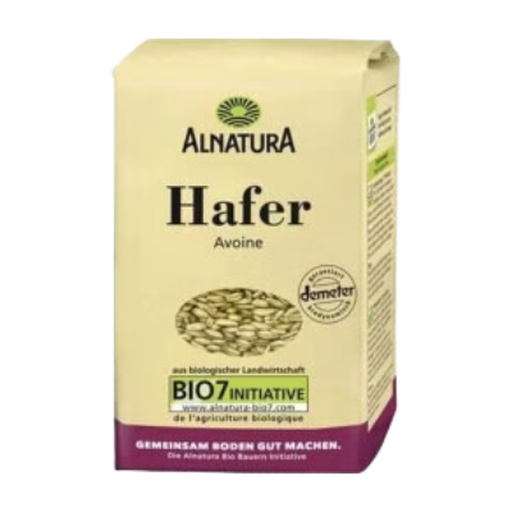 No image available
For recipes using whole oat grains, whether for cooking or baking. They are not a like-for-like substitute for fine porridge oats.
Pack size: 500 g. Check the ingredients and any possible allergen traces on the pack before use.
No. ‘No added sugar’ doesn’t mean that the product contains no sugar. For example, Kölln lists 1.5 g of sugar per 100 g for its Hafer-Porridge Nuss. Check the nutritional information and ingredients list for the variety you choose.
No. A claim that a product is reduced in sugar refers to a comparison, while ‘no added sugar’ describes a different characteristic of the recipe. The Verbraucherzentrale points out that even a product with less sugar than a comparable one may still contain a significant amount. So check what it is being compared with and the sugar content per 100 g.
EDEKA recommends coarse rolled oats for baking and fine rolled oats for desserts or porridge. Check the recipe before swapping one type of oats for another, and remember to consider the sweetening ingredients in your bake.
Not without checking the allergens. Kölln Hafer-Porridge Nuss contains hazelnuts and may contain traces of other allergens. Read the label on the pack you’re using and check your guests’ ingredient requirements before you start preparing the meal.
No. You can’t assume that what’s suitable for one product applies to all porridge. Alnatura specifically labels its Hafer-Banane children’s porridge as suitable for children aged 1 year and over, with its own preparation instructions. Follow the age and preparation guidance for the product you choose.