Breakfast without weighing
You want to make exactly one warm serving without weighing out the oats. A cup or pre-portioned sachet takes care of that step for you; whether you’ll also need a bowl depends on the format.


If you’re looking for a single, pre-portioned serving in a cup for Sunday breakfast, choose a porridge cup. A sachet is a good fit if you’d rather use your own bowl. A larger mix lets you choose your own portion size and ingredients, but you’ll need to measure it out. Depending on the product, even single servings may need liquid and time to prepare.
You want to make exactly one warm serving without weighing out the oats. A cup or pre-portioned sachet takes care of that step for you; whether you’ll also need a bowl depends on the format.
You want to choose your own fruit, nuts or plant-based drink. A less prescriptive porridge base gives you more flexibility than a ready-flavoured portion.
Alongside portion size, you’re also considering protein, wholegrain content, sources of sugar and the ingredients in the specific variety. If you have an intolerance or follow a particular diet, allergen information is especially important.
A good fit if: You want a single serving in its own cup and don’t want to use a separate bowl.
Bear in mind: A cup isn’t necessarily ready to eat; check the preparation instructions for your chosen variety.
A good fit if: You want a measured portion and have your own bowl or mug to hand.
Bear in mind: A sachet doesn’t replace a bowl or mug; the amount of liquid and standing time depend on the product.
A good fit if: You want to choose your own portion size, consistency and extra ingredients at breakfast.
Bear in mind: You’ll need to portion it yourself; with pre-mixed varieties, some ingredients and flavours are already decided for you.
| Consideration | What to check before buying | Who it matters most to |
|---|---|---|
| Portion and preparation | Does it come with a cup, or will you need a bowl? What liquid and standing time are recommended in the instructions? | I want to make a single warm serving on Sunday without weighing out the oats first. For around 42% of consumers, keeping preparation to a minimum is the top priority. |
| Flavour and ingredients | Is it a neutral base or a pre-flavoured mix? Which ingredients give it its flavour? | I want to choose my own fruit and other ingredients rather than commit to a ready-made flavour. This flexibility is the main priority for around 33% of consumers. |
| Nutrition and allergens | Compare protein and other nutritional values using the same basis; check the ingredients, allergen information and, where relevant, the gluten-free label for the specific variety. | Before choosing a format, I need to make sure the recipe meets my requirements for ingredients and labelling. For around 25% of consumers, these checks come first. |
Even pre-portioned porridge often needs to be mixed with liquid and left to stand. You’ll also need a bowl or mug for a sachet.
Read the preparation instructions and check whether the pack includes a cup. If you’re buying sachets, make sure you have the right bowl or mug.
A recipe high in protein may contain milk protein. Ingredients and precautionary allergen statements can also matter for fruit mixes: Seitenbacher lists milk protein in its blueberry protein porridge, while REWE Bio Berry warns that the product may contain traces of several allergens.
Check the ingredients list and allergen information for the specific variety rather than relying on the product name alone.
You can’t tell whether an oat product is suitable for a gluten-free diet from its main ingredient alone. The Verbraucherzentrale recommends that people with coeliac disease choose only oats explicitly labelled gluten-free.
Check the labelling on the specific product, and read its ingredients and precautionary allergen information too.
Davert sells porridge cups as single servings in their own cups; the brand lists varieties weighing between 60 and 65 g.
RUF offers porridge in 60 g sachets in a range of flavours.
Kölln offers both a porridge base that you can customise and a High-Protein range in sachets.
Seitenbacher Protein Porridge Blueberry comes in a 500 g pack, rather than as a single serving in a cup.
REWE Bio Berry Porridge is a 500 g fruit mix for breakfasts you portion out yourself.
This selection includes a porridge cup and packs with stated single servings for breakfast at home. If you specifically want a cup, check the packaging format of multi-serving packs before buying.
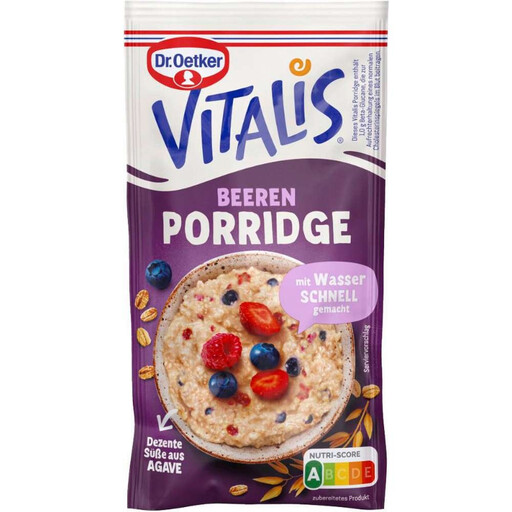 No image available
This cup is a good choice if you want to prepare a single serving without needing a separate bowl.
Prepare with hot water and leave to stand for 3 to 5 minutes. Check the ingredients and allergen information on the specific pack.
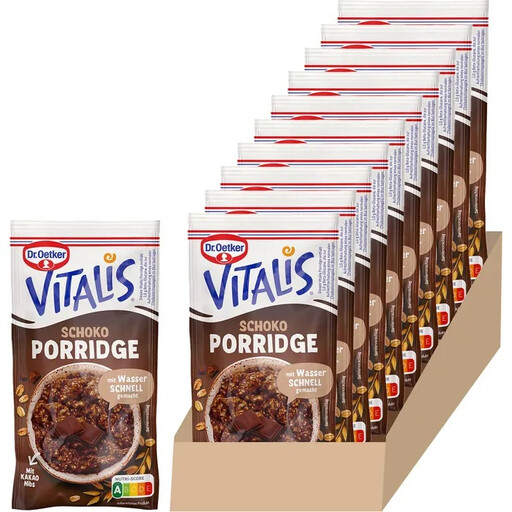 No image available
This pack of ten 61 g servings is a good choice if you’d like set portion sizes for several breakfasts.
You’ll need liquid and a bowl or mug to prepare it, so it’s not the same as a single-serving cup. Check the ingredients and allergen information.
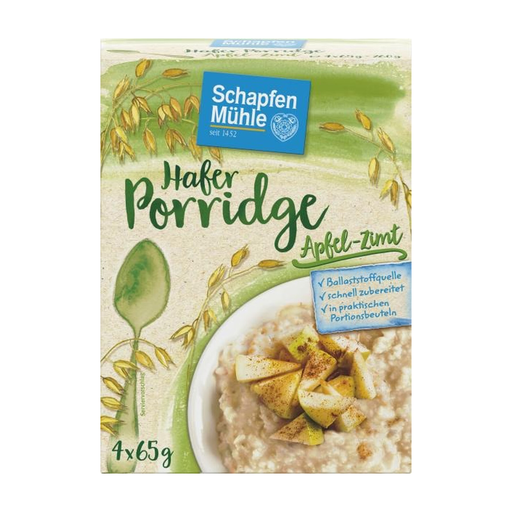 No image available
This pack is a good choice if you’re looking for four 65 g servings with an apple and cinnamon flavour.
Prepare in a bowl with 150 ml of boiling water and leave to stand for 4 to 5 minutes. Check how the servings are packaged and read the allergen information.
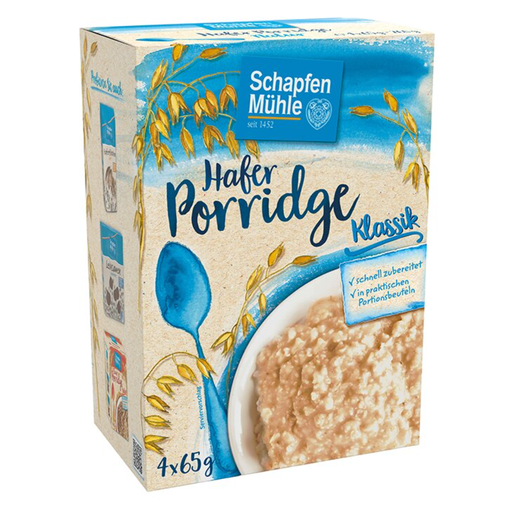 No image available
This pack of four 65 g servings is a good choice if you want set portion sizes for several breakfasts.
Before buying, check how the servings are packaged and how one portion should be prepared. It’s also important to check the ingredients and allergen information for the Natural variety.
No, a sachet doesn’t include a cup for preparation. For the products described, you pour the contents into a bowl and mix with liquid; RUF recommends 150 ml of boiling water and a standing time of three minutes for its 60 g sachet.
A cup is a good choice if you want a single, pre-measured serving in its own cup. If you’d rather choose your own portion size and add different toppings, a larger mix gives you more flexibility, but you’ll need to portion it out yourself.
Look for an explicit “gluten-free” label on the specific product; oats as an ingredient aren’t enough. The Verbraucherzentrale recommends that people with coeliac disease choose only oats that are labelled accordingly.
Read the ingredients list and allergen information for the specific variety. Seitenbacher lists milk protein in its Protein Porridge Blueberry; REWE Bio Berry Porridge may contain traces of milk and nuts, among other allergens.