What should you look for when buying?
First, check whether you can use hot water and a container in the canteen. Then you can compare the recipe, protein information and portion format to find what suits your day-to-day routine.
| Criterion |
What to check |
Who it matters to |
| Preparation |
Check whether you need hot or cold water and what sort of container you’ll need. |
If I only have access to water in the canteen, the portion needs to be made with water. For around 33% of consumers, this would be their top priority when buying. |
| Ingredients and allergens |
Read the ingredients list, allergen information and may-contain advice for the specific variety. |
If you want to avoid milk ingredients or certain other ingredients, you’ll need a recipe that meets your requirements. For around 27% of consumers, this would come first. |
| Protein information |
Compare the protein per portion and per 100 g, as well as the stated portion size. |
If I’m choosing porridge mainly as a protein-rich snack, I want to know how much protein is in the portion I’ll actually eat. This would be the deciding factor for around 20% of consumers. |
| Portion and portability |
Compare the weight and number of portions, and remember that you’ll need to portion out a large pack yourself. |
If I’m taking porridge with me, I want to choose between a ready-portioned format and deciding on my own serving size. For around 20% of consumers, this would be the main consideration. |
Which single portions are available at Joybuy?
This selection includes pre-portioned oat porridges for days in the canteen when you can use hot water. A cup means you won’t need to find a bowl; for sachets, check what sort of container you’ll need to bring for mixing.
 No image available
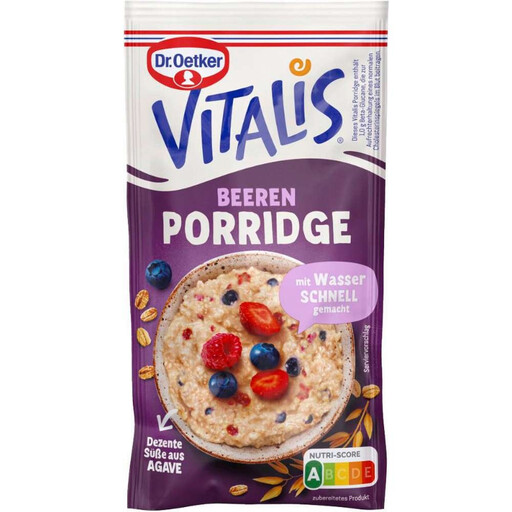
Dr. Oetker Vitalis Berries Porridge Oats, 53 g cup
The cup is a handy choice for a single canteen break if you have access to boiling water. Allow 3–5 minutes for it to stand.
If there are ingredients you need to avoid, check the labelling on the specific pack; the product information lists oats and milk, as well as possible traces of other cereals.
View at Joybuy
 No image available
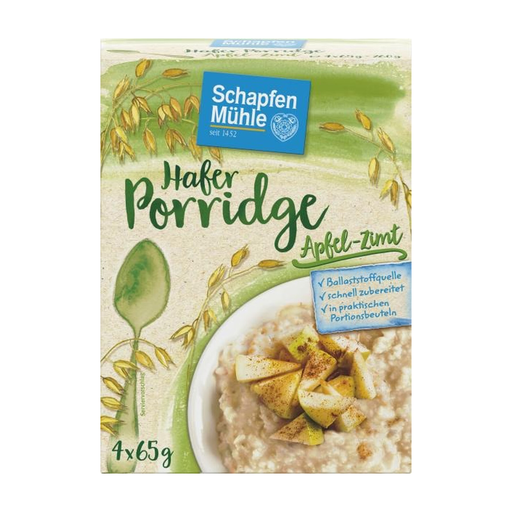
Schapfenmühle Apple & Cinnamon Porridge Oats, 4 × 65 g
The four pre-portioned sachets are easy to take with you if you have a cup or bowl and boiling water. Each portion calls for 150 ml of boiling water and 4–5 minutes to stand.
Before buying, check the ingredients and allergen information on the specific pack if there are any ingredients you need to avoid.
View at Joybuy
 No image available
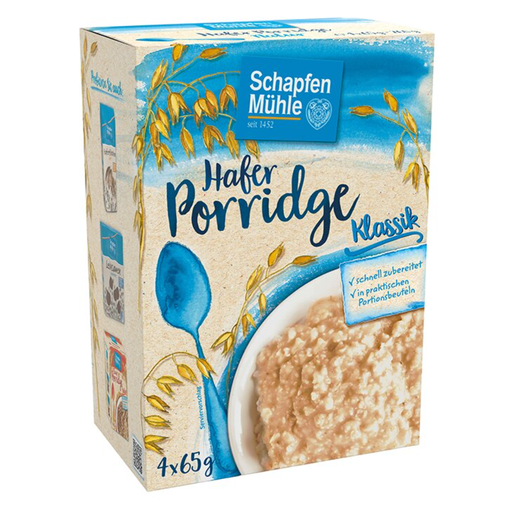
Schapfenmühle Natural Porridge Oats, 4 × 65 g
This pack of four 65 g portions is a good fit if you want to take individual servings of porridge with you and use hot water. Check the pack to see how much water you’ll need and what sort of container to use.
If you need to avoid oats, milk or other allergens, always go by the labelling on the specific pack.
View at Joybuy
 No image available
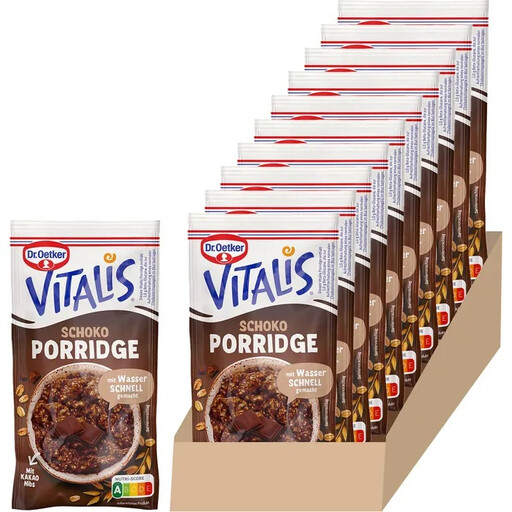
Dr. Oetker Vitalis Chocolate Porridge Oats, 10 × 61 g
The ten 61 g sachets are handy if you want to take pre-portioned meals with you regularly. The porridge is designed to be mixed with hot water or milk; check the pack instructions for the amount of liquid and the container you’ll need.
The product information lists milk and possible traces of hazelnuts. If you need to avoid these, check the labelling on the specific pack.
View at Joybuy
Frequently asked questions
Do I need a microwave to make single-portion porridge?
Not necessarily: it depends on the instructions for the specific variety. Kölln says its High-Protein portion sachets can be made with hot or cold water; the RUF Porridge Classic described by REWE, on the other hand, needs 150 ml of boiling water and a cup or bowl.
Is oat porridge automatically gluten-free?
No. The name ‘oat porridge’ doesn’t mean a product is suitable for a gluten-free diet. If you avoid gluten, check for the relevant information on the specific pack; Germany’s Federal Ministry of Agriculture, Food and Regional Identity includes oats under cereals containing gluten in its allergen labelling guidance.
How can I tell whether a variety is vegan or dairy-free?
Check the ingredients and information for the specific variety, rather than relying on the words ‘protein porridge’. The Seitenbacher Blueberry Protein Porridge featured here contains milk protein; Kölln describes its Coconut-Mango portion as vegan and lactose-free, but also lists possible traces of other allergens.
Can I still use porridge after its best-before date?
As the German Food Federation explains, a best-before date isn’t the same as a use-by date. If the best-before date has passed, check the packaging and product for anything unusual, assuming it has been stored properly. Don’t eat it if you see mould or notice an unusual smell.
What does the order of the ingredients tell me?
It shows which ingredients make up the greatest proportion by weight: according to the German Food Federation, they’re listed in descending order by weight. This lets you compare where oats, fruit or sugar appear in two porridge varieties, for example, without assuming that this alone tells you whether either one is suitable for you.


