When choosing porridge if you have a food allergy, first check the ingredients and allergen information on the specific pack; ‘no added sugar’ doesn’t answer the allergen question. A simple oat base lets you decide how sweet to make it, but it can still contain ingredients you need to avoid. With fruity mixes, it’s also worth checking ‘of which sugars’ per 100 g, as sugars from fruit are included in the nutritional information.
Who these buying criteria matter to
People avoiding a specific allergen
If you need to avoid milk, nuts, peanuts, soya, sesame or celery, for example, check the labelling of each individual porridge variety. The Federal Ministry of Agriculture, Food and Regional Identity explains the requirement to label the most common allergens. Also check for possible ‘may contain’ warnings; ‘vegan’ or ‘no added sugar’ does not replace this check.
People with gluten- or wheat-related dietary requirements
Oats should not be assumed to be gluten-free simply because of the type of grain; spelt is a type of wheat. If you need to follow a gluten-free diet for medical reasons, look for an explicit gluten-free label on the current pack and follow your individual medical advice.
People who want to control how sweet their porridge is
If you want to avoid added sugar or compare the total sugar content of different products, check both the ingredients list and ‘of which sugars’ per 100 g. A fruit mix with no added sugar can still contain sugars from its ingredients.
What to look for when buying
When choosing porridge with a food allergy in mind, first make sure it is suitable for the specific allergen you need to avoid. Then consider whether your main priority is avoiding added sugar, comparing total sugar or choosing the ingredients yourself.
| Criterion | What to check when buying | Who it matters most to |
|---|
| Specific allergens |
Check the ingredients, highlighted allergens and any warnings about possible traces against the allergen you need to avoid. |
If I need to avoid a particular ingredient, a general claim on the front of the pack isn’t enough. For around 33% of consumers, checking for allergens is likely to be the main concern. |
| Gluten and wheat |
If you need to follow a gluten-free diet, check for an explicit label on the pack; if you have a wheat allergy, check for spelt too. |
If I have a gluten- or wheat-related restriction, I need to check the type of grain and the relevant labelling before choosing. Around 27% of consumers are likely to prioritise this. |
| Added and total sugar |
Read the ingredients list alongside ‘of which sugars’ per 100 g, especially for fruit mixes. |
If I want less sugar in my finished porridge, ‘no added sugar’ isn’t enough as my only selection criterion. Around 27% of consumers are likely to prioritise comparing sugar content. |
| Creating your own base |
Check the ingredients in the oat base, as well as the liquid and any other ingredients you plan to add. |
I want to choose what goes into my porridge, including the ingredients I use to prepare it. For around 13% of consumers, this is likely to be the main consideration. |
Common buying pitfalls
-
Assuming ‘no added sugar’ means ‘low in sugar’
These claims don’t mean the same thing. Seitenbacher describes its Fruit Porridge as having no added sugar, but it contains 19 g of sugar per 100 g.
Decide whether you want to avoid added sugar or compare total sugar, and check the ingredients list and nutritional information together.
-
Assuming a vegan recipe is suitable for allergies
According to the manufacturer, Kölln Oat Porridge Fine Base contains oats, spelt and almonds, among other ingredients. Neither a vegan claim nor ‘no added sugar’ confirms that a product is suitable for every allergy.
Check the current labelling for the variety you choose against the ingredients you need to avoid.
-
Overlooking oats and spelt if you need to avoid gluten or wheat
The German Federal Institute for Risk Assessment notes that oats can also contain small amounts of gluten. Spelt is a type of wheat, too.
If you need to follow a gluten-free diet, look for an explicit gluten-free label; if you have a wheat allergy, check the ingredients list for spelt.
-
Overlooking ‘may contain’ warnings on children’s porridge
For its Children’s Oat and Banana Porridge, Alnatura lists possible traces of soya, milk, nuts, celery and sesame, among other allergens. Being labelled as a children’s product doesn’t mean it is suitable for someone with a particular allergy.
Check the current pack for any ‘may contain’ warnings too, and choose according to the specific allergen you need to avoid.
Brands and product ranges to consider
Kölln
Kölln offers a range of oat porridges, including mixes with no added sugar and a base you can customise yourself.
- With Fine Base, you can choose your own additional ingredients.
- According to Kölln, this particular mix contains oats, spelt and almonds; check the pack for ‘may contain’ warnings too.
Seitenbacher
Seitenbacher offers porridge mixes with different ingredient profiles, including Fruit Porridge and High Protein Porridge Vanilla.
- Seitenbacher says its Fruit Porridge has no added sugar and contains 19 g of sugar per 100 g; you can take both claims into account when choosing.
- According to the manufacturer, High Protein Porridge Vanilla contains milk protein and cane sugar. Information about one variety does not automatically apply to another.
Alnatura
Alnatura’s range includes Children’s Oat and Banana Porridge.
- The information for this variety lets you check its ingredients and ‘may contain’ warnings against your requirements.
- The children’s porridge contains oats and spelt; Alnatura also lists possible traces of several allergens, including milk, nuts, soya and sesame.
Brüggen
H. & J. Brüggen processes different types of grain and also makes breakfast cereals for retailers’ own brands.
- Its range includes products made with different types of grain.
- For a specific own-brand porridge, check its own ingredients and allergen information rather than relying on the manufacturer’s general description.
Oat products for creating your own base
This selection includes rolled oats and whole oat groats for making your own porridge base. Whole groats are not the same as fine rolled oats, so check that the product form suits the way you want to prepare your porridge before buying. For every variety, the current allergen labelling and nutritional information remain important.
 No image available
Kölln gluten-free fine rolled oats, 500 g
An oat base if you’re looking for a product explicitly labelled gluten-free. Check the labelling and any other allergen information on the current pack against your individual requirements.
View on Joybuy
 No image available
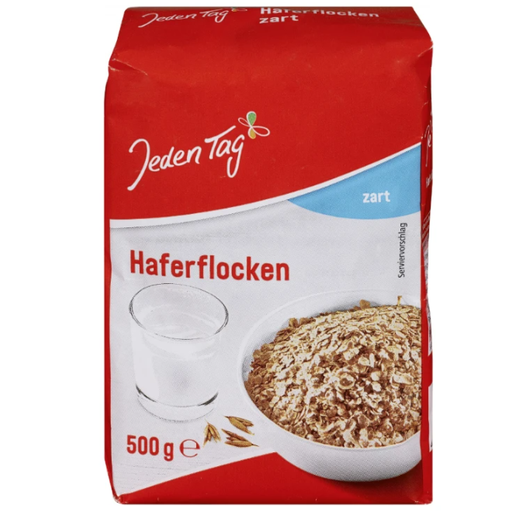
Jeden Tag fine rolled oats, 500 g
Fine rolled oats for a base you can customise with your own ingredients. Check the current pack to make sure its grain and ‘may contain’ information is suitable for the allergen you need to avoid.
View on Joybuy
 No image available
Kölln fine tender rolled oats, 500 g
Fine tender rolled oats if you want to add your own ingredients to your porridge. Check the current ingredients and allergen information rather than assuming that another Kölln variety is suitable.
View on Joybuy
 No image available
Alnatura organic fine rolled oats, 500 g
Fine rolled oats for porridge with your choice of additional ingredients. The organic label does not replace checking the current allergen and ‘may contain’ information.
View on Joybuy
 No image available
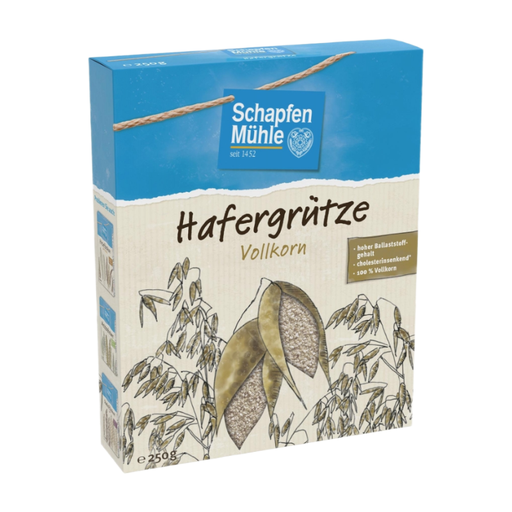
Schapfenmühle whole oat groats, 250 g
Whole oat groats may suit you if you want to use this product form instead of fine rolled oats. Check the preparation instructions for the porridge you plan to make, as well as the current allergen labelling.
View on Joybuy
Frequently asked questions
Is porridge with no added sugar automatically low in sugar?
No, the claim does not automatically mean that the product has a low total sugar content. Seitenbacher describes its Fruit Porridge as having no added sugar, while also stating that it contains 19 g of sugar per 100 g. So compare ‘of which sugars’ per 100 g and check the ingredients.
Is oat porridge automatically suitable if I need to follow a gluten-free diet?
No, simply being labelled oat porridge is not enough. The German Federal Institute for Risk Assessment notes that oats can also contain small amounts of gluten. Look for an explicit gluten-free label on the current pack, check for other allergens and follow your individual medical advice.
Where can I check the allergens in packaged porridge?
Start with the ingredients list and highlighted allergens on the specific pack; also read any ‘may contain’ warnings. The Federal Ministry of Agriculture, Food and Regional Identity explains the labelling requirements for the most common causes of allergies and intolerances. Ingredients are listed in descending order by weight.
Can I make up my chosen porridge with milk or a plant-based drink?
Yes, as long as the liquid and preparation method suit the product and your allergen profile. If you have a milk, soya or nut allergy, check the drink separately; its ingredients and nutritional information are part of the prepared meal.


