
Lieferung heute & morgen

Qualitätsgarantie

Willkommens-Angebote freischalten: KOSTENLOSE Lieferung | Bis zu 80 % RABATT | Kostenlose 30-Tage-JoyPlus-Testphase
App herunterladen
Rising summer temperatures make cooling homes and workspaces a key consideration. For many, especially those in rental properties, installing a fixed air conditioner isn't an option. A portable air conditioner offers a flexible and straightforward solution. These units can be moved from room to room as needed and don't require any extensive structural modifications.
This article serves as a guide. It explains the essential criteria to consider when choosing a portable air conditioner and presents various models for different use cases.
To find the right unit for your needs, you should consider several technical aspects and functional differences.
Cooling capacity is measured in BTU (British Thermal Unit) per hour and is the crucial metric for a unit's effectiveness. A higher BTU number means greater cooling power. For efficient cooling, the capacity should match the room size. As a rule of thumb:
Factors like ceiling height, sun exposure, and the number of people in the room can also affect cooling requirements.
Portable air conditioners are mainly divided into two types:
Modern units often offer more than just cooling. Features like an air conditioner with a heating function make the device usable all year round. An air conditioner with app control allows for remote operation via a smartphone, so you can, for example, pre-cool your home before you arrive. For off-grid use, there are special models such as a camping air conditioner equipped with a powerful battery.
Here is a selection of units that are well-suited for different requirements due to their specific features.
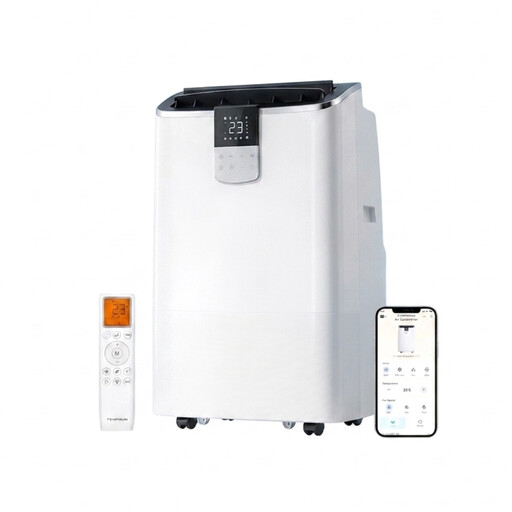
Why it stands out: This monobloc unit combines high cooling capacity with smart features, making it well-suited for cooling medium-sized living spaces.
Pros:
Who is it for? This model is a great choice for users looking for a powerful cooling solution for their apartment or home office and who value smart integration capabilities.
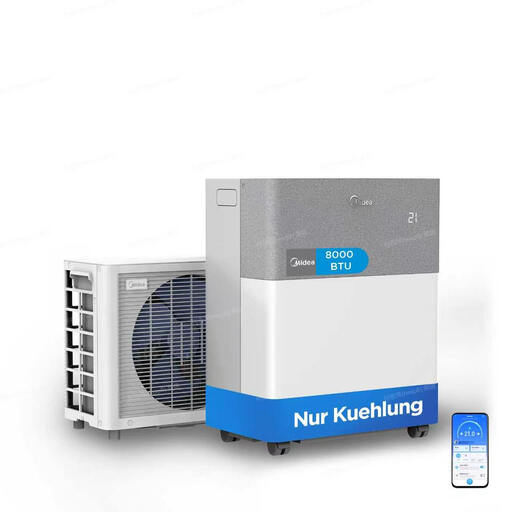
Why it stands out: As a portable split air conditioner, it places the compressor outside, resulting in very quiet indoor operation.
Pros:
Who is it for? Ideal for individuals who need effective and exceptionally quiet climate control for bedrooms, children's rooms, or for focused work in an office.
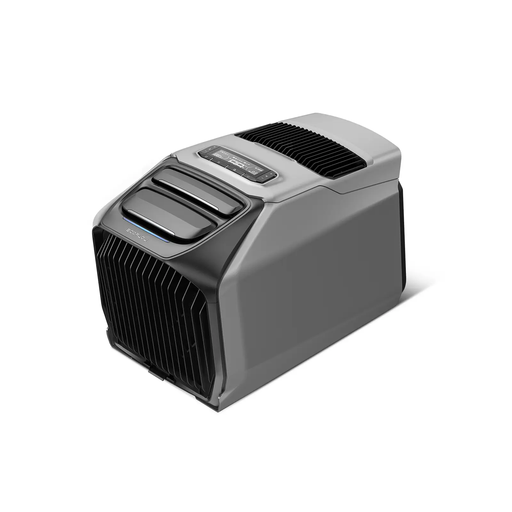
Why it stands out: This unit is designed for mobile use and can operate completely off-grid thanks to an optional battery. It also features a heating function.
Pros:
Who is it for? This model is aimed at outdoor enthusiasts, campers, and van owners who need a self-sufficient and flexible climate control solution on the go.
The models featured here cover specific use cases. If you haven't found the right unit for your needs yet, there is a wide variety of other models with different features and in various price ranges.
Discover more portable air conditioners on Joybuy.de
The noise level, measured in decibels (dB), varies depending on the model and design. Monobloc units, where the compressor operates indoors, typically have a sound pressure level between 45 and 65 dB. Portable split air conditioners are significantly quieter because the noise source is in the outdoor unit. Models like the Midea PortaSplit can achieve levels below 40 dB indoors.
Yes, air conditioners that work on the compression principle (both monobloc and split) must vent the heat extracted from the room to the outside. This is done via an exhaust hose (for monobloc units) or a connecting line (for split units). Units without an exhaust hose are typically air coolers (evaporative coolers), which cool the air through water evaporation. However, their cooling performance is significantly lower, and they increase the humidity in the room.
Most monobloc units come with a window sealing kit. This usually consists of a flexible fabric panel with a zipper, which is attached to the window frame and sash using Velcro tape. The exhaust hose is then fed outside through the zipper opening. This prevents warm outside air from flowing back into the room. The installation is typically simple and requires no tools.